Bryony Ladybird

Bryony Ladybird

Henosepilachna argus

Daily sighting probability ~10% · With luck
at Fertő-Hanság National Park

In 3 days ~20% in a week ~40%

9 Verified sightings at Fertő-Hanság National Park From 2019 to 2026
9 In 1 park
June Best month
☀️ Diurnal When it's spotted

About the Bryony Ladybird

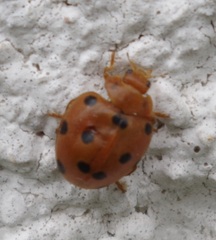
Henosepilachna argus, common name bryony ladybird, is a species of beetle in the family Coccinellidae. This species occurs in most of Europe (Portugal, Spain, France, Great Britain, Ireland, Switzerland, Austria, Belgium, the Netherlands, Germany, Italy, Czech Republic, Slovakia, Hungary, Croatia, Serbia, Montenegro, Romania and Bulgaria) and in the Afrotropical realm. These ladybugs can be found where the host plants are present, in hedges, herbaceous wasteland, forest clearings and sometimes even in dunes.

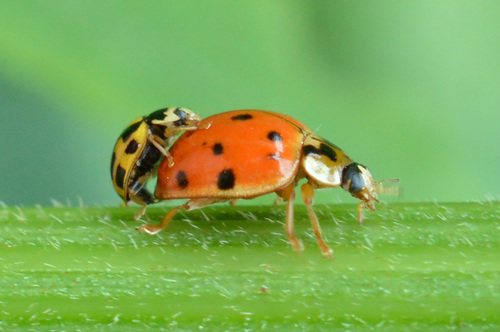
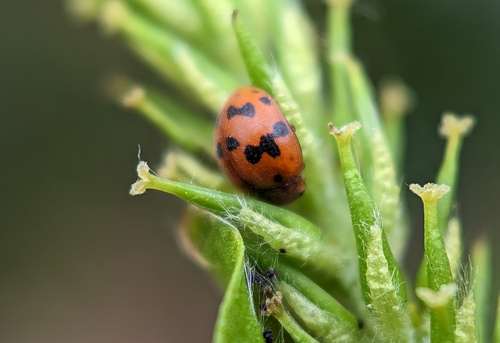
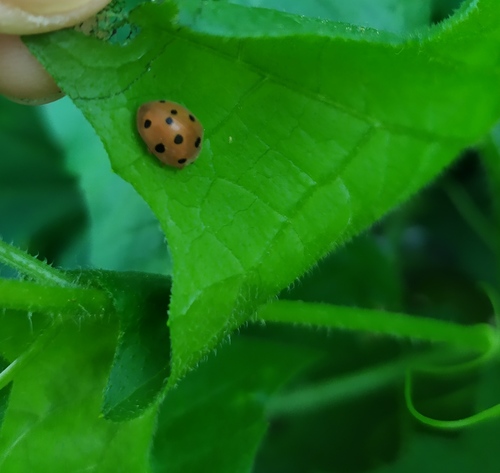
Henosepilachna argus can reach a body length of about 5–7 mm (0.20–0.28 in). These Ladybirds show an orange or orange-red background colour on pronotum and on the strongly arched elytra, with eleven black spots (five on each elytron and one common at the shield). The legs are orange colored in southern Europe. Elytra are covered with very fine, short and dense hair, that give them a matte to fluffy appearance, while usually ladybirds have smooth, shiny elytra.

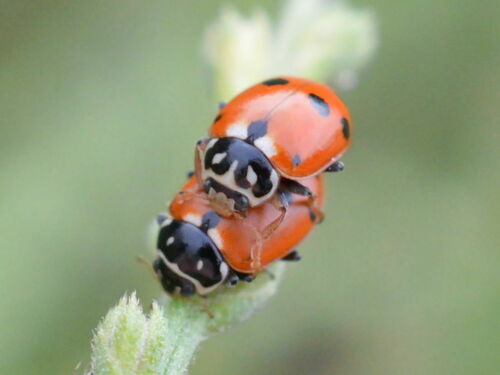
These ladybirds appear at the beginning of Spring (in March or April), they mate in May or June and disappear at the end of Summer. In fact they go to wintering... Wikipedia →
Global Distribution

Parks Where Found

# Park Country Daily sighting probability
1 Fertő-Hanság National Park 🇭🇺 Hungary
~10%

More parks will be added in future updates.

Cities Where Found

# City Country Daily sighting probability
1 Istanbul 🇹🇷 Turkey
~10%
2 Valencia 🇪🇸 Spain
~10%
3 Paris 🇫🇷 France
~10%
4 Brussels 🇧🇪 Belgium
~10%
5 London 🇬🇧 United Kingdom
~10%
6 Vienna 🇦🇹 Austria
<5%
7 Cologne 🇩🇪 Germany
<5%
8 Madrid 🇪🇸 Spain
<5%
9 Berlin 🇩🇪 Germany
<5%
10 Hamburg 🇩🇪 Germany
<5%

Before you go

What are the chances of seeing a Bryony Ladybird in Fertő-Hanság National Park?

With luck

About 10% of wildlife watchers report a Bryony Ladybird sighting in Fertő-Hanság National Park on a given day, based on 9 verified sightings from GBIF citizen-science data from 2019 to 2026. It is the 199th most-seen of the 243 insects we can rate there. Over three days the chance rises to about 20%, and over a week to about 40%, if each day is a fresh chance.

When is the best time to see a Bryony Ladybird in Fertő-Hanság National Park?

May–June and September

In those months about 10% of wildlife watchers report a Bryony Ladybird in Fertő-Hanság National Park on a given day, against under 5% in July–August and October–April, the lowest months.

What time of day is best to see a Bryony Ladybird?

Between 10 am and 1 pm

Across all the parks we cover, that three-hour window holds the most Bryony Ladybird sightings with a recorded time, and about 9 in 10 of them come between 6 am and 6 pm: it is a daytime animal.

Where else can you see a Bryony Ladybird?

Only Fertő-Hanság National Park, in our data

Fertő-Hanság National Park is the only park on Wallace's Line with enough records to rate Bryony Ladybird sightings: about 10% of wildlife watchers there report one on a given day.

Which relatives of the Bryony Ladybird live in Fertő-Hanság National Park?

Same family: Coccinellidae

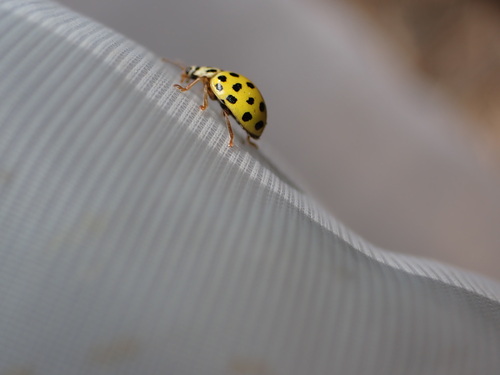
The closest relatives of the Bryony Ladybird that you can see in Fertő-Hanság National Park (family Coccinellidae, Lady Beetles) are Asian Lady Beetle (about 30%), Seven-Spotted Lady Beetle (about 20%) and 22-Spot Ladybird (about 10%), with each one's daily chance of a sighting.

Where does the Bryony Ladybird sighting chance come from?

GBIF citizen-science records

It is estimated from how often the Bryony Ladybird is recorded against all the insects logged in Fertő-Hanság National Park (9 verified sightings from 2019 to 2026), calibrated against known sighting rates. Figures are rounded to the nearest 10% because citizen-science data supports honest approximations, not decimals, and months with records from fewer than five people show "—". How it works.

← Back to Fertő-Hanság National Park