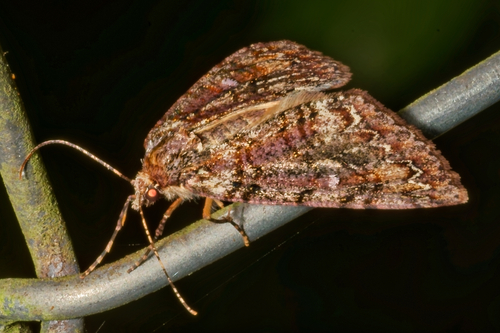
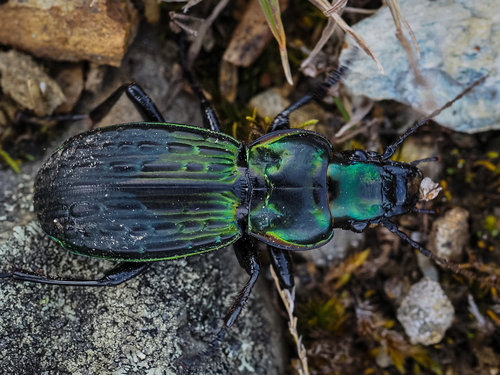
Black Stonefly

Black Stonefly

Austroperla cyrene

Endemic
Daily sighting probability ~10% · With luck
at Fiordland National Park

In 3 days ~20% in a week ~40%

6 Verified sightings at Fiordland National Park From 2019 to 2026
14 In all 2 parks
January Best month
☀️🌙 Day & Night When it's spotted

About the Black Stonefly

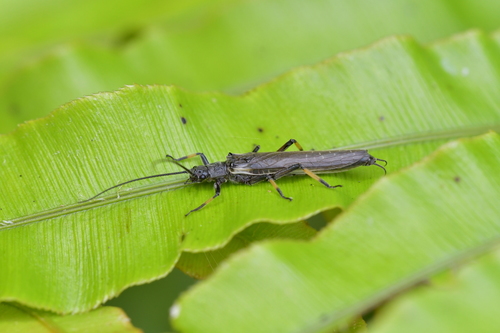
Austroperla cyrene, the black stonefly, is a species of austroperlid stonefly endemic to New Zealand. It is the single species in the genus Austroperla. The species is a 'shredder' that lives and feeds on decomposing wood and leaves in streams throughout New Zealand. It is particularly common in forested streams but relatively rare or absent from deforested streams.

A. cyrene nymphs and adults contain hydrogen cyanide and as a result are toxic to predators. To advertise their toxicity, A. cyrene adults have striking aposematic (warning) colouration, with bright yellow and white colour features against a black background.

This distinctive warning coloration is mimicked by melanic specimens of the non-toxic stoneflies Zelandoperla fenestrata and Taraperla pseudocyrene. A fossilised specimen of Austroperla has been recorded from early Miocene sediments of Foulden Maar in Central Otago. A phylogenetic study of Southern Hemisphere stoneflies similarly suggests an ancient history for this New Zealand lineage, with Austroperla estimated to have diverged from Australian and Chilean austroperlids around 37 million years ago. Wikipedia →
Global Distribution

Parks Where Found

# Park Country Daily sighting probability
1 Egmont National Park 🇳🇿 New Zealand
~10%
2 Fiordland National Park 🇳🇿 New Zealand
~10%

Closest Relatives at Fiordland National Park

No species of the same family or order lives in Fiordland National Park, so these are its closest relatives here: other insects.

Before you go

What are the chances of seeing a Black Stonefly in Fiordland National Park?

With luck

About 10% of wildlife watchers report a Black Stonefly sighting in Fiordland National Park on a given day, based on 6 verified sightings from GBIF citizen-science data from 2019 to 2026. It is the 147th most-seen of the 201 insects we can rate there. Over three days the chance rises to about 20%, and over a week to about 40%, if each day is a fresh chance.

When is the best time to see a Black Stonefly in Fiordland National Park?

December to February

In those months about 10% of wildlife watchers report a Black Stonefly in Fiordland National Park on a given day, against under 5% in March to November, the lowest months.

What time of day is best to see a Black Stonefly?

Between 1 and 4 pm

Across all the parks we cover, that three-hour window holds the most Black Stonefly sightings with a recorded time, and about 6 in 10 of them come between 6 am and 6 pm: it is seen both by day and at night.

Is Fiordland National Park the best place to see a Black Stonefly?

Among the best

Of the 2 parks where we can rate Black Stonefly sightings, Fiordland National Park ranks 2nd at about 10%, level with the leaders once rounded. The best odds are in Egmont National Park (New Zealand, about 10%).

Where does the Black Stonefly sighting chance come from?

GBIF citizen-science records

It is estimated from how often the Black Stonefly is recorded against all the insects logged in Fiordland National Park (6 verified sightings from 2019 to 2026), calibrated against known sighting rates. Figures are rounded to the nearest 10% because citizen-science data supports honest approximations, not decimals, and months with records from fewer than five people show "—". How it works.

← Back to Fiordland National Park