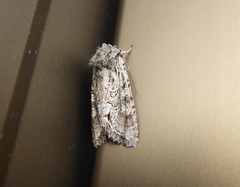
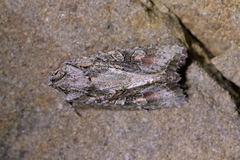
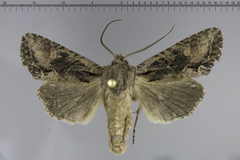
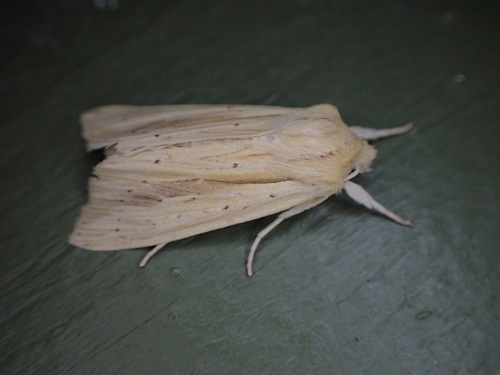
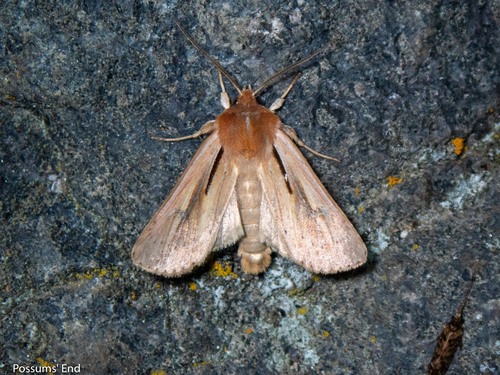
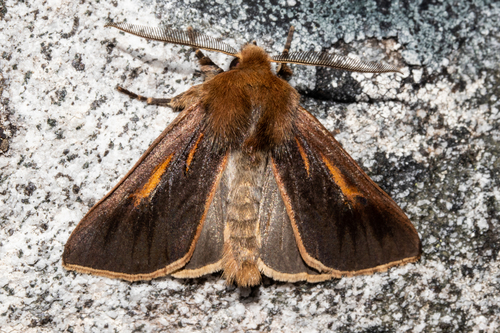
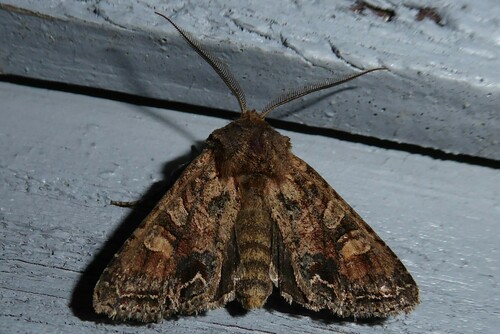
New Zealand Cutworm

New Zealand Cutworm

Ichneutica mutans

Endemic
Daily sighting probability ~20% · Possible
at Fiordland National Park

In 3 days ~40% in a week ~70%

43 Verified sightings at Fiordland National Park From 2019 to 2026
179 In all 5 parks
February Best month
☀️🌙 Day & Night When it's spotted

About the New Zealand Cutworm

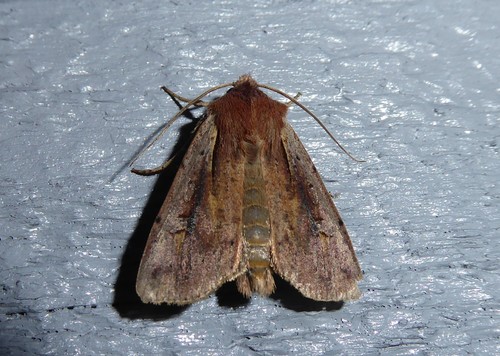
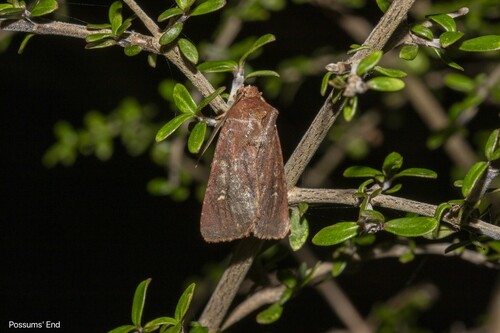
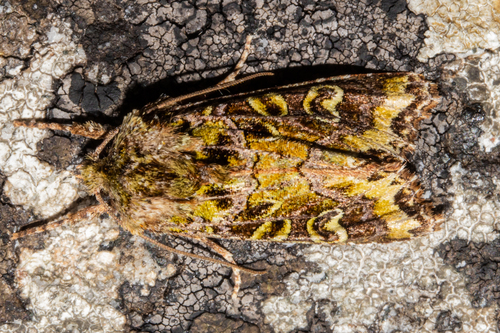
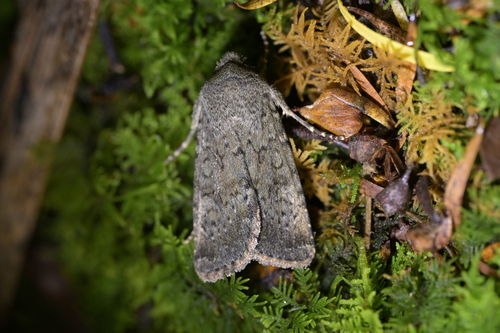
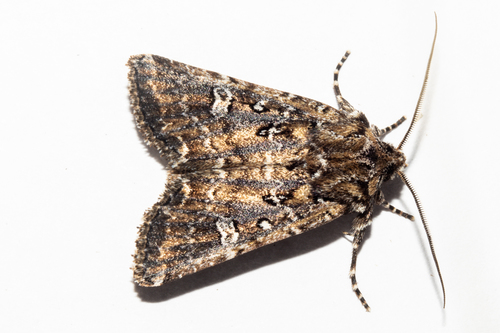
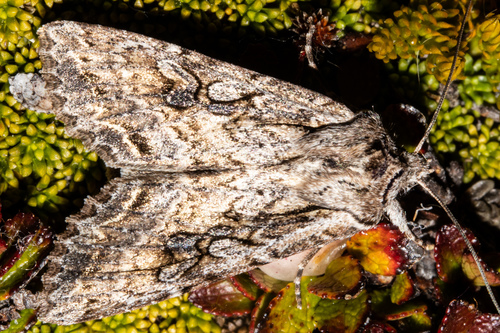
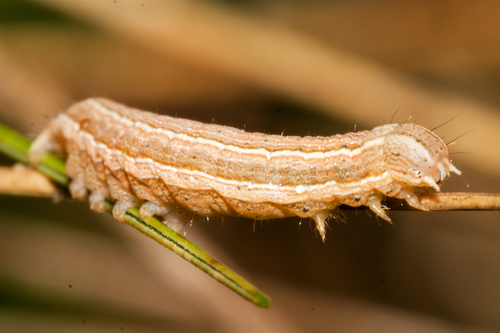
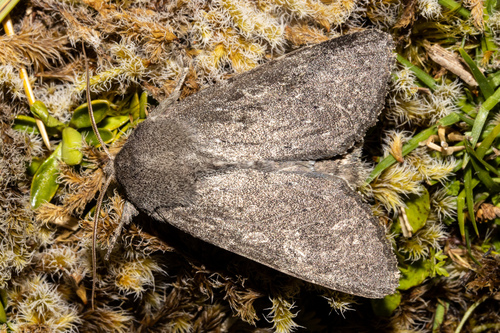
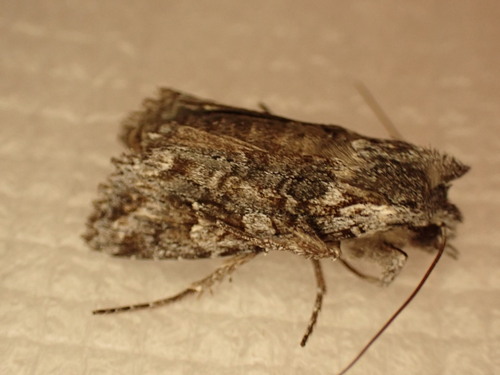
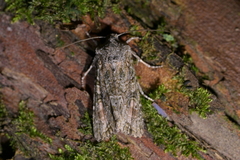
Ichneutica mutans, commonly known as the New Zealand cutworm or the grey-brown cutworm, is a moth of the family Noctuidae. This moth endemic to New Zealand and can be found throughout New Zealand, including from Three Kings Islands down to Stewart Island. However this species is not found in the Chatham Islands. The adult moths are on the wing all year round. I. mutans is variable in appearance and can be confused with similar species in the same genus. As a result of the variety of host species consumed by the larvae of the species, including such crops as turnips, wheat and apples, this species is regarded as an agricultural pest. However between the early 1960s and late 1980s the population of I. mutans was shown to have decreased significantly, by over 80%, at two study sites.

This species was first described by Francis Walker in 1857. The lectotype specimen is held at the Natural History Museum, London. The type locality of I. mutans is presumed by Robert Hoare to be Auckland. As a result of the variability in the appearance of I. mutans Walker, thinking he was describing new species, went on to describe it numerous times under the names Hadena lignifusca, Xylina... Wikipedia →
Global Distribution

Parks Where Found

# Park Country Daily sighting probability
1 Rakiura National Park 🇳🇿 New Zealand
~30%
2 Fiordland National Park 🇳🇿 New Zealand
~20%
3 Egmont National Park 🇳🇿 New Zealand
~20%
4 Arthur's Pass National Park 🇳🇿 New Zealand
~10%
5 Abel Tasman National Park 🇳🇿 New Zealand
~10%

Cities Where Found

# City Country Daily sighting probability
1 Auckland 🇳🇿 New Zealand
~20%

Before you go

What are the chances of seeing a New Zealand Cutworm in Fiordland National Park?

Possible

About 20% of wildlife watchers report a New Zealand Cutworm sighting in Fiordland National Park on a given day, based on 43 verified sightings from GBIF citizen-science data from 2019 to 2026. It is the 8th most-seen of the 201 insects we can rate there. Over three days the chance rises to about 40%, and over a week to about 70%, if each day is a fresh chance.

When is the best time to see a New Zealand Cutworm in Fiordland National Park?

July and November–March

In those months about 20% of wildlife watchers report a New Zealand Cutworm in Fiordland National Park on a given day, against under 5% in May–June and August–September, the lowest months.

What time of day is best to see a New Zealand Cutworm?

Between 10 pm and 1 am

Across all the parks we cover, that three-hour window holds the most New Zealand Cutworm sightings with a recorded time, and about 6 in 10 of them come between 6 pm and 6 am: it is seen both by day and at night.

Is Fiordland National Park the best place to see a New Zealand Cutworm?

2nd of 5

Of the 5 parks where we can rate New Zealand Cutworm sightings, Fiordland National Park ranks 2nd at about 20%. The best odds are in Rakiura National Park (New Zealand, about 30%).

Where does the New Zealand Cutworm sighting chance come from?

GBIF citizen-science records

It is estimated from how often the New Zealand Cutworm is recorded against all the insects logged in Fiordland National Park (43 verified sightings from 2019 to 2026), calibrated against known sighting rates. Figures are rounded to the nearest 10% because citizen-science data supports honest approximations, not decimals, and months with records from fewer than five people show "—". How it works.

← Back to Fiordland National Park