

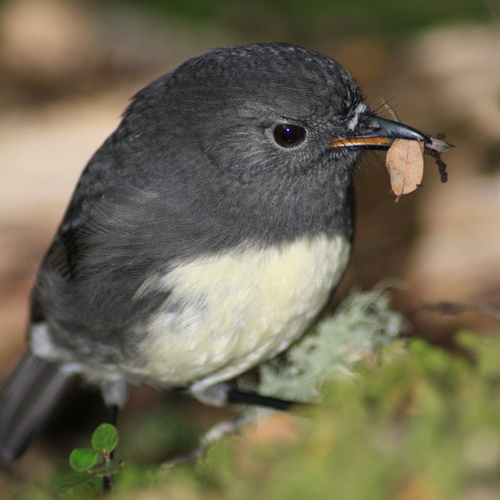
South Island Wren

South Island Wren

Xenicus gilviventris

Silhouette: Wynston Cooper (photo) and Albertonykus (silhouette) · PhyloPic

LCNTVUENEndangeredCR Endemic
Daily sighting probability ~10% · With luck
at Fiordland National Park

In 3 days ~30% in a week ~50%

511 Verified sightings at Fiordland National Park From 2019 to 2026
745 In all 2 parks
November Best month
☀️ Diurnal When it's spotted

About the South Island Wren

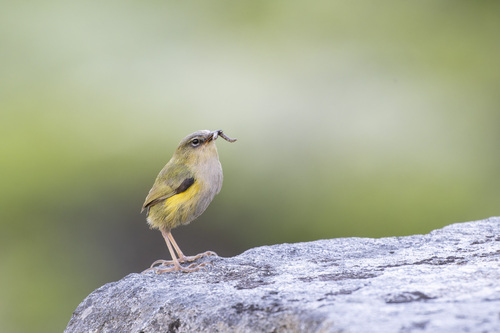
The New Zealand rock wren (Xenicus gilviventris) is a small New Zealand wren (family Acanthisittidae) endemic to the South Island of New Zealand. Its Māori names include pīwauwau ("little complaining bird"), mātuitui, and tuke ("twitch", after its bobbing motion). Outside New Zealand it is sometimes known as the rockwren to distinguish it from the unrelated rock wren of North America.

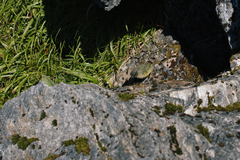
The rock wren is currently restricted to alpine and subalpine areas of the South Island. It is a poor flier and highly terrestrial, feeding in low scrub, open scree, and rockfalls. The rock wren and rifleman are the only two surviving New Zealand wrens; the rock wren's closest relatives were the extinct stout-legged wrens, followed by the extinct bushwren. Its numbers are declining due to predation by introduced mammals.

The rock wren is a very small, almost tailless bird that prefers to hop and run on its long legs, and uses its rounded wings to fly only short distances. Its body length is typically about 9 centimetres (3.5 in). Males weigh around 16 g, females 20 g. Males are greenish with yellow flanks and a pale underside, females tend to be browner, although the degree of difference... Wikipedia →

Sounds

Call1:08

New Zealand · 2014

© Dan Lane · XC207344 · CC BY-NC-SA 4.0

Global Distribution

Parks Where Found

# Park Country Daily sighting probability
1 Arthur's Pass National Park 🇳🇿 New Zealand
~10%
2 Fiordland National Park 🇳🇿 New Zealand
~10%

Before you go

What are the chances of seeing a South Island Wren in Fiordland National Park?

With luck

About 10% of wildlife watchers report a South Island Wren sighting in Fiordland National Park on a given day, based on 511 verified sightings from GBIF citizen-science data from 2019 to 2026. It is the 48th most-seen of the 94 birds we can rate there. Over three days the chance rises to about 30%, and over a week to about 50%, if each day is a fresh chance.

When is the best time to see a South Island Wren in Fiordland National Park?

September to April

In those months about 10% of wildlife watchers report a South Island Wren in Fiordland National Park on a given day, against under 5% in May to August, the lowest months.

What time of day is best to see a South Island Wren?

Between 11 am and 2 pm

Across all the parks we cover, that three-hour window holds the most South Island Wren sightings with a recorded time, and about 9 in 10 of them come between 6 am and 6 pm: it is a daytime animal.

Is Fiordland National Park the best place to see a South Island Wren?

Among the best

Of the 2 parks where we can rate South Island Wren sightings, Fiordland National Park ranks 2nd at about 10%, level with the leaders once rounded. The best odds are in Arthur's Pass National Park (New Zealand, about 10%).

Where does the South Island Wren sighting chance come from?

GBIF citizen-science records

It is estimated from how often the South Island Wren is recorded against all the birds logged in Fiordland National Park (511 verified sightings from 2019 to 2026), calibrated against known sighting rates. Figures are rounded to the nearest 10% because citizen-science data supports honest approximations, not decimals, and months with records from fewer than five people show "—". How it works.

← Back to Fiordland National Park