



Completed

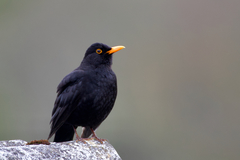


Eurasian Blackbird
Turdus merula
Silhouette: Anthony Caravaggi · PhyloPic
- KingdomAnimalia (Animals)
- PhylumChordata (Chordates)
- ClassAves (Birds)
- OrderPasseriformes (Perching Birds)
- FamilyTurdidae (Thrushes)
- GenusTurdus (Typical Thrushes)
- SpeciesTurdus merula (Eurasian Blackbird)
In 3 days ~90% in a week >90%
1,429 Verified sightings at Fiordland National Park From 2019 to 2026
33,115 In all 44 parks
December Best month
☀️ Diurnal When it's spotted
About the Eurasian Blackbird
The common blackbird (Turdus merula) is a species of true thrush. It is also known as the Eurasian blackbird (especially in North America, to distinguish it from the unrelated New World blackbirds), or simply the blackbird. It breeds in Europe, western Asia, and North Africa, and has been introduced to Australia and New Zealand. It has a number of subspecies across its large range; a few former Asian subspecies are now widely treated as separate species. Depending on latitude, the common blackbird may be resident, partially migratory, or fully migratory.
The adult male of the common blackbird (Turdus merula merula, the nominate subspecies), which is found throughout most of Europe, is all black except for a yellow eye-ring and bill and has a rich, melodious song. The adult female and juvenile have mainly dark brown plumage. This species breeds in woods and gardens, constructing neat, cup-shaped nests bound together with mud. It is omnivorous, eating a wide range of insects, earthworms, berries, and fruits.
Both sexes are territorial on the breeding grounds and have distinctive threat displays. However, they are more gregarious during migration and in wintering areas. Pairs remain in their territory throughout the year if the climate is sufficiently temperate. This common and conspicuous species has given rise to a number of literary and cultural references, often related to its song. Wikipedia →
Recent sightings of Eurasian Blackbird in Fiordland National Park
LIVEiNaturalistGlobal Distribution
Parks Where Found
Zoos & Centres Where Found
| # | Zoo / Centre | Country | |
|---|---|---|---|
| 1 | Moscow Zoo | 🇷🇺 Russia | |
| 2 | Barcelona Zoo | 🇪🇸 Spain | |
| 3 | Philadelphia Zoo | 🇺🇸 United States | |
| 4 | Aquarama Barcelona | 🇪🇸 Spain | |
| 5 | Willowbank Wildlife Reserve | 🇳🇿 New Zealand |
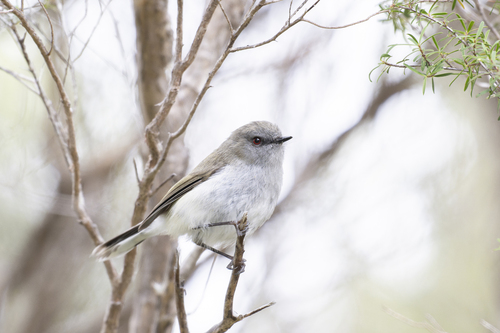
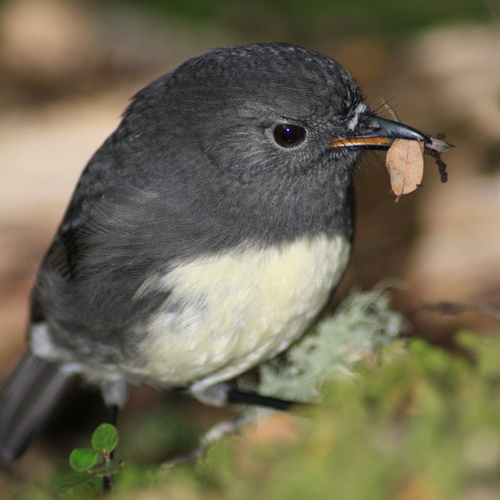
Closest Relatives at Fiordland National Park






Before you go
What are the chances of seeing a Eurasian Blackbird in Fiordland National Park?
Likely
About 60% of wildlife watchers report a Eurasian Blackbird sighting in Fiordland National Park on a given day, based on 1,429 verified sightings from GBIF citizen-science data from 2019 to 2026. It is the 7th most-seen of the 94 birds we can rate there. Over three days the chance rises to about 90%, and over a week to over 90%, if each day is a fresh chance.
When is the best time to see a Eurasian Blackbird in Fiordland National Park?
September–October and December
In those months about 70% of wildlife watchers report a Eurasian Blackbird in Fiordland National Park on a given day, against about 30% in February, the lowest month.
What time of day is best to see a Eurasian Blackbird?
Between 8 and 11 am
Across all the parks we cover, that three-hour window holds the most Eurasian Blackbird sightings with a recorded time, and about 9 in 10 of them come between 6 am and 6 pm: it is a daytime animal.
Is Fiordland National Park the best place to see a Eurasian Blackbird?
18th of 44
Of the 44 parks where we can rate Eurasian Blackbird sightings, Fiordland National Park ranks 18th at about 60%. The best odds are in Aoraki Mount Cook National Park (New Zealand, about 90%), Egmont National Park (New Zealand, about 80%) and Plitvice Lakes National Park (Croatia, about 80%). All parks ranked.
Where does the Eurasian Blackbird sighting chance come from?
GBIF citizen-science records
It is estimated from how often the Eurasian Blackbird is recorded against all the birds logged in Fiordland National Park (1,429 verified sightings from 2019 to 2026), calibrated against known sighting rates. Figures are rounded to the nearest 10% because citizen-science data supports honest approximations, not decimals, and months with records from fewer than five people show "—". How it works.
