


Completed
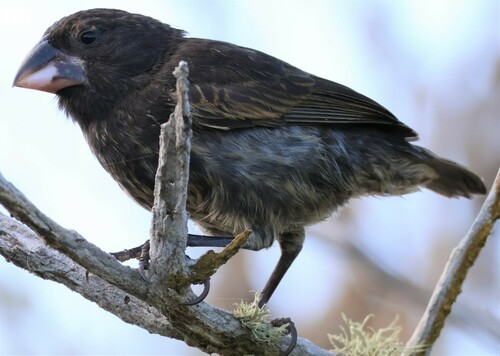

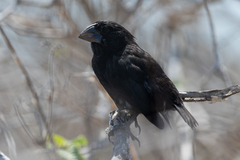


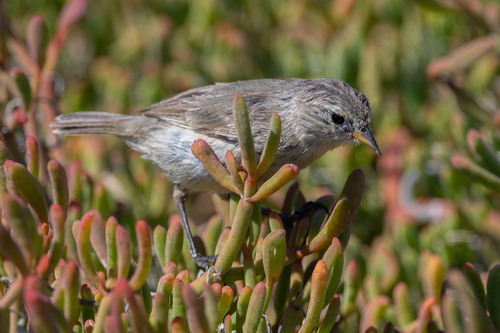
Española Cactus-Finch
Geospiza conirostris
Silhouette: Ryan Cupo · PhyloPic
- KingdomAnimalia (Animals)
- PhylumChordata (Chordates)
- ClassAves (Birds)
- OrderPasseriformes (Perching Birds)
- FamilyThraupidae (Tanagers and Allies)
- GenusGeospiza (Ground-Finches and Cactus-Finches)
- SpeciesGeospiza conirostris (Española Cactus-Finch)
In 3 days ~20% in a week ~40%
727 Verified sightings at Galápagos Islands From 2019 to 2026
727 In 1 park
July Best month
☀️ Diurnal When it's spotted
About the Española Cactus-Finch
The Española cactus finch (Geospiza conirostris) is a species of bird in the tanager family Thraupidae. It is one of Darwin's finches, and is endemic to the Galápagos islands, where it is restricted to Española, Genovesa, and the Darwin and Wolf Islands. This rather dark bird resembles the smaller and finer-beaked common cactus finch, but the two species do not co-inhabit any island.
Its natural habitat is dry shrubland and it is commonly seen on the ground. Its main food source is the cactus Opuntia. The Española cactus finch is one of Darwin's finches, a group of closely related birds that evolved on the Galápagos Islands. The group is related to the Tiaris grassquits, which are found in South America and the Caribbean. An ancestral relative of those grassquits arrived on the Galápagos Islands some 2–3 million years ago, and the Española cactus finch is one of the species that evolved from that ancestor.
From a study done in 2015, the Española cactus finch of Española was found to be a sister to the large ground finch, not to the Genovesa cactus finch. The International Ornithologists' Union has changed the taxonomy based on the study. Other taxonomic authorities... Wikipedia →
Sounds
Song0:40
Ecuador · 2011
© Eric DeFonso · XC114157 · CC BY-NC-SA 3.0
Recent sightings of Española Cactus-Finch in Galápagos Islands
LIVEiNaturalistGlobal Distribution
Parks Where Found
| # | Park | Country | Daily sighting probability |
|---|---|---|---|
| 1 | Galápagos Islands | 🇪🇨 Ecuador |
More parks will be added in future updates.
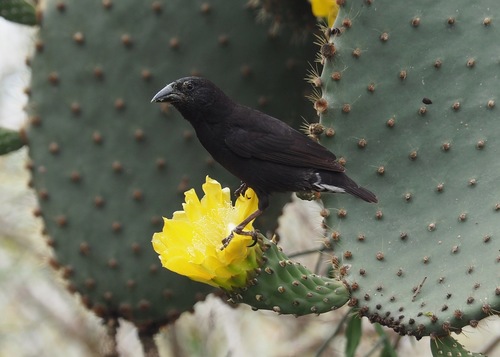
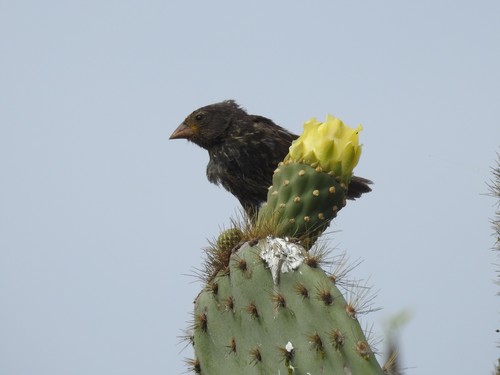
Closest Relatives at Galápagos Islands








Before you go
What are the chances of seeing an Española Cactus-Finch in Galápagos Islands?
With luck
About 10% of wildlife watchers report an Española Cactus-Finch sighting in Galápagos Islands on a given day, based on 727 verified sightings from GBIF citizen-science data from 2019 to 2026. It is the 58th most-seen of the 114 birds we can rate there. Over three days the chance rises to about 20%, and over a week to about 40%, if each day is a fresh chance.
When is the best time to see an Española Cactus-Finch in Galápagos Islands?
April to December
In those months about 10% of wildlife watchers report an Española Cactus-Finch in Galápagos Islands on a given day, against under 5% in January to March, the lowest months.
What time of day is best to see an Española Cactus-Finch?
Between 7 and 10 am
Across all the parks we cover, that three-hour window holds the most Española Cactus-Finch sightings with a recorded time, and about 8 in 10 of them come between 6 am and 6 pm: it is a daytime animal.
Where else can you see an Española Cactus-Finch?
Only Galápagos Islands, in our data
Galápagos Islands is the only park on Wallace's Line with enough records to rate Española Cactus-Finch sightings: about 10% of wildlife watchers there report one on a given day.
Which relatives of the Española Cactus-Finch live in Galápagos Islands?
Same genus: Geospiza
The closest relatives of the Española Cactus-Finch that you can see in Galápagos Islands (genus Geospiza, Ground-Finches and Cactus-Finches) are Small Ground-Finch (about 70%), Medium Ground-Finch (about 50%) and Common Cactus-Finch (about 20%), with each one's daily chance of a sighting.
Where does the Española Cactus-Finch sighting chance come from?
GBIF citizen-science records
It is estimated from how often the Española Cactus-Finch is recorded against all the birds logged in Galápagos Islands (727 verified sightings from 2019 to 2026), calibrated against known sighting rates. Figures are rounded to the nearest 10% because citizen-science data supports honest approximations, not decimals, and months with records from fewer than five people show "—". How it works.
