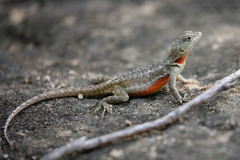

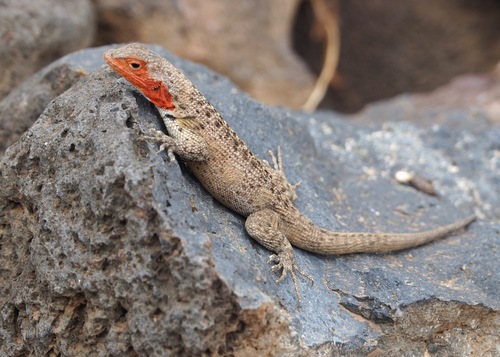
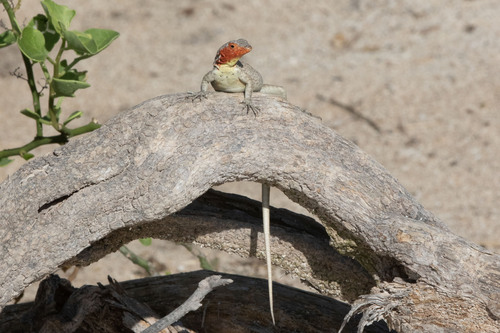
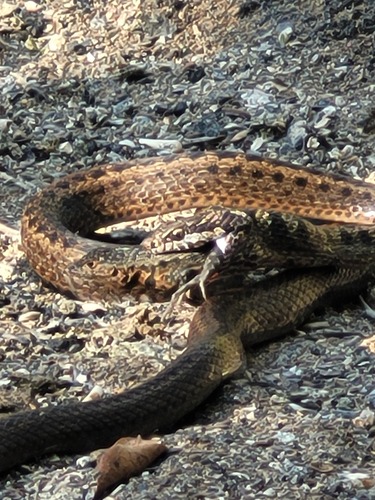
San Cristobal Lava Lizard

San Cristobal Lava Lizard

Microlophus bivittatus

Silhouette: Kurtis Wothe and Giovanna Sainz · PhyloPic

LCNTNear ThreatenedVUENCR Endemic
Daily sighting probability ~40% · Likely
at Galápagos Islands

In 3 days ~80% in a week >90%

1,265 Verified sightings at Galápagos Islands From 2019 to 2026
1,265 In 1 park
May Best month
☀️ Diurnal When it's spotted

About the San Cristobal Lava Lizard

Microlophus bivittatus, the San Cristóbal lava lizard, is a species of lava lizard endemic to San Cristóbal Island in the Galápagos Islands. The species is commonly attributed to the genus Microlophus but has been attributed to the genus Tropidurus. They are currently under threat by invasive cats on the island. The lizard is also closely related to the Microlophus occipitalis which radiated off of the bivittatus.

Lava lizards have a breeding ritual where males will compete via head bobbing to avoid physical conflict. Research has found that head bobbing achieves a greater response when the response is immediate as compared to a 30-second delay. Larger males will receive greater aggression from other males and greater assertive responses from females. There is no current data that supports ecological competition is higher between same sex individuals however. Wikipedia →

Global Distribution

Parks Where Found

# Park Country Daily sighting probability
1 Galápagos Islands 🇪🇨 Ecuador
~40%

More parks will be added in future updates.

Closest Relatives at Galápagos Islands

Before you go

What are the chances of seeing a San Cristobal Lava Lizard in Galápagos Islands?

Likely

About 40% of wildlife watchers report a San Cristobal Lava Lizard sighting in Galápagos Islands on a given day, based on 1,265 verified sightings from GBIF citizen-science data from 2019 to 2026. It is the 6th most-seen of the 31 reptiles we can rate there. Over three days the chance rises to about 80%, and over a week to over 90%, if each day is a fresh chance.

When is the best time to see a San Cristobal Lava Lizard in Galápagos Islands?

February–March, May–June and October–November

In those months about 50% of wildlife watchers report a San Cristobal Lava Lizard in Galápagos Islands on a given day, against about 30% in December, the lowest month.

What time of day is best to see a San Cristobal Lava Lizard?

Between 1 and 4 pm

Across all the parks we cover, that three-hour window holds the most San Cristobal Lava Lizard sightings with a recorded time, and about 9 in 10 of them come between 6 am and 6 pm: it is a daytime animal.

Where else can you see a San Cristobal Lava Lizard?

Only Galápagos Islands, in our data

Galápagos Islands is the only park on Wallace's Line with enough records to rate San Cristobal Lava Lizard sightings: about 40% of wildlife watchers there report one on a given day.

Which relatives of the San Cristobal Lava Lizard live in Galápagos Islands?

Same genus: Microlophus

The closest relatives of the San Cristobal Lava Lizard that you can see in Galápagos Islands (genus Microlophus, Pacific Iguanas) are Santa Cruz Lava Lizard (about 50%), Isabela Lava Lizard (about 40%) and Hood Lava Lizard (about 30%), with each one's daily chance of a sighting.

Where does the San Cristobal Lava Lizard sighting chance come from?

GBIF citizen-science records

It is estimated from how often the San Cristobal Lava Lizard is recorded against all the reptiles logged in Galápagos Islands (1,265 verified sightings from 2019 to 2026), calibrated against known sighting rates. Figures are rounded to the nearest 10% because citizen-science data supports honest approximations, not decimals, and months with records from fewer than five people show "—". How it works.

← Back to Galápagos Islands