Santiago Lava Lizard

Santiago Lava Lizard

Microlophus jacobii

Silhouette: Kurtis Wothe and Giovanna Sainz · PhyloPic

LCLeast ConcernNTVUENCR Endemic
Daily sighting probability ~30% · Possible
at Galápagos Islands

In 3 days ~60% in a week ~90%

396 Verified sightings at Galápagos Islands From 2019 to 2026
396 In 1 park
March Best month
☀️ Diurnal When it's spotted

About the Santiago Lava Lizard

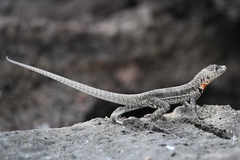
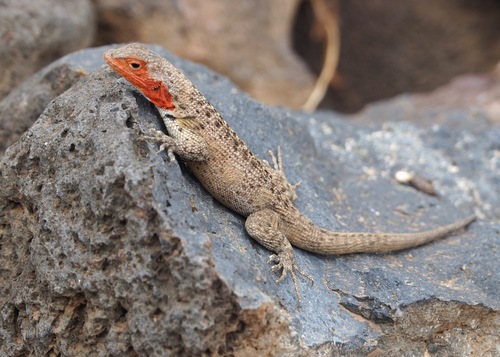
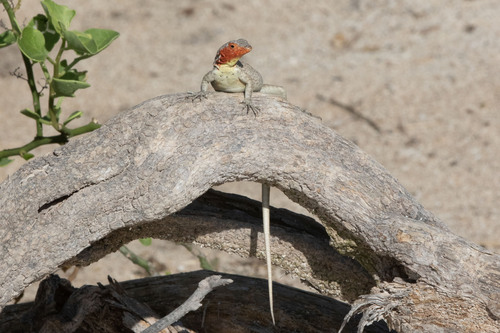
Microlophus jacobii, the Santiago lava lizard, is a species of lava lizard in the family Tropiduridae. They are endemic to the Galapagos islands of Santiago, Bartolomé, Rábida and a few islets. They are also the only lava lizards present on these islands. This species was formerly considered a subpopulation of the Galápagos lava lizard, but is now widely considered as a distinct species.

The genus name Microlophus, meaning "small crest", refers to the small crest on the head, while jacobi refers to the Latin name of the Santiago Island, Jacobi (James). It is endemic to the islands of Santiago, Rábida, Bartolomé, and six surrounding islets in the central Galapagos archipelago. In total the entire species is estimated to only inhabit 463 km2.

Common year-round, these diurnal lizards inhabit rocky volcanic areas of their islands along with dry shrub and grassland. They usually spend the midday hours in the shade to avoid the heat. They spend the night beneath the soil, among rocks or the leaf litter. This species is known to feed on plant material such as leaves, fruit, and seeds, along with insects. They have native predators such as... Wikipedia →

Global Distribution

Parks Where Found

# Park Country Daily sighting probability
1 Galápagos Islands 🇪🇨 Ecuador
~30%

More parks will be added in future updates.

Closest Relatives at Galápagos Islands

Before you go

What are the chances of seeing a Santiago Lava Lizard in Galápagos Islands?

Possible

About 30% of wildlife watchers report a Santiago Lava Lizard sighting in Galápagos Islands on a given day, based on 396 verified sightings from GBIF citizen-science data from 2019 to 2026. It is the 10th most-seen of the 31 reptiles we can rate there. Over three days the chance rises to about 60%, and over a week to about 90%, if each day is a fresh chance.

When is the best time to see a Santiago Lava Lizard in Galápagos Islands?

July–August and November–March

In those months about 30% of wildlife watchers report a Santiago Lava Lizard in Galápagos Islands on a given day, against about 20% in April–June and September–October, the lowest months.

What time of day is best to see a Santiago Lava Lizard?

Between 3 and 6 pm

Across all the parks we cover, that three-hour window holds the most Santiago Lava Lizard sightings with a recorded time, and about 9 in 10 of them come between 6 am and 6 pm: it is a daytime animal.

Where else can you see a Santiago Lava Lizard?

Only Galápagos Islands, in our data

Galápagos Islands is the only park on Wallace's Line with enough records to rate Santiago Lava Lizard sightings: about 30% of wildlife watchers there report one on a given day.

Where does the Santiago Lava Lizard sighting chance come from?

GBIF citizen-science records

It is estimated from how often the Santiago Lava Lizard is recorded against all the reptiles logged in Galápagos Islands (396 verified sightings from 2019 to 2026), calibrated against known sighting rates. Figures are rounded to the nearest 10% because citizen-science data supports honest approximations, not decimals, and months with records from fewer than five people show "—". How it works.

← Back to Galápagos Islands