Illustrious Greenbottle Fly

Illustrious Greenbottle Fly

Lucilia illustris

Daily sighting probability <5% · Rare
at Great Bear Rainforest

In 3 days ~10% in a week ~30%

5 Verified sightings at Great Bear Rainforest From 2019 to 2026
5 In 1 park
October Best month
☀️ Diurnal When it's spotted

About the Illustrious Greenbottle Fly

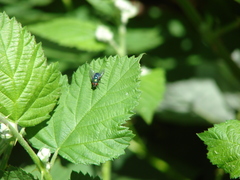
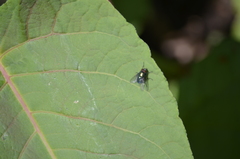
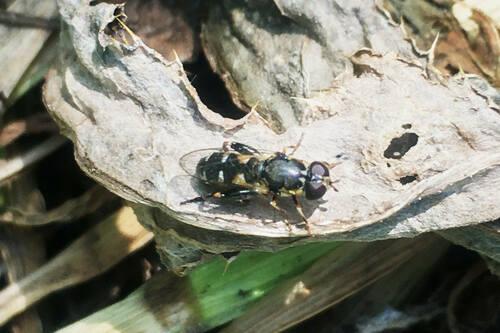
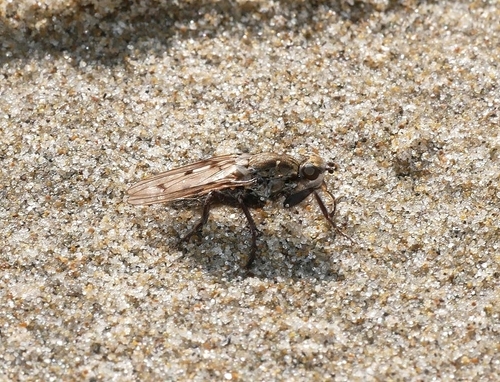
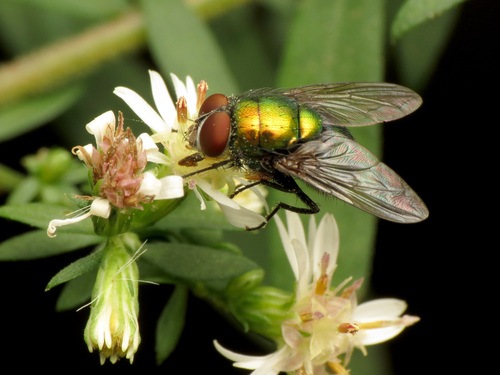
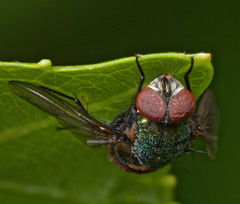
Lucilia illustris is a member of the fly family Calliphoridae, commonly known as a blow fly. Along with several other species, L. illustris is commonly referred to as a green bottle fly. Lucilia illustris is typically 6–9 mm in length and has a metallic blue-green thorax. The larvae develop in three instars, each with unique developmental properties. The adult fly typically will feed on flowers, but the females need some sort of carrion protein in order to breed and lay eggs.

Due to the predictable nature of development, L. illustris is often used by forensic entomologists to determine time and place of death. Medically, L. illustris is often used for maggot debridement therapy because it only causes myiasis in necrotic tissue. Lucilia illustris was first described by the German entomologist Johann Wilhelm Meigen in 1826. Its specific epithet is derived from the Latin word "illustris", meaning "brilliant".

Lucilia illustris is 6–9 mm in length. Its bucca (cheeks) are colored black with slightly gray pollinose and black hairs. The first segment of the antenna is black; the second generally orange-tipped, and the third segment is about three times the length of the second... Wikipedia →
Global Distribution

Parks Where Found

# Park Country Daily sighting probability
1 Great Bear Rainforest 🇨🇦 Canada
<5%

More parks will be added in future updates.

Cities Where Found

# City Country Daily sighting probability
1 Toronto 🇨🇦 Canada
<5%
2 Washington 🇺🇸 United States
<5%
3 Vancouver 🇨🇦 Canada
<5%
4 Montreal 🇨🇦 Canada
<5%
5 Boston 🇺🇸 United States
<5%
6 New York City 🇺🇸 United States
<5%

Before you go

What are the chances of seeing an Illustrious Greenbottle Fly in Great Bear Rainforest?

Rare

Under 5% of wildlife watchers report an Illustrious Greenbottle Fly sighting in Great Bear Rainforest on a given day, based on 5 verified sightings from GBIF citizen-science data from 2019 to 2026. It is the 200th most-seen of the 235 insects we can rate there. Over three days the chance rises to about 10%, and over a week to about 30%, if each day is a fresh chance.

When is the best time to see an Illustrious Greenbottle Fly in Great Bear Rainforest?

September and October

In those months about 10% of wildlife watchers report an Illustrious Greenbottle Fly in Great Bear Rainforest on a given day, against under 5% in November to August, the lowest months.

What time of day is best to see an Illustrious Greenbottle Fly?

Between 1 and 4 pm

Across all the parks we cover, that three-hour window holds the most Illustrious Greenbottle Fly sightings with a recorded time, and nearly all of them come between 6 am and 6 pm: it is a daytime animal.

Where else can you see an Illustrious Greenbottle Fly?

Only Great Bear Rainforest, in our data

Great Bear Rainforest is the only park on Wallace's Line with enough records to rate Illustrious Greenbottle Fly sightings: under 5% of wildlife watchers there report one on a given day.

Which relatives of the Illustrious Greenbottle Fly live in Great Bear Rainforest?

Same order: Diptera

The closest relatives of the Illustrious Greenbottle Fly that you can see in Great Bear Rainforest (order Diptera, Flies) are Western Pond Fly (about 20%), Melanostoma mellina (about 20%) and Common Drone Fly (about 10%), with each one's daily chance of a sighting.

Where does the Illustrious Greenbottle Fly sighting chance come from?

GBIF citizen-science records

It is estimated from how often the Illustrious Greenbottle Fly is recorded against all the insects logged in Great Bear Rainforest (5 verified sightings from 2019 to 2026), calibrated against known sighting rates. Figures are rounded to the nearest 10% because citizen-science data supports honest approximations, not decimals, and months with records from fewer than five people show "—". How it works.

← Back to Great Bear Rainforest