Pindi Moth

Pindi Moth

Abantiades latipennis

Daily sighting probability ~10% · With luck
at Great Otway National Park

In 3 days ~10% in a week ~30%

7 Verified sightings at Great Otway National Park From 2019 to 2026
7 In 1 park
March Best month
☀️🌙 Day & Night When it's spotted

About the Pindi Moth

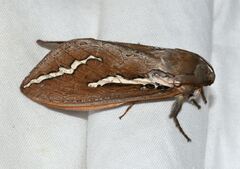
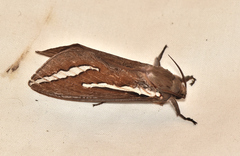
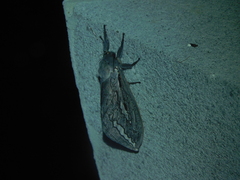
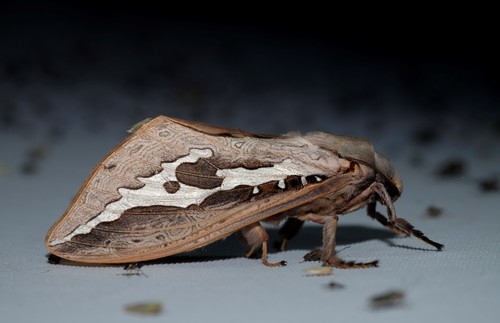
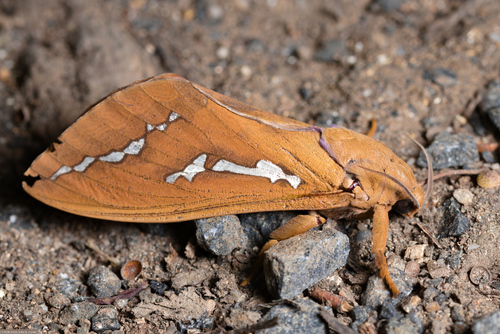
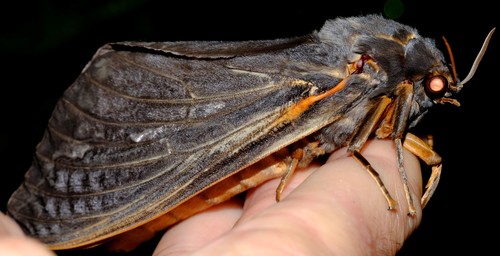
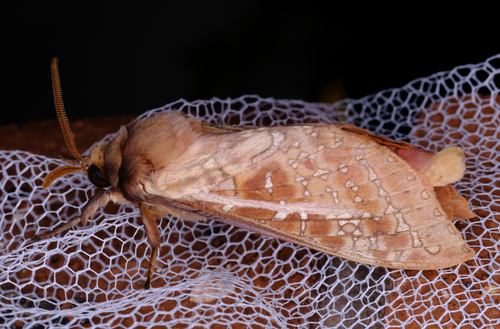
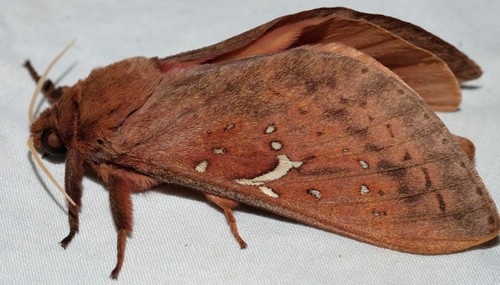
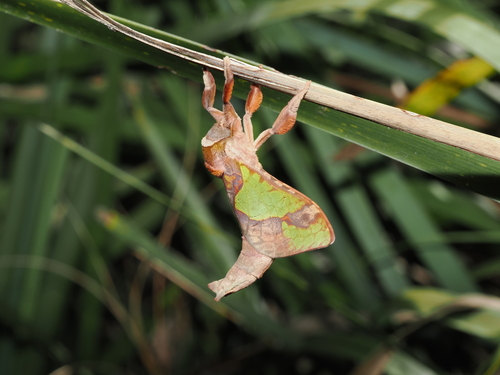
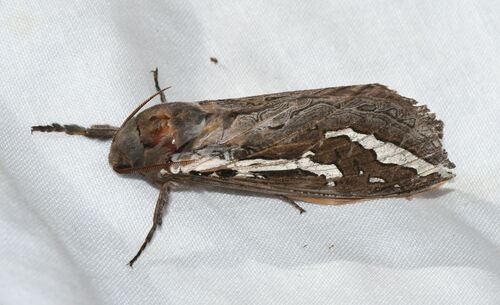
Abantiades latipennis, known as the Pindi moth, is a species of moth in the family Hepialidae. It may also be referred to as a swift moth or a ghost moth, as this is a common name associated with Hepialidae. Endemic to Australia and identified in 1932, it is most populous in temperate rainforest where eucalypti are prevalent, as the larvae feed primarily on the roots of these trees. Females lay eggs during flight in a scattering fashion. The larvae live for over eighteen months underground, while adult moths survive for approximately one week, as they have no mouthparts with which to feed. The moths are preyed upon by a number of predators, including bats and owls. Brown in colour overall, males are paler and the identifying silver bars of the male's wings are more prominent than those of the female's, with dark margins. Male adults are generally smaller.

Established clearfelling practices have been shown to favour the Pindi moth, and could lead to it being considered a pest due to opportunistic proliferation of the species. The resulting damage caused to the trees on which it feeds may be considered significant.

Abantiades latipennis is one of fourteen species... Wikipedia →
Global Distribution

Parks Where Found

# Park Country Daily sighting probability
1 Great Otway National Park 🇦🇺 Australia
~10%

More parks will be added in future updates.

Before you go

What are the chances of seeing a Pindi Moth in Great Otway National Park?

With luck

About 10% of wildlife watchers report a Pindi Moth sighting in Great Otway National Park on a given day, based on 7 verified sightings from GBIF citizen-science data from 2019 to 2026. It is the 331st most-seen of the 418 insects we can rate there. Over three days the chance rises to about 10%, and over a week to about 30%, if each day is a fresh chance.

When is the best time to see a Pindi Moth in Great Otway National Park?

February and March

In those months about 10% of wildlife watchers report a Pindi Moth in Great Otway National Park on a given day, against under 5% in April to January, the lowest months.

What time of day is best to see a Pindi Moth?

Between 8 and 11 am

Across all the parks we cover, that three-hour window holds the most Pindi Moth sightings with a recorded time, and about 6 in 10 of them come between 6 am and 6 pm: it is seen both by day and at night.

Where else can you see a Pindi Moth?

Only Great Otway National Park, in our data

Great Otway National Park is the only park on Wallace's Line with enough records to rate Pindi Moth sightings: about 10% of wildlife watchers there report one on a given day.

Which relatives of the Pindi Moth live in Great Otway National Park?

Same genus: Abantiades

The closest relatives of the Pindi Moth that you can see in Great Otway National Park (genus Abantiades) are Labyrinthine Ghost Moth (about 10%), Mustard Ghost Moth (about 10%) and Bardi Moth (about 10%), with each one's daily chance of a sighting.

Where does the Pindi Moth sighting chance come from?

GBIF citizen-science records

It is estimated from how often the Pindi Moth is recorded against all the insects logged in Great Otway National Park (7 verified sightings from 2019 to 2026), calibrated against known sighting rates. Figures are rounded to the nearest 10% because citizen-science data supports honest approximations, not decimals, and months with records from fewer than five people show "—". How it works.

← Back to Great Otway National Park