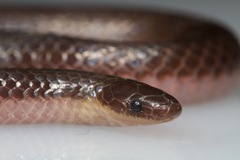
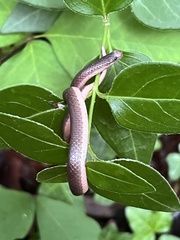

Eastern Worm Snake

Eastern Worm Snake

Carphophis amoenus

Silhouette: Alex Slavenko · PhyloPic

LCLeast ConcernNTVUENCR Endemic
Daily sighting probability ~20% · Possible
at Great Smoky Mountains National Park

In 3 days ~50% in a week ~80%

90 Verified sightings at Great Smoky Mountains National Park From 2019 to 2026
111 In all 3 parks
April Best month
☀️ Diurnal When it's spotted

About the Eastern Worm Snake

Carphophis amoenus, commonly known as the worm snake, is a species of nonvenomous colubrid snake endemic to the eastern United States. C. amoenus can be found east of the Mississippi, from southwest Massachusetts south to southern Alabama west to Louisiana and then north to Illinois. This species of snake protects a large range, and normally prefers a moist habitat in the rocky woodlands, under rotten wood of logs and stumps. Though this snake is quite abundant over its range, it is rarely seen because of its dormant lifestyle and where it usually resides. This snake is most common on the edges or in the ecotonal areas of open to thick woodlands, and the borders of wetlands. It may also be found in the grasslands next to woodlands. The best chance to spot it is after heavy rains, when its small size and distinct color make it easy to spot. This species prefers moist soil inhabited by earthworms, which are its main prey, so the soil needs to be sufficiently moist. The snake's skin naturally evaporates water; so the soil needs to be moist enough to offset this. C. amoenus is mostly found under rocks and in sufficient leaf litter during the extreme daytime heat. Peak activity falls between 15:00 to 18:00. Wikipedia →

Sounds

Recording0:40

United States · 2025

© Iso Lainey! 🍂 · iNaturalist · CC BY-NC 4.0

Global Distribution

Parks Where Found

# Park Country Daily sighting probability
1 Great Smoky Mountains National Park 🇺🇸 United States
~20%
2 Shenandoah National Park 🇺🇸 United States
~10%
3 Congaree National Park 🇺🇸 United States
~10%

Cities Where Found

# City Country Daily sighting probability
1 Washington 🇺🇸 United States
~10%

Before you go

What are the chances of seeing an Eastern Worm Snake in Great Smoky Mountains National Park?

Possible

About 20% of wildlife watchers report an Eastern Worm Snake sighting in Great Smoky Mountains National Park on a given day, based on 90 verified sightings from GBIF citizen-science data from 2019 to 2026. It is the 10th most-seen of the 27 reptiles we can rate there. Over three days the chance rises to about 50%, and over a week to about 80%, if each day is a fresh chance.

When is the best time to see an Eastern Worm Snake in Great Smoky Mountains National Park?

March to June

In those months about 30% of wildlife watchers report an Eastern Worm Snake in Great Smoky Mountains National Park on a given day, against under 5% in August–September and November–February, the lowest months.

What time of day is best to see an Eastern Worm Snake?

Between 1 and 4 pm

Across all the parks we cover, that three-hour window holds the most Eastern Worm Snake sightings with a recorded time, and about 8 in 10 of them come between 6 am and 6 pm: it is a daytime animal.

Is Great Smoky Mountains National Park the best place to see an Eastern Worm Snake?

Yes

Of the 3 parks where we can rate Eastern Worm Snake sightings, Great Smoky Mountains National Park has the highest daily chance: about 20%. Next come Shenandoah National Park (United States, about 10%) and Congaree National Park (United States, about 10%).

Which relatives of the Eastern Worm Snake live in Great Smoky Mountains National Park?

Same family: Colubridae

The closest relatives of the Eastern Worm Snake that you can see in Great Smoky Mountains National Park (family Colubridae, Colubrid Snakes) are Common Watersnake (about 50%), Eastern/Central Ratsnake Complex (about 40%) and Common Garter Snake (about 40%), with each one's daily chance of a sighting.

Where does the Eastern Worm Snake sighting chance come from?

GBIF citizen-science records

It is estimated from how often the Eastern Worm Snake is recorded against all the reptiles logged in Great Smoky Mountains National Park (90 verified sightings from 2019 to 2026), calibrated against known sighting rates. Figures are rounded to the nearest 10% because citizen-science data supports honest approximations, not decimals, and months with records from fewer than five people show "—". How it works.

← Back to Great Smoky Mountains National Park