
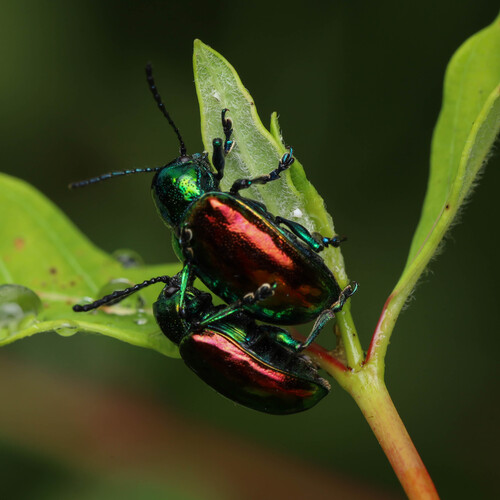
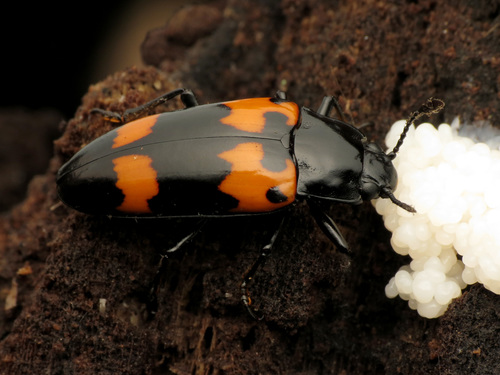

Passionflower Flea Beetle

Passionflower Flea Beetle

Disonycha discoidea

Daily sighting probability <5% · Rare
at Great Smoky Mountains National Park

In 3 days ~10% in a week ~20%

6 Verified sightings at Great Smoky Mountains National Park From 2019 to 2026
6 In 1 park
May Best month
☀️ Diurnal When it's spotted

About the Passionflower Flea Beetle

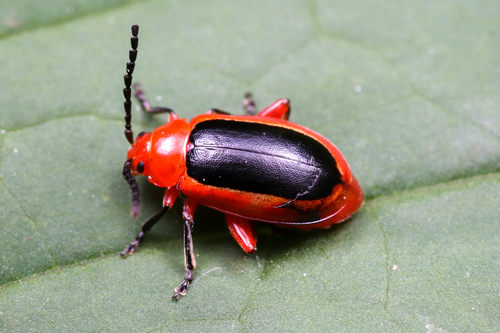
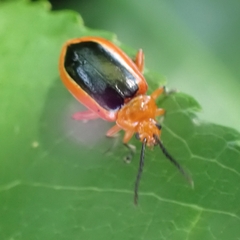
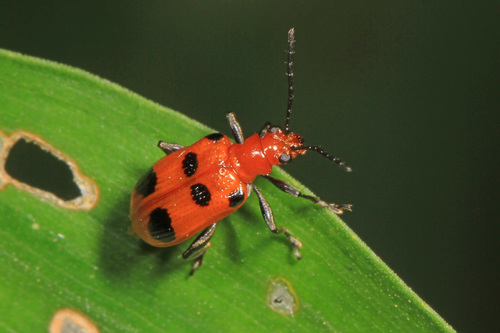
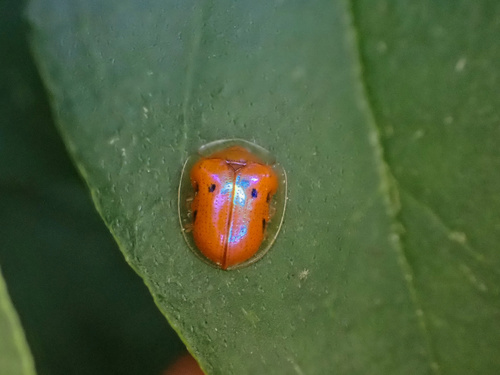
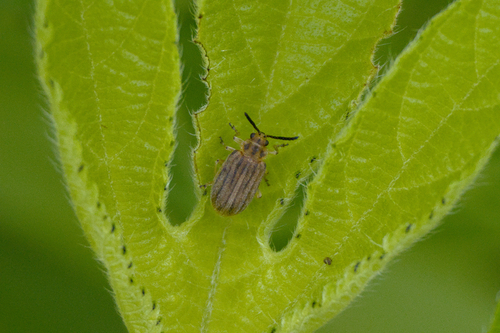
Disonycha discoidea, the passionflower flea beetle, is a species of flea beetle in the family Chrysomelidae. It is found in North America. The adult is large for a flea beetle, roughly 7 mm long and 4 mm wide. The body is oval-shaped and orange-red (some references base the description on preserved specimens, which yellow with age). The antennae are dark, with the basal and apical joints sometimes paler.

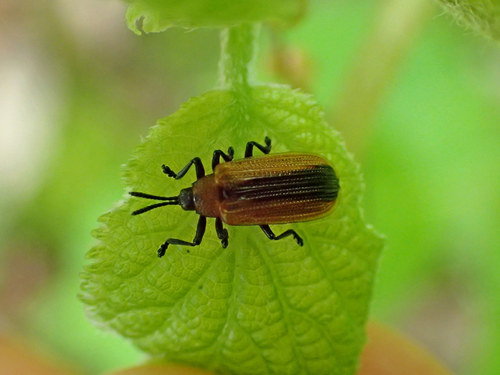
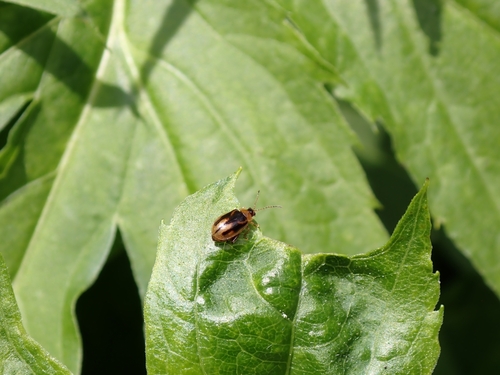
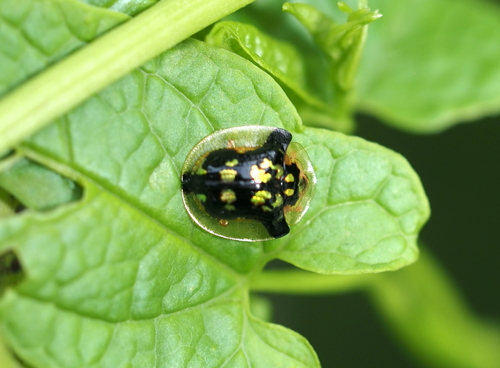
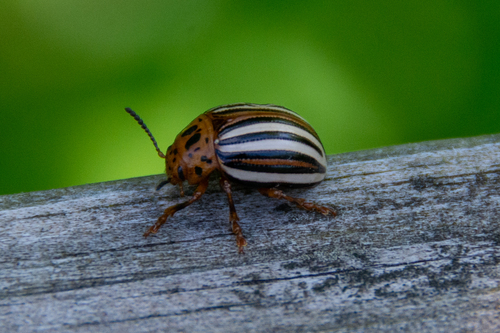
Two subspecies are recognized, distinguished by elytra coloration: D. discoidea discoidea: elytra with a black discoidal spot of variable but large size, not reaching the margins. D. discoidea abbreviata: elytra with alternating longitudinal black and pale yellow stripes.

Chevrolat coined the genus name Disonycha from the Greek roots δίς (two) and ὄνυξ (claw). The specific epithet discoidea presumably refers to the disc-shaped black spot on the elytra. Disonycha discoidea is found in the eastern United States, from Texas and Kansas in the west to Georgia and Maryland in the east. Some references report a broader range of Colorado to Florida to Rhode Island.

As the common name suggests, Disonycha discoidea is a Passiflora... Wikipedia →

Global Distribution

Parks Where Found

# Park Country Daily sighting probability
1 Great Smoky Mountains National Park 🇺🇸 United States
<5%

More parks will be added in future updates.

Cities Where Found

# City Country Daily sighting probability
1 Dallas 🇺🇸 United States
<5%

Before you go

What are the chances of seeing a Passionflower Flea Beetle in Great Smoky Mountains National Park?

Rare

Under 5% of wildlife watchers report a Passionflower Flea Beetle sighting in Great Smoky Mountains National Park on a given day, based on 6 verified sightings from GBIF citizen-science data from 2019 to 2026. It is the 628th most-seen of the 822 insects we can rate there. Over three days the chance rises to about 10%, and over a week to about 20%, if each day is a fresh chance.

When is the best time to see a Passionflower Flea Beetle in Great Smoky Mountains National Park?

May–June and September

In those months about 10% of wildlife watchers report a Passionflower Flea Beetle in Great Smoky Mountains National Park on a given day, against under 5% in July–August and October–April, the lowest months.

What time of day is best to see a Passionflower Flea Beetle?

Between 9 am and noon

Across all the parks we cover, that three-hour window holds the most Passionflower Flea Beetle sightings with a recorded time, and nearly all of them come between 6 am and 6 pm: it is a daytime animal.

Where else can you see a Passionflower Flea Beetle?

Only Great Smoky Mountains National Park, in our data

Great Smoky Mountains National Park is the only park on Wallace's Line with enough records to rate Passionflower Flea Beetle sightings: under 5% of wildlife watchers there report one on a given day.

Which relatives of the Passionflower Flea Beetle live in Great Smoky Mountains National Park?

Same family: Chrysomelidae

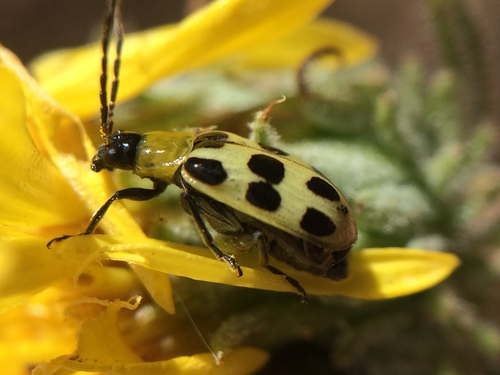
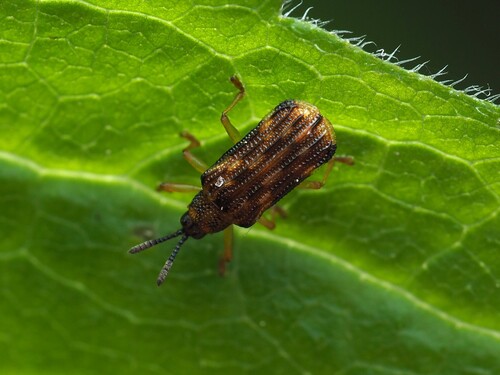
The closest relatives of the Passionflower Flea Beetle that you can see in Great Smoky Mountains National Park (family Chrysomelidae, Leaf Beetles) are Spotted Cucumber Beetle (about 20%), Sumitrosis inaequalis (about 10%) and Dogbane Leaf Beetle (about 10%), with each one's daily chance of a sighting.

Where does the Passionflower Flea Beetle sighting chance come from?

GBIF citizen-science records

It is estimated from how often the Passionflower Flea Beetle is recorded against all the insects logged in Great Smoky Mountains National Park (6 verified sightings from 2019 to 2026), calibrated against known sighting rates. Figures are rounded to the nearest 10% because citizen-science data supports honest approximations, not decimals, and months with records from fewer than five people show "—". How it works.

← Back to Great Smoky Mountains National Park