False Potato Beetle

False Potato Beetle

Leptinotarsa juncta

Daily sighting probability <5% · Rare
at Great Smoky Mountains National Park

In 3 days ~10% in a week ~20%

6 Verified sightings at Great Smoky Mountains National Park From 2019 to 2026
11 In all 2 parks
July Best month
☀️ Diurnal When it's spotted

About the False Potato Beetle

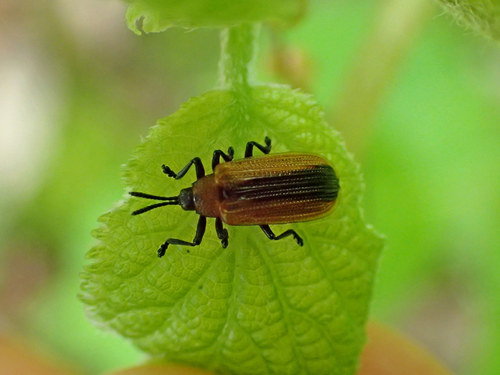
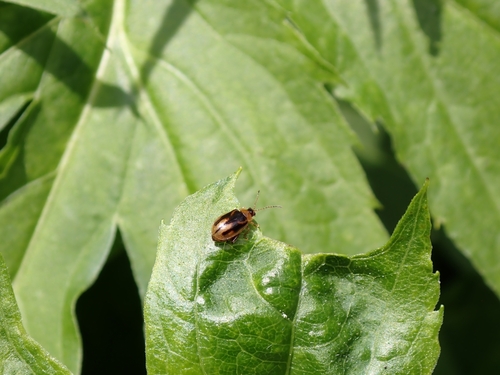
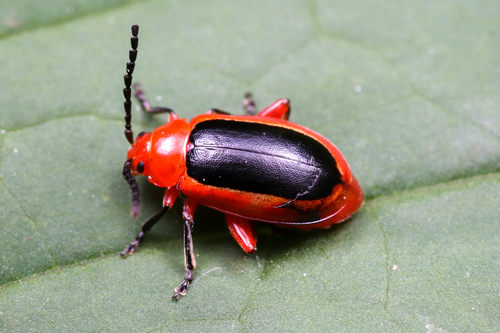
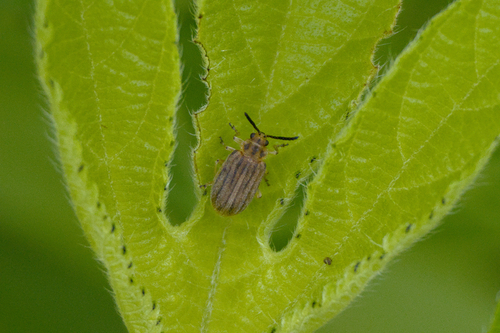
The false potato beetle (Leptinotarsa juncta) is a beetle found primarily in the Mid-Atlantic and Southeastern United States. Its distribution extends to Maine. Adult beetles emerge from the soil in the late spring or early summer and begin breeding, and a population may go through one to three generations in a summer.

The false potato beetle feeds on solanaceous weeds such as horsenettle, Solanum carolinense. It also feeds on other solanaceous plants, such as species of ground cherry or husk tomato, Physalis spp., and bittersweet, Solanum dulcamara, but no growth and reproduction occurs when feeding on the potato, Solanum tuberosum.

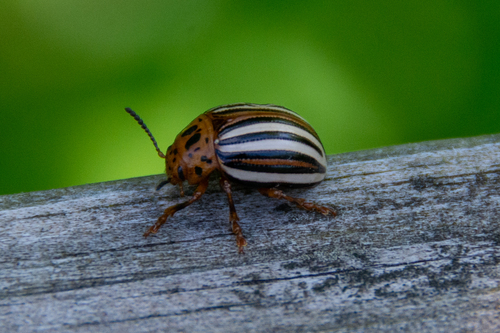
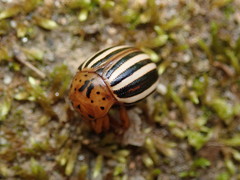
L. juncta can be easily confused with its congener the Colorado potato beetle, Leptinotarsa decemlineata. While the adult false potato beetle has alternating black and white strips on its back, like the Colorado potato beetle, one of the white strips in the center of each wing cover is missing and replaced by a light brown strip. The eggs are slightly larger and fewer are found in a cluster. The hump-backed larva is similar, but with only one row of dark spots on each side. The two species are apparently incapable of crossbreeding. Of the two, only the Colorado potato beetle is a serious pest. Wikipedia →
Global Distribution

Parks Where Found

# Park Country Daily sighting probability
1 Shenandoah National Park 🇺🇸 United States
<5%
2 Great Smoky Mountains National Park 🇺🇸 United States
<5%

Cities Where Found

# City Country Daily sighting probability
1 Detroit 🇺🇸 United States
~10%
2 Philadelphia 🇺🇸 United States
<5%
3 Washington 🇺🇸 United States
<5%
4 Baltimore 🇺🇸 United States
<5%
5 Boston 🇺🇸 United States
<5%
6 New York City 🇺🇸 United States
<5%

Before you go

What are the chances of seeing a False Potato Beetle in Great Smoky Mountains National Park?

Rare

Under 5% of wildlife watchers report a False Potato Beetle sighting in Great Smoky Mountains National Park on a given day, based on 6 verified sightings from GBIF citizen-science data from 2019 to 2026. It is the 628th most-seen of the 822 insects we can rate there. Over three days the chance rises to about 10%, and over a week to about 20%, if each day is a fresh chance.

When is the best time to see a False Potato Beetle in Great Smoky Mountains National Park?

June and July

In those months about 10% of wildlife watchers report a False Potato Beetle in Great Smoky Mountains National Park on a given day, against under 5% in August to May, the lowest months.

What time of day is best to see a False Potato Beetle?

Between 10 am and 1 pm

Across all the parks we cover, that three-hour window holds the most False Potato Beetle sightings with a recorded time, and nearly all of them come between 6 am and 6 pm: it is a daytime animal.

Is Great Smoky Mountains National Park the best place to see a False Potato Beetle?

Among the best

Of the 2 parks where we can rate False Potato Beetle sightings, Great Smoky Mountains National Park ranks 2nd at under 5%, level with the leaders once rounded. The best odds are in Shenandoah National Park (United States, under 5%).

Which relatives of the False Potato Beetle live in Great Smoky Mountains National Park?

Same family: Chrysomelidae

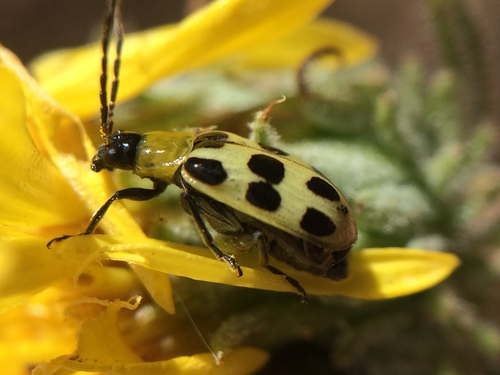
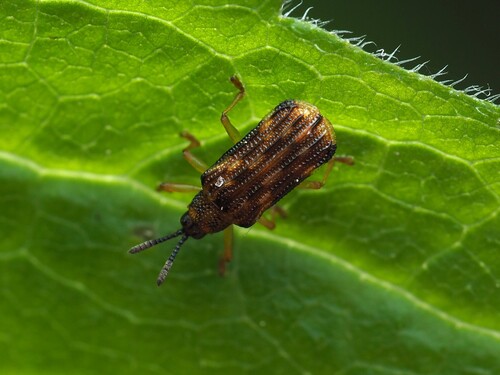
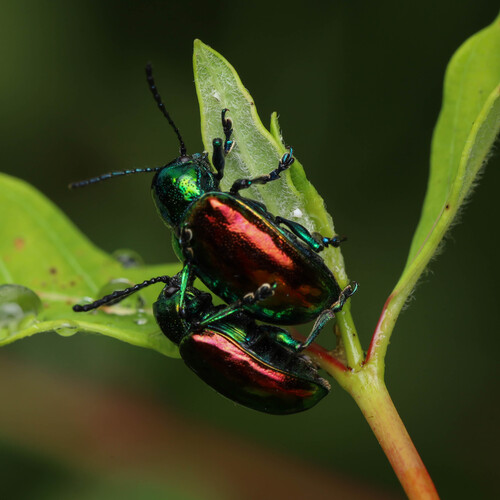
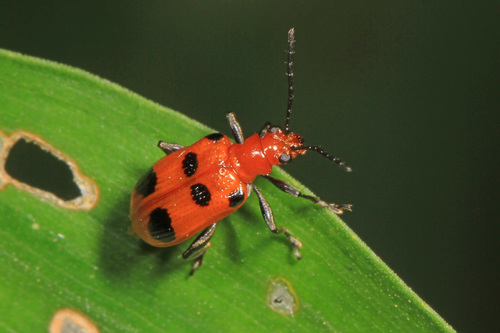
The closest relatives of the False Potato Beetle that you can see in Great Smoky Mountains National Park (family Chrysomelidae, Leaf Beetles) are Spotted Cucumber Beetle (about 20%), Sumitrosis inaequalis (about 10%) and Dogbane Leaf Beetle (about 10%), with each one's daily chance of a sighting.

Where does the False Potato Beetle sighting chance come from?

GBIF citizen-science records

It is estimated from how often the False Potato Beetle is recorded against all the insects logged in Great Smoky Mountains National Park (6 verified sightings from 2019 to 2026), calibrated against known sighting rates. Figures are rounded to the nearest 10% because citizen-science data supports honest approximations, not decimals, and months with records from fewer than five people show "—". How it works.

← Back to Great Smoky Mountains National Park