Lake Darner
Daily sighting probability ~10% · With luck
at Gros Morne National Park

In 3 days ~40% in a week ~60%

11 Verified sightings at Gros Morne National Park From 2019 to 2026
71 In all 5 parks
August Best month
☀️ Diurnal When it's spotted

About the Lake Darner

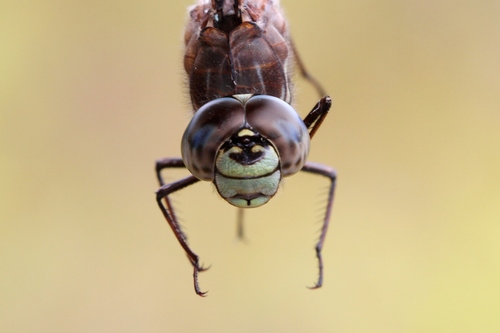
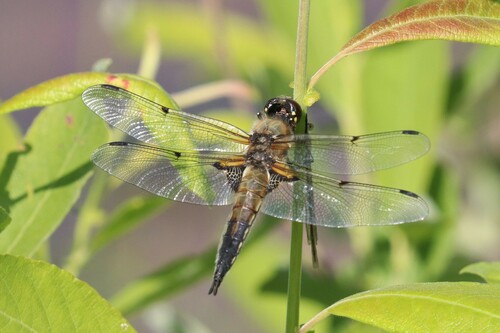
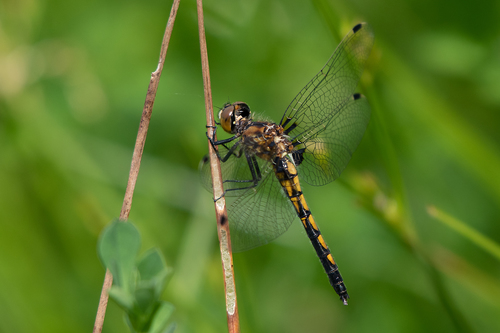
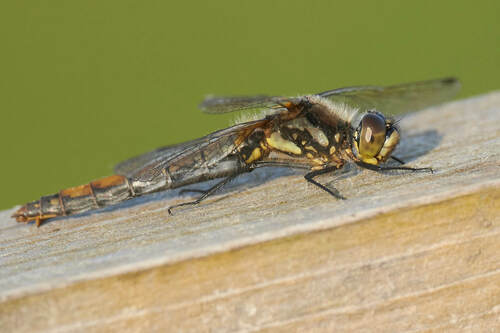
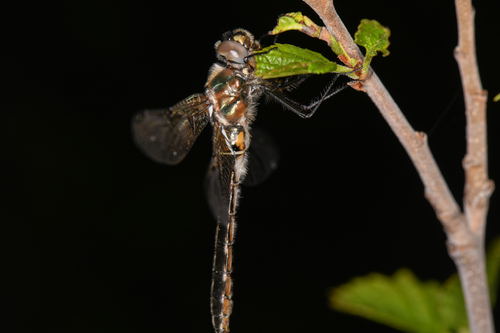
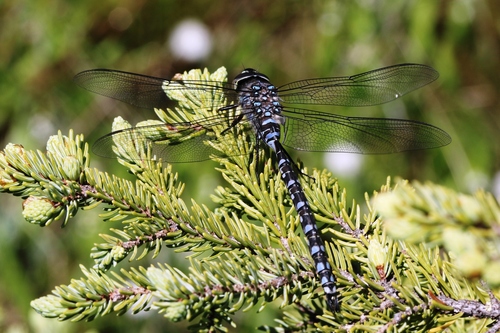
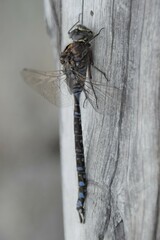
Aeshna eremita, the lake darner, is a species of dragonfly in the family Aeshnidae. It is found in Alaska, the Northern United States and across Canada. It is similar in size and markings to the Canada darner, but has a black line across its face.

Aeshna eremita was first scientifically described in an 1866 paper by American biologist S. H. Scudder published in the Proceedings of the Boston Society of Natural History. The type specimens, fourteen males and two females, were collected in August around a site called Hermit Lake in the White Mountains of New England. Scudder provided a one-page synopsis of the colouration and morphology of both sexes. A holotype male specimen is held in the Museum of Comparative Zoology. The specific name, eremita, means "hermit" or "recluse" in Latin and refers to the site of discovery. The common name, "lake darner", refers to its common habitat of large lakes. All dragonflies of the family Aeshnidae, to which A. eremita belongs, are called "darners" in North America.

Aeshna crenata, a Euro–Siberian species, was thought by some scientists in the 19th century such as Hermann Hagen... Wikipedia →
Global Distribution

Parks Where Found

# Park Country Daily sighting probability
1 Riding Mountain National Park 🇨🇦 Canada
~20%
2 Gros Morne National Park 🇨🇦 Canada
~10%
3 Elk Island National Park 🇨🇦 Canada
~10%
4 Great Bear Rainforest 🇨🇦 Canada
~10%
5 Rocky Mountain National Park 🇺🇸 United States
<5%

Cities Where Found

# City Country Daily sighting probability
1 Anchorage 🇺🇸 United States
~10%
2 Calgary 🇨🇦 Canada
<5%
3 Montreal 🇨🇦 Canada
<5%

Before you go

What are the chances of seeing a Lake Darner in Gros Morne National Park?

With luck

About 10% of wildlife watchers report a Lake Darner sighting in Gros Morne National Park on a given day, based on 11 verified sightings from GBIF citizen-science data from 2019 to 2026. It is the 31st most-seen of the 83 insects we can rate there. Over three days the chance rises to about 40%, and over a week to about 60%, if each day is a fresh chance.

When is the best time to see a Lake Darner in Gros Morne National Park?

July and August

In those months about 20% of wildlife watchers report a Lake Darner in Gros Morne National Park on a given day, against under 5% in September to June, the lowest months.

What time of day is best to see a Lake Darner?

Between 11 am and 2 pm

Across all the parks we cover, that three-hour window holds the most Lake Darner sightings with a recorded time, and about 9 in 10 of them come between 6 am and 6 pm: it is a daytime animal.

Is Gros Morne National Park the best place to see a Lake Darner?

2nd of 5

Of the 5 parks where we can rate Lake Darner sightings, Gros Morne National Park ranks 2nd at about 10%. The best odds are in Riding Mountain National Park (Canada, about 20%).

Which relatives of the Lake Darner live in Gros Morne National Park?

Same genus: Aeshna

The closest relatives of the Lake Darner that you can see in Gros Morne National Park (genus Aeshna, Hawkers and Typical Darners) are Shadow Darner (about 20%) and Zigzag Darner (about 20%), with each one's daily chance of a sighting.

Where does the Lake Darner sighting chance come from?

GBIF citizen-science records

It is estimated from how often the Lake Darner is recorded against all the insects logged in Gros Morne National Park (11 verified sightings from 2019 to 2026), calibrated against known sighting rates. Figures are rounded to the nearest 10% because citizen-science data supports honest approximations, not decimals, and months with records from fewer than five people show "—". How it works.

← Back to Gros Morne National Park