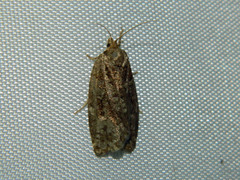
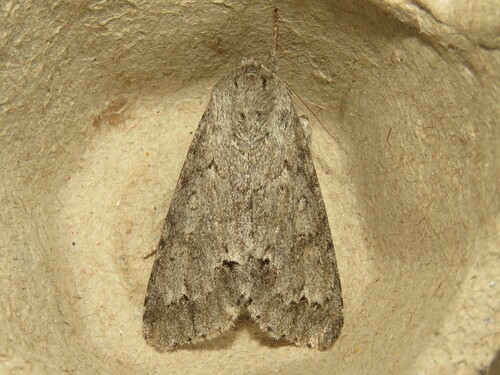
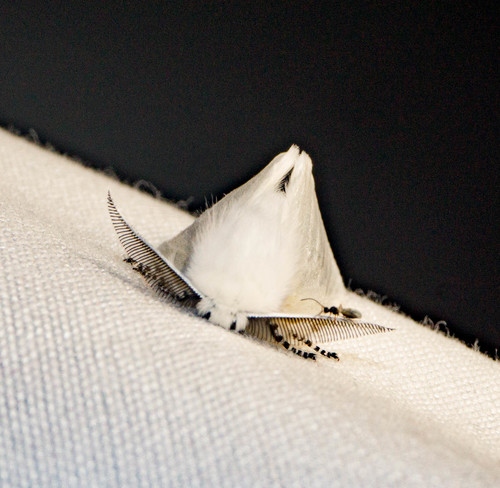
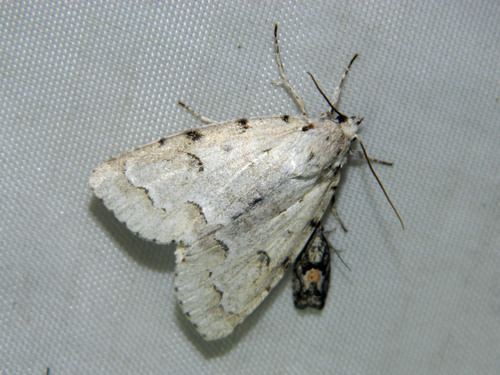
Spruce Budworm Moth

Spruce Budworm Moth

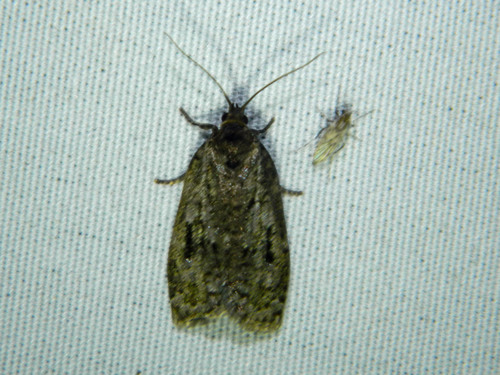
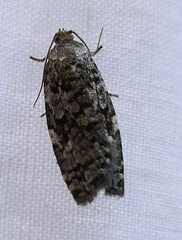
Choristoneura fumiferana

Daily sighting probability ~30% · Possible
at Gros Morne National Park

In 3 days ~60% in a week ~90%

31 Verified sightings at Gros Morne National Park From 2019 to 2026
46 In all 3 parks
July Best month
☀️ Diurnal When it's spotted

About the Spruce Budworm Moth

Choristoneura fumiferana, the eastern spruce budworm, is a species of moth of the family Tortricidae native to the eastern United States and Canada. The caterpillars feed on the needles of spruce and fir trees. Eastern spruce budworm populations can experience significant oscillations, with large outbreaks sometimes resulting in wide scale tree mortality. The first recorded outbreaks of the spruce budworm in the United States occurred in about 1807, and since 1909 there have been waves of budworm outbreaks throughout the eastern United States and Canada. In Canada, the major outbreaks occurred in periods circa 1910–20, c. 1940–50, and c. 1970–80, each of which impacted millions of hectares of forest. Longer-term tree-ring studies suggest that spruce budworm outbreaks have been recurring approximately every three decades since the 16th century, and paleoecological studies suggest the spruce budworm has been breaking out in eastern North America for thousands of years.

Budworm outbreaks can have significant economic impacts on the forestry industry. As a result, the eastern spruce budworm is considered one of the most destructive forest pests in North America, and various methods of control are utilized. However, the species is also ecologically important, and several bird species are specialised on feeding on budworms during the breeding season. Several theories exist to explain the cyclical budworm outbreaks. Wikipedia →
Global Distribution

Parks Where Found

# Park Country Daily sighting probability
1 Gros Morne National Park 🇨🇦 Canada
~30%
2 Isle Royale National Park 🇺🇸 United States
~20%
3 Banff National Park 🇨🇦 Canada
<5%

Cities Where Found

# City Country Daily sighting probability
1 Montreal 🇨🇦 Canada
<5%
2 Edmonton 🇨🇦 Canada
<5%
3 Toronto 🇨🇦 Canada
<5%
4 Chicago 🇺🇸 United States
<5%

Before you go

What are the chances of seeing a Spruce Budworm Moth in Gros Morne National Park?

Possible

About 30% of wildlife watchers report a Spruce Budworm Moth sighting in Gros Morne National Park on a given day, based on 31 verified sightings from GBIF citizen-science data from 2019 to 2026. It is the 9th most-seen of the 83 insects we can rate there. Over three days the chance rises to about 60%, and over a week to about 90%, if each day is a fresh chance.

When is the best time to see a Spruce Budworm Moth in Gros Morne National Park?

July

In that month about 40% of wildlife watchers report a Spruce Budworm Moth in Gros Morne National Park on a given day, against under 5% in March–May and September–November, the lowest months.

What time of day is best to see a Spruce Budworm Moth?

Between 9 am and noon

Across all the parks we cover, that three-hour window holds the most Spruce Budworm Moth sightings with a recorded time, and about 9 in 10 of them come between 6 am and 6 pm: it is a daytime animal.

Is Gros Morne National Park the best place to see a Spruce Budworm Moth?

Yes

Of the 3 parks where we can rate Spruce Budworm Moth sightings, Gros Morne National Park has the highest daily chance: about 30%. Next come Isle Royale National Park (United States, about 20%) and Banff National Park (Canada, under 5%).

Which relatives of the Spruce Budworm Moth live in Gros Morne National Park?

Same order: Lepidoptera

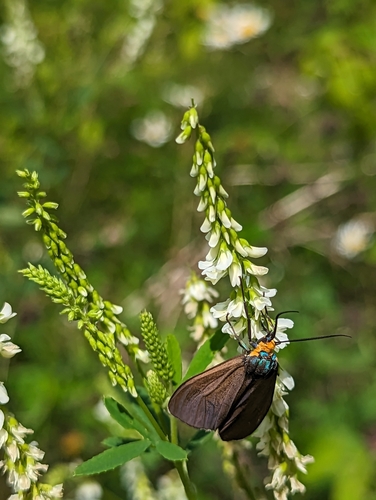
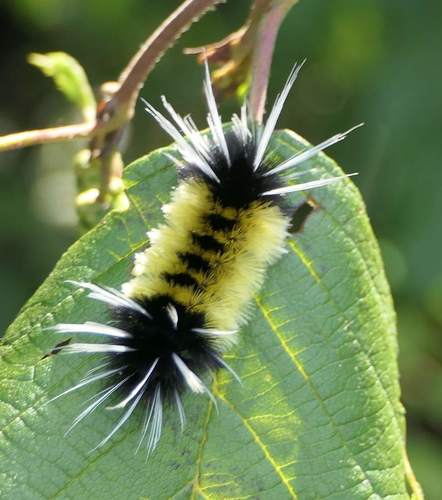
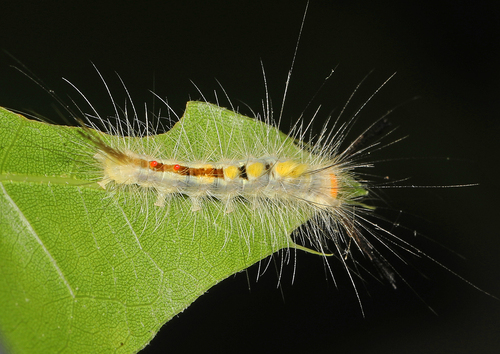
The closest relatives of the Spruce Budworm Moth that you can see in Gros Morne National Park (order Lepidoptera, Butterflies and Moths) are Virginia Ctenucha Moth (about 40%), Spotted Tussock Moth (about 40%) and White-Marked Tussock Moth (about 30%), with each one's daily chance of a sighting.

Where does the Spruce Budworm Moth sighting chance come from?

GBIF citizen-science records

It is estimated from how often the Spruce Budworm Moth is recorded against all the insects logged in Gros Morne National Park (31 verified sightings from 2019 to 2026), calibrated against known sighting rates. Figures are rounded to the nearest 10% because citizen-science data supports honest approximations, not decimals, and months with records from fewer than five people show "—". How it works.

← Back to Gros Morne National Park