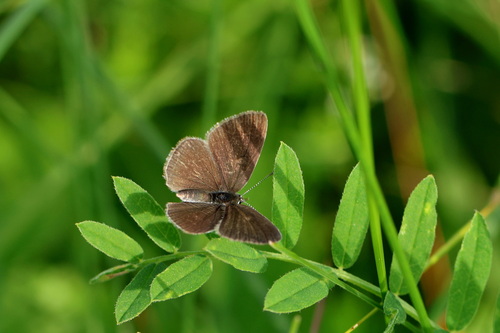
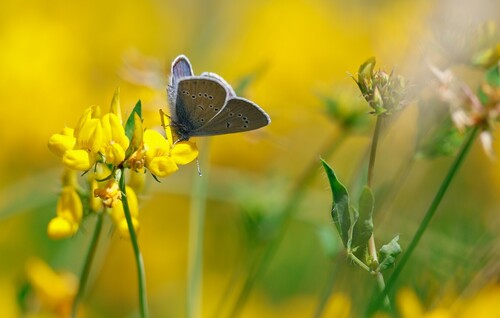
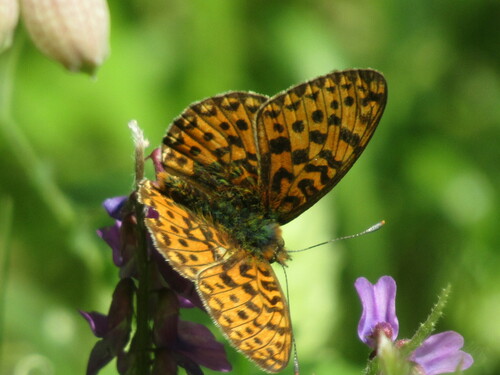
Dark-Veined White

Dark-Veined White

Pieris bryoniae

Daily sighting probability ~20% · Possible
at Hohe Tauern National Park

In 3 days ~50% in a week ~80%

18 Verified sightings at Hohe Tauern National Park From 2019 to 2026
91 In all 4 parks
May Best month
☀️ Diurnal When it's spotted

About the Dark-Veined White

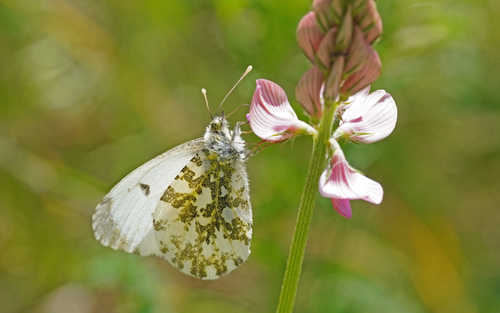
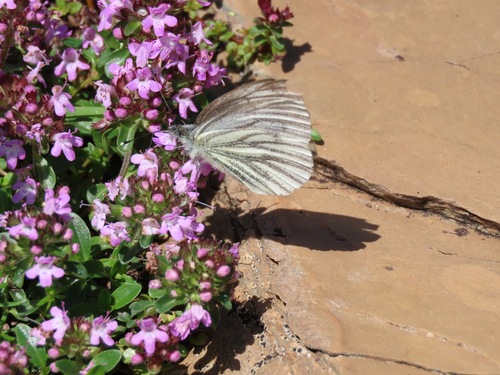
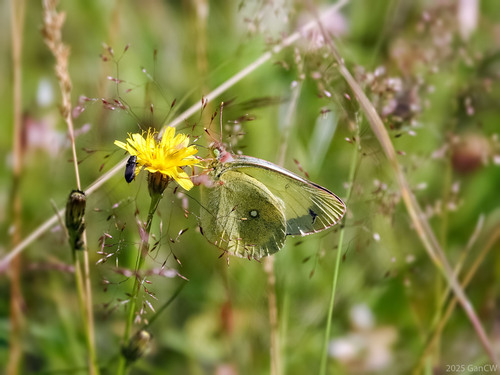
Pieris bryoniae, the dark-veined white or mountain green-veined white, is a Palearctic butterfly of the family Pieridae. It has variously been considered to be a full species, a subspecies of Pieris napi or a superspecies complex.

Seitz-bryoniae (21c), which inhabits the Alps, Northern Scandinavia and the mountains of Asia Minor; the male of the latter is rather more narrow-winged than napi-males, not bearing any markings on the forewing above except the blackish apical and basal areas; the female has a yellowish ground-colour, which is however more or less suppressed by the great extent of the dark scaling situated along the veins. Among the females there occur specimens in which the discal spots and the vein-streaks of the forewing are strongly obsolescent, there being consequently no prominent marking; we name this form ab. obsoleta nov.;

individuals in which the yellowish ground-colour, especially on the forewing, is almost entirely suppressed by the greater extension of the dark scaling may be named ab. concolor nov..The form kamtschadalis Bang-Haas i. 1., from Kamchatka, is in the female somewhat paler than bryoniaeand the discal spots of... Wikipedia →
Global Distribution

Parks Where Found

# Park Country Daily sighting probability
1 Triglav National Park 🇸🇮 Slovenia
~30%
2 Hohe Tauern National Park 🇦🇹 Austria
~20%
3 Mercantour National Park 🇫🇷 France
~20%
4 Vanoise National Park 🇫🇷 France
~10%

Before you go

What are the chances of seeing a Dark-Veined White in Hohe Tauern National Park?

Possible

About 20% of wildlife watchers report a Dark-Veined White sighting in Hohe Tauern National Park on a given day, based on 18 verified sightings from GBIF citizen-science data from 2019 to 2026. It is the 34th most-seen of the 165 insects we can rate there. Over three days the chance rises to about 50%, and over a week to about 80%, if each day is a fresh chance.

When is the best time to see a Dark-Veined White in Hohe Tauern National Park?

April and May

In those months about 40% of wildlife watchers report a Dark-Veined White in Hohe Tauern National Park on a given day, against under 5% in February–March and August–September, the lowest months. December has too few records to rate.

What time of day is best to see a Dark-Veined White?

Between 10 am and 1 pm

Across all the parks we cover, that three-hour window holds the most Dark-Veined White sightings with a recorded time, and nearly all of them come between 6 am and 6 pm: it is a daytime animal.

Is Hohe Tauern National Park the best place to see a Dark-Veined White?

2nd of 4

Of the 4 parks where we can rate Dark-Veined White sightings, Hohe Tauern National Park ranks 2nd at about 20%. The best odds are in Triglav National Park (Slovenia, about 30%).

Which relatives of the Dark-Veined White live in Hohe Tauern National Park?

Same family: Pieridae

The closest relatives of the Dark-Veined White that you can see in Hohe Tauern National Park (family Pieridae, Whites, Yellows, and Sulphurs) are Moorland Clouded Yellow (about 20%), Mountain Clouded Yellow (about 20%) and Orange-Tip (about 10%), with each one's daily chance of a sighting.

Where does the Dark-Veined White sighting chance come from?

GBIF citizen-science records

It is estimated from how often the Dark-Veined White is recorded against all the insects logged in Hohe Tauern National Park (18 verified sightings from 2019 to 2026), calibrated against known sighting rates. Figures are rounded to the nearest 10% because citizen-science data supports honest approximations, not decimals, and months with records from fewer than five people show "—". How it works.

← Back to Hohe Tauern National Park