Small Blue

Small Blue

Cupido minimus

Daily sighting probability ~30% · Possible
at Hohe Tauern National Park

In 3 days ~70% in a week ~90%

55 Verified sightings at Hohe Tauern National Park From 2019 to 2026
308 In all 10 parks
June Best month
☀️ Diurnal When it's spotted

About the Small Blue

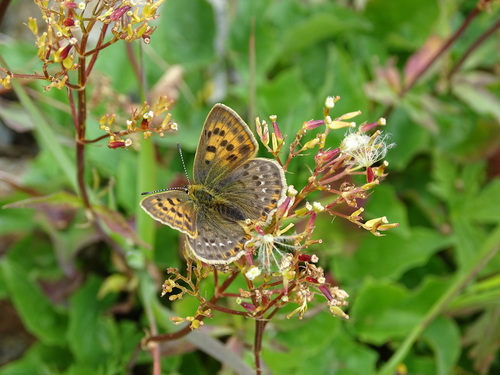
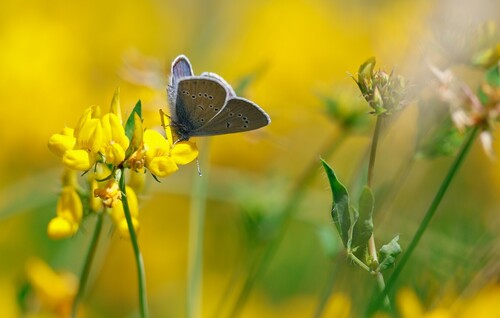
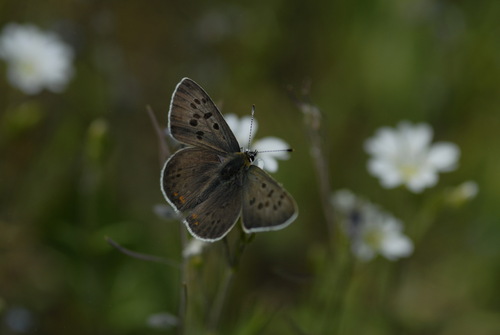
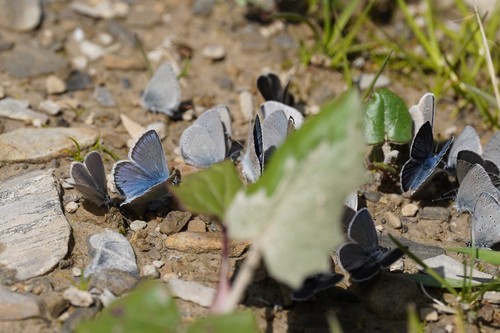
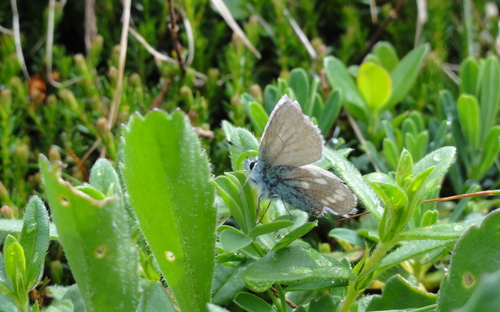
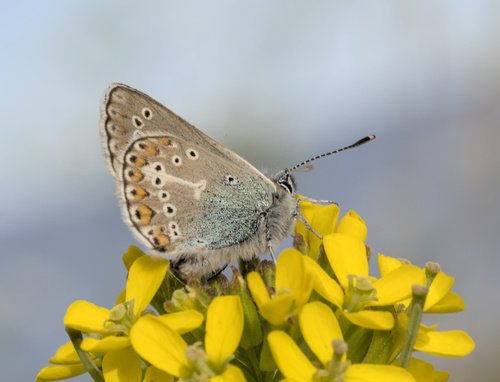
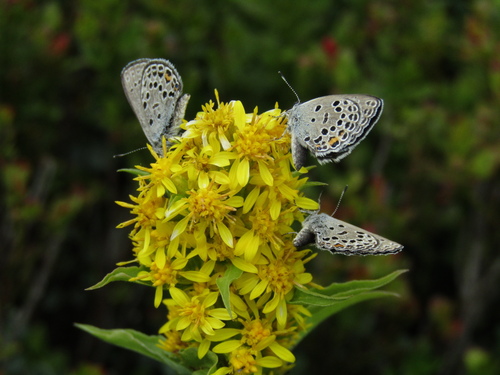
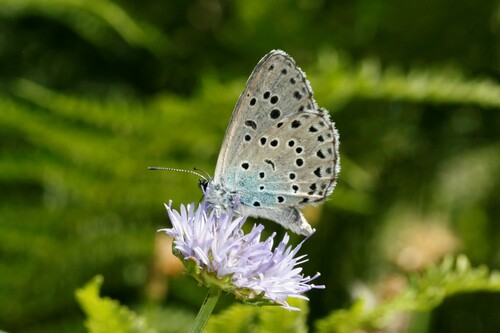
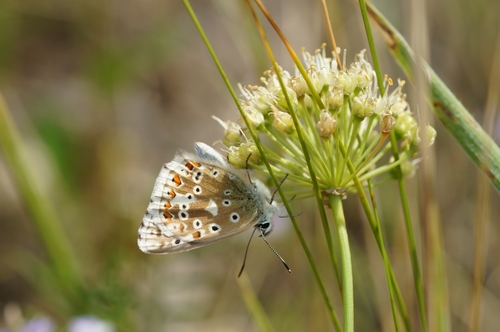
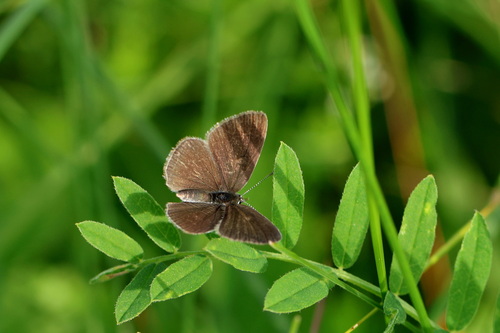
The small blue (Cupido minimus) is a Palearctic butterfly in the family Lycaenidae. Despite its common name, it is not particularly blue. The male has some bluish suffusion at the base of its upper wings but is mostly dark brown like the female. The species can live in colonies of up to several hundred and in its caterpillar stage is cannibalistic.

Small blue males are dark brown with a scattering of bright blue scales that speckle their wings. Females lack this blue speckling. Both males and females exhibit the characteristic silver underside with black spots. The male has a bluish tint at the base of its wings similar to the upper side. Their wingspan can fall anywhere from 16-27mm, but males tend to be the smaller sex. Small blues are often confused with the female Osiris Blue, whose coloring is similar to that of the male small blue.

C. minimus is found in Europe, Asia Minor, Transcaucasia, Tian-Shan, western Siberia, central Siberia, southern Siberia, the Russian Far East, Amur, Mongolia, Magadan and Kamchatka. The small blue is the smallest butterfly species found in the United Kingdom. It has a very patchy distribution... Wikipedia →
Global Distribution

Parks Where Found

# Park Country Daily sighting probability
1 Hohe Tauern National Park 🇦🇹 Austria
~30%
2 Vanoise National Park 🇫🇷 France
~30%
3 Mercantour National Park 🇫🇷 France
~20%
4 Triglav National Park 🇸🇮 Slovenia
~20%
5 Aigüestortes National Park 🇪🇸 Spain
~20%
6 Picos de Europa National Park 🇪🇸 Spain
~10%
7 Cévennes National Park 🇫🇷 France
~10%
8 Pyrénées National Park 🇫🇷 France
~10%
9 Ecrins National Park 🇫🇷 France
~10%
10 Sierra de Guadarrama National Park 🇪🇸 Spain
<5%

Cities Where Found

# City Country Daily sighting probability
1 Munich 🇩🇪 Germany
~10%
2 Budapest 🇭🇺 Hungary
~10%
3 Nizhny Novgorod 🇷🇺 Russia
<5%
4 Prague 🇨🇿 Czechia
<5%
5 Vienna 🇦🇹 Austria
<5%
6 London 🇬🇧 United Kingdom
<5%

Before you go

What are the chances of seeing a Small Blue in Hohe Tauern National Park?

Possible

About 30% of wildlife watchers report a Small Blue sighting in Hohe Tauern National Park on a given day, based on 55 verified sightings from GBIF citizen-science data from 2019 to 2026. It is the 7th most-seen of the 165 insects we can rate there. Over three days the chance rises to about 70%, and over a week to about 90%, if each day is a fresh chance.

When is the best time to see a Small Blue in Hohe Tauern National Park?

June

In that month about 60% of wildlife watchers report a Small Blue in Hohe Tauern National Park on a given day, against under 5% in September, the lowest month. December has too few records to rate.

What time of day is best to see a Small Blue?

Between 10 am and 1 pm

Across all the parks we cover, that three-hour window holds the most Small Blue sightings with a recorded time, and nearly all of them come between 6 am and 6 pm: it is a daytime animal.

Is Hohe Tauern National Park the best place to see a Small Blue?

Yes

Of the 10 parks where we can rate Small Blue sightings, Hohe Tauern National Park has the highest daily chance: about 30%. Next come Vanoise National Park (France, about 30%) and Mercantour National Park (France, about 20%).

Which relatives of the Small Blue live in Hohe Tauern National Park?

Same family: Lycaenidae

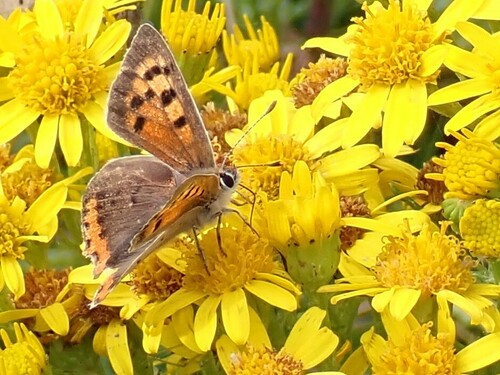
The closest relatives of the Small Blue that you can see in Hohe Tauern National Park (family Lycaenidae, Gossamer-winged Butterflies) are Scarce Copper (about 50%), Mazarine Blue (about 30%) and Sooty Copper (about 30%), with each one's daily chance of a sighting.

Where does the Small Blue sighting chance come from?

GBIF citizen-science records

It is estimated from how often the Small Blue is recorded against all the insects logged in Hohe Tauern National Park (55 verified sightings from 2019 to 2026), calibrated against known sighting rates. Figures are rounded to the nearest 10% because citizen-science data supports honest approximations, not decimals, and months with records from fewer than five people show "—". How it works.

← Back to Hohe Tauern National Park