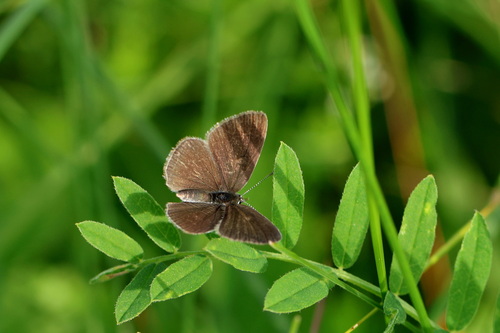
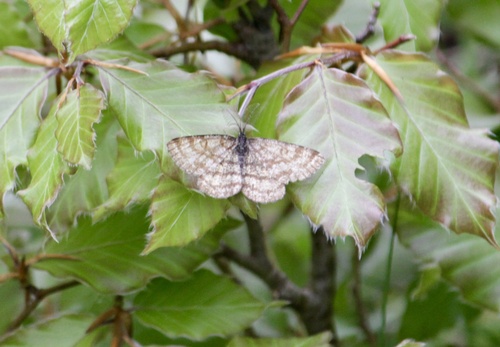
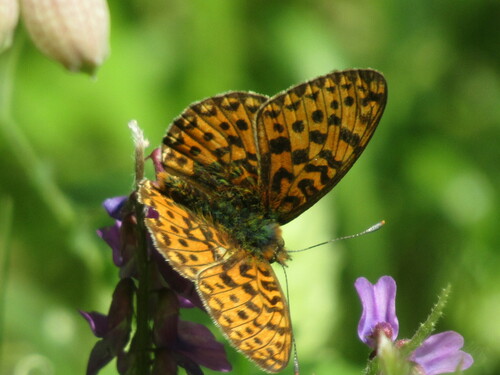
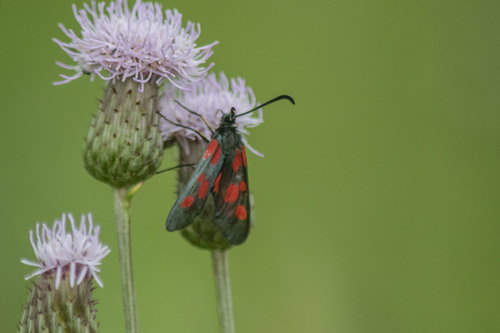
New Forest Burnet

New Forest Burnet

Zygaena viciae

Daily sighting probability ~10% · With luck
at Hohe Tauern National Park

In 3 days ~30% in a week ~50%

6 Verified sightings at Hohe Tauern National Park From 2019 to 2026
14 In all 2 parks
July Best month
☀️ Diurnal When it's spotted

About the New Forest Burnet

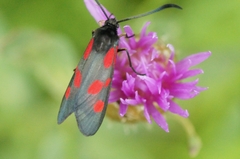
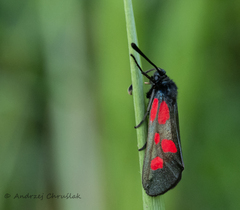
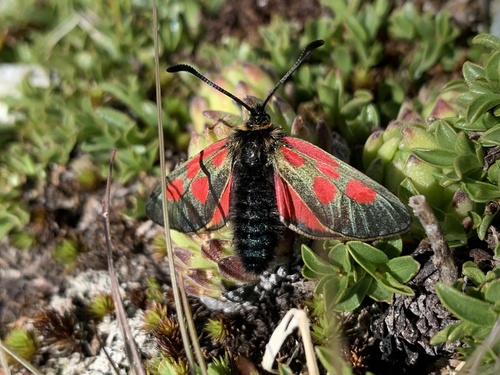
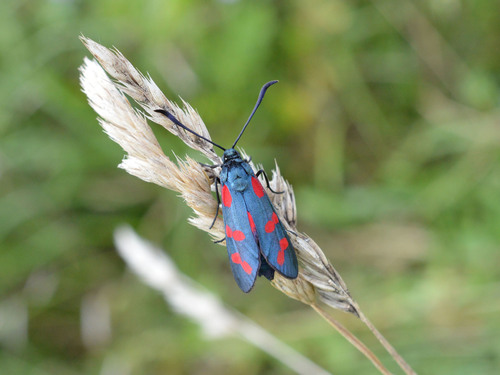
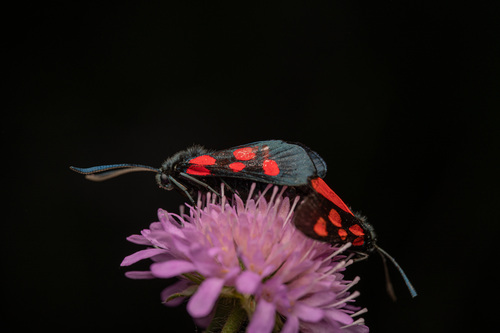
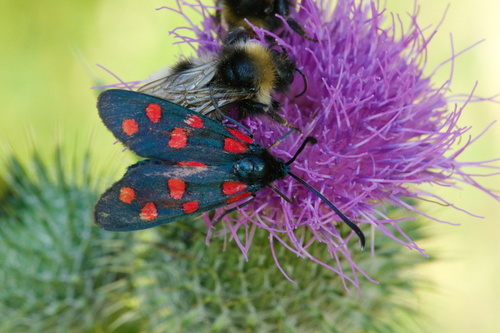
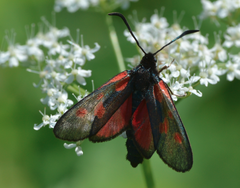
Zygaena viciae, the New Forest burnet moth, is a member of the Zygaenidae family, found in the northern hemisphere. Since 1927 it has been extinct in the New Forest, England, after which it is named. It is also known in Europe as the small five-spotted ram.

The moth is found in southern and central Europe, and in Scotland (Z. v. argylliensis), where it survives in very small numbers. It is also found in southern Scandinavia. In the east, the range extends to Lake Baikal. Pale green/yellow eggs are laid in clusters. The larvae feed on the leaves of clover and vetch species. Their appearance varies with region, but they are generally green, with yellow and black spots. They pupate within a cocoon attached to foliage. The adults' wingspan is 22–32 mm, they fly by day, and they are on wing in July.

Šašić, Martina; Nahirnić, Ana; Tarmann, Gerhard M. (2016-12-31). "Zygaenidae (Lepidoptera) in the Lepidoptera collections of the Croatian Natural History Museum". Natura Croatica: Periodicum Musei Historiae Naturalis Croatici. 25 (2): 233–248. doi:10.20302/NC.2016.25.19. eISSN 1848... Wikipedia →
Global Distribution

Parks Where Found

# Park Country Daily sighting probability
1 Hohe Tauern National Park 🇦🇹 Austria
~10%
2 Pyrénées National Park 🇫🇷 France
<5%

Cities Where Found

# City Country Daily sighting probability
1 Moscow 🇷🇺 Russia
<5%

Before you go

What are the chances of seeing a New Forest Burnet in Hohe Tauern National Park?

With luck

About 10% of wildlife watchers report a New Forest Burnet sighting in Hohe Tauern National Park on a given day, based on 6 verified sightings from GBIF citizen-science data from 2019 to 2026. It is the 142nd most-seen of the 165 insects we can rate there. Over three days the chance rises to about 30%, and over a week to about 50%, if each day is a fresh chance.

When is the best time to see a New Forest Burnet in Hohe Tauern National Park?

July

In that month about 20% of wildlife watchers report a New Forest Burnet in Hohe Tauern National Park on a given day, against under 5% in January–June and August–October, the lowest months. December has too few records to rate.

What time of day is best to see a New Forest Burnet?

Between 10 am and 1 pm

Across all the parks we cover, that three-hour window holds the most New Forest Burnet sightings with a recorded time, and about 9 in 10 of them come between 6 am and 6 pm: it is a daytime animal.

Is Hohe Tauern National Park the best place to see a New Forest Burnet?

Yes

Of the 2 parks where we can rate New Forest Burnet sightings, Hohe Tauern National Park has the highest daily chance: about 10%. Next come Pyrénées National Park (France, under 5%).

Which relatives of the New Forest Burnet live in Hohe Tauern National Park?

Same genus: Zygaena

The closest relatives of the New Forest Burnet that you can see in Hohe Tauern National Park (genus Zygaena) are Mountain Burnet (about 40%), Six-Spot Burnet (about 30%) and Narrow-Bordered Five-Spot Burnet (about 20%), with each one's daily chance of a sighting.

Where does the New Forest Burnet sighting chance come from?

GBIF citizen-science records

It is estimated from how often the New Forest Burnet is recorded against all the insects logged in Hohe Tauern National Park (6 verified sightings from 2019 to 2026), calibrated against known sighting rates. Figures are rounded to the nearest 10% because citizen-science data supports honest approximations, not decimals, and months with records from fewer than five people show "—". How it works.

← Back to Hohe Tauern National Park