Great Bustard

Great Bustard

Otis tarda

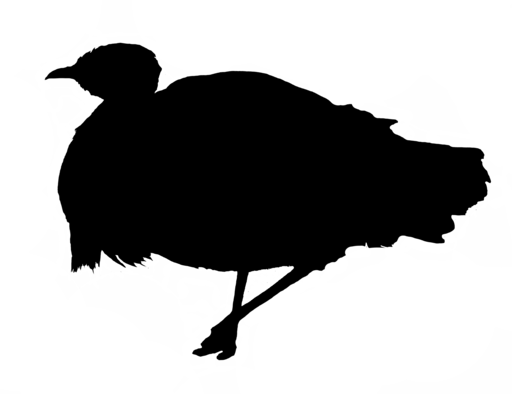
Silhouette: Kai Caspar · PhyloPic

LCNTVUENEndangeredCR
Daily sighting probability ~10% · With luck
at Hortobágy National Park

In 3 days ~20% in a week ~30%

39 Verified sightings at Hortobágy National Park From 2019 to 2026
1,181 In all 4 parks
March Best month
☀️ Diurnal When it's spotted

About the Great Bustard

The great bustard (Otis tarda) is a bird in the bustard family, and the only living member of the genus Otis. It breeds in open grasslands and farmland from northern Morocco, South and Central Europe to temperate Central and East Asia. European populations are mainly resident, but Asian populations migrate farther south in winter. Endangered as of 2023, it had been listed as a Vulnerable species on the IUCN Red List since 1996.

Portugal and Spain now host about 60% of the world's great bustard population. The species was extirpated in Great Britain in the 19th century, when the last bird was shot in 1832. Since 1998, The Great Bustard Group have helped reintroduce it to England on Salisbury Plain, a British Army training area. Here, the lack of public access and disturbance allows them the seclusion they desire as a large, ground-nesting bird.

The genus name Otis was introduced in 1758 by the Swedish naturalist Carl Linnaeus in the tenth edition of his Systema Naturae; it came from the Greek name ὠτίς ōtis used for this species taken from Natural History by Pliny the Elder published around 77 AD which briefly mentions a bird like it, it was also given the name ωτιδος... Wikipedia →

Sounds

Call0:15

Spain · 2026

© Esperanza Poveda · XC1154916 · CC BY-NC-SA 4.0

Flight call0:13

Austria · 2020

© Jarek Matusiak · XC595430 · CC BY-NC-SA 4.0

Call0:15

Germany · 2022

© Lars Lachmann · XC721834 · CC BY-NC-SA 4.0

Global Distribution

Parks Where Found

# Park Country Daily sighting probability
1 Kiskunság National Park 🇭🇺 Hungary
~40%
2 Fertő-Hanság National Park 🇭🇺 Hungary
~30%
3 Hortobágy National Park 🇭🇺 Hungary
~10%
4 Monfragüe National Park 🇪🇸 Spain
<5%

Cities Where Found

# City Country Daily sighting probability
1 Beijing 🇨🇳 China
<5%
2 Madrid 🇪🇸 Spain
<5%

Zoos & Centres Where Found

# Zoo / Centre Country
1 Everland 🇰🇷 South Korea In captivity
2 Watatunga Wildlife Reserve 🇬🇧 United Kingdom In captivity
3 Nikolaev Zoo 🇺🇦 Ukraine In captivity
4 Kinderbauernhof auf dem Görlitzer 🇩🇪 Germany In captivity
5 Kharkiv Dolphinarium 🇺🇦 Ukraine In captivity
6 Bird Park 🇷🇺 Russia In captivity
7 hipopotamiarnia i akwarium morskie warszawskiego ZOO 🇵🇱 Poland In captivity

Before you go

What are the chances of seeing a Great Bustard in Hortobágy National Park?

With luck

About 10% of wildlife watchers report a Great Bustard sighting in Hortobágy National Park on a given day, based on 39 verified sightings from GBIF citizen-science data from 2019 to 2026. It is the 150th most-seen of the 202 birds we can rate there. Over three days the chance rises to about 20%, and over a week to about 30%, if each day is a fresh chance.

When is the best time to see a Great Bustard in Hortobágy National Park?

March

In that month about 20% of wildlife watchers report a Great Bustard in Hortobágy National Park on a given day, against under 5% in May, July and October–February, the lowest months.

What time of day is best to see a Great Bustard?

Between 9 am and noon

Across all the parks we cover, that three-hour window holds the most Great Bustard sightings with a recorded time, and about 8 in 10 of them come between 6 am and 6 pm: it is a daytime animal.

Is Hortobágy National Park the best place to see a Great Bustard?

3rd of 4

Of the 4 parks where we can rate Great Bustard sightings, Hortobágy National Park ranks 3rd at about 10%. The best odds are in Kiskunság National Park (Hungary, about 40%) and Fertő-Hanság National Park (Hungary, about 30%).

Where does the Great Bustard sighting chance come from?

GBIF citizen-science records

It is estimated from how often the Great Bustard is recorded against all the birds logged in Hortobágy National Park (39 verified sightings from 2019 to 2026), calibrated against known sighting rates. Figures are rounded to the nearest 10% because citizen-science data supports honest approximations, not decimals, and months with records from fewer than five people show "—". How it works.

← Back to Hortobágy National Park