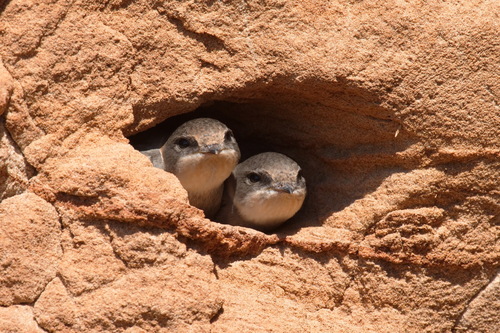
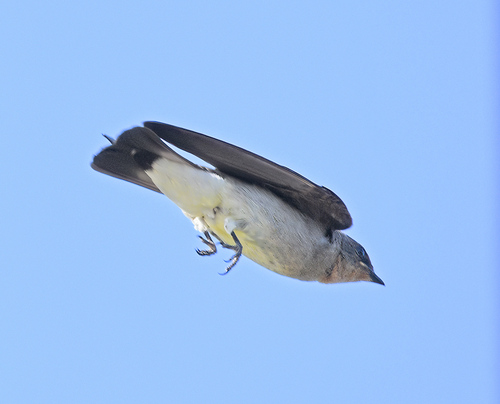
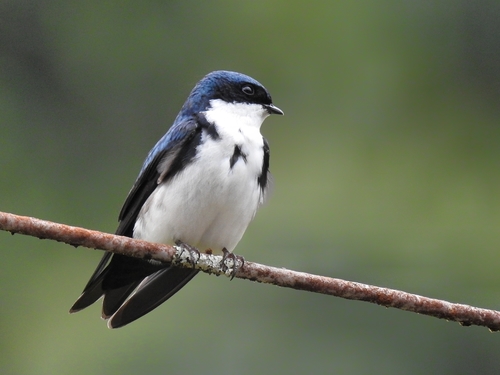
Chilean Swallow

Chilean Swallow

Tachycineta leucopyga

Silhouette: Edwin Price · PhyloPic

Daily sighting probability <5% · Rare
at Iberá National Park

In 3 days ~10% in a week ~30%

90 Verified sightings at Iberá National Park From 2019 to 2026
2,925 In all 6 parks
June Best month
☀️ Diurnal When it's spotted

About the Chilean Swallow

The Chilean swallow (Tachycineta leucopyga) is a species of bird in the family Hirundinidae. It breeds in Chile and Patagonia, migrating north as far as Bolivia, Paraguay, and Rio Grande do Sul. The new genus Tachycineta was created for this group of swallows by German ornithologist Jean Cabanis in 1850. The current genus name Tachycineta, is from Ancient Greek takhukinetos, "moving quickly", and the specific meyeni commemorates Prussian botanist and collector Franz Meyen. Some consider the species name to be leucopyga, which is what the species name originally was. This species, along with the white-rumped swallow, T. leucorrhoa, form a superspecies. This species is monotypic.

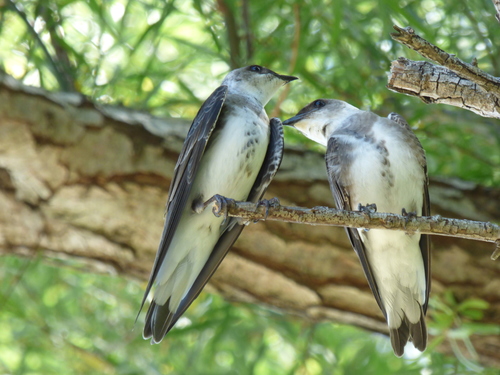
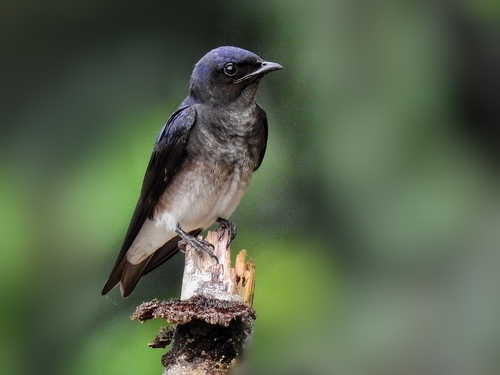
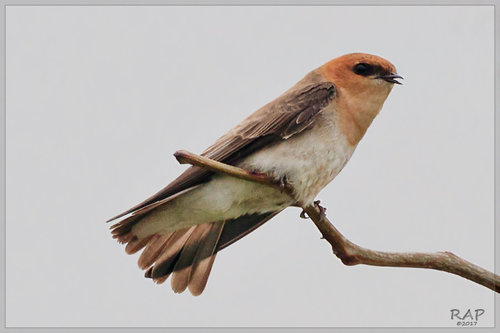
The Chilean swallow is about 13 centimetres (5.1 in) in length and weighs 15–20 grams (0.53–0.71 oz). It is glossy blue-black above and white below with a white rump. Its wings and tail are black, with white tips on its inner secondaries and its tertials. Their underwing coverts and auxiliaries are both grey. The Chilean swallow's bill and legs are black. The sexes are alike, and the juveniles are duller and browner.

It is similar to the white-rumped swallow, but... Wikipedia →

Sounds

Flight call0:19

Chile · 2025

© Marc Anderson · XC1075057 · CC BY-NC-ND 4.0

Song0:30

Chile · 2018

© Peter Boesman · XC450173 · CC BY-NC-ND 4.0

Alarm call0:07

Argentina · 2005

© Bernabe Lopez-Lanus · XC46816 · CC BY-NC-SA 3.0

Global Distribution

Parks Where Found

# Park Country Daily sighting probability
1 Vicente Pérez Rosales National Park 🇨🇱 Chile
~60%
2 Tierra del Fuego National Park 🇦🇷 Argentina
~60%
3 Torres del Paine National Park 🇨🇱 Chile
~60%
4 Nahuel Huapi National Park 🇦🇷 Argentina
~40%
5 Península Valdés 🇦🇷 Argentina
~10%
6 Iberá National Park 🇦🇷 Argentina
<5%

Cities Where Found

# City Country Daily sighting probability
1 Santiago 🇨🇱 Chile
~50%
2 Mendoza 🇦🇷 Argentina
<5%
3 Buenos Aires 🇦🇷 Argentina
<5%
4 Montevideo 🇺🇾 Uruguay
<5%

Before you go

What are the chances of seeing a Chilean Swallow in Iberá National Park?

Rare

Under 5% of wildlife watchers report a Chilean Swallow sighting in Iberá National Park on a given day, based on 90 verified sightings from GBIF citizen-science data from 2019 to 2026. It is the 190th most-seen of the 284 birds we can rate there. Over three days the chance rises to about 10%, and over a week to about 30%, if each day is a fresh chance.

When is the best time to see a Chilean Swallow in Iberá National Park?

June

In that month about 30% of wildlife watchers report a Chilean Swallow in Iberá National Park on a given day, against under 5% in October to April, the lowest months.

What time of day is best to see a Chilean Swallow?

Between 10 am and 1 pm

Across all the parks we cover, that three-hour window holds the most Chilean Swallow sightings with a recorded time, and about 8 in 10 of them come between 6 am and 6 pm: it is a daytime animal.

Where does the Chilean Swallow sighting chance come from?

GBIF citizen-science records

It is estimated from how often the Chilean Swallow is recorded against all the birds logged in Iberá National Park (90 verified sightings from 2019 to 2026), calibrated against known sighting rates. Figures are rounded to the nearest 10% because citizen-science data supports honest approximations, not decimals, and months with records from fewer than five people show "—". How it works.

← Back to Iberá National Park