Marsh Seedeater

Marsh Seedeater

Sporophila palustris

Silhouette: Sheatherius · PhyloPic

LCNTVUENEndangeredCR
Daily sighting probability ~10% · With luck
at Iberá National Park

In 3 days ~20% in a week ~50%

142 Verified sightings at Iberá National Park From 2019 to 2026
142 In 1 park
December Best month
☀️ Diurnal When it's spotted

About the Marsh Seedeater

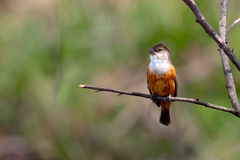
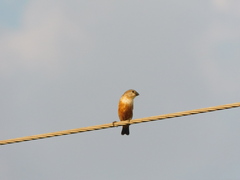
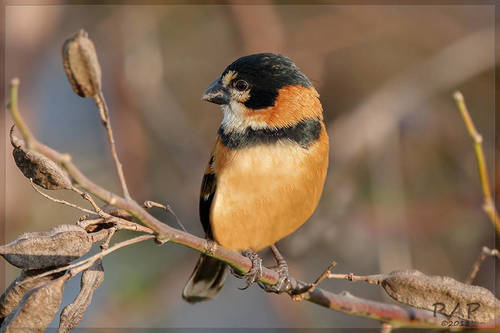
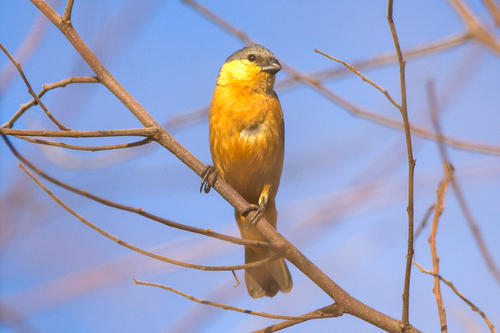
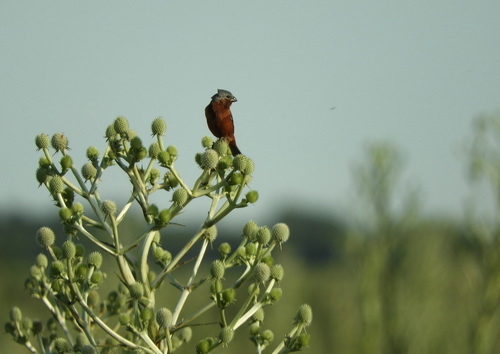
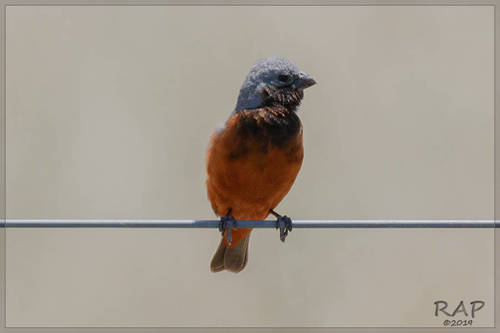
The marsh seedeater (Sporophila palustris) is a species of bird in the family Thraupidae. It is sexually dichromic, with the males sporting a bright white throat, grey crown and chestnut belly, and the females resembling other brown female seedeaters.

It is found in Argentina, Brazil, Paraguay, and Uruguay. It is migratory, breeding in wet grasslands and marshes around Uruguay and Argentina and migrating northwards in the austral winter to wet and dry grasslands in southern Brazil.

It is threatened by habitat loss, trapping for the pet trade, and pesticides. It is currently protected across most of its range and several protected areas may help safeguard this species. A rare seedeater very similar to this species breeds in the Entre Ríos province of Argentina, and a few individuals have been found in Corrientes province and in southern Brazil, eastern Paraguay, and southeastern Uruguay. It has been listed as a separate species, Sporophila zelichi, the Entre Ríos, white-collared, Zelich's, or Narosky's seedeater. Differences are that it has a wide white collar all the way around the neck; the back is chestnut, not grey; and the rufous of the belly is... Wikipedia →

Sounds

Call0:32

Brazil · 2021

© JAYRSON ARAUJO DE OLIVEIRA · XC686956 · CC BY-NC-SA 4.0

Song0:54

Argentina · 2008

© Bernabe Lopez-Lanus · XC47161 · CC BY-NC-SA 3.0

Call0:34

Argentina · 2002

© Jeremy Minns · XC84742 · CC BY-NC-SA 3.0

Global Distribution

Parks Where Found

# Park Country Daily sighting probability
1 Iberá National Park 🇦🇷 Argentina
~10%

More parks will be added in future updates.

Before you go

What are the chances of seeing a Marsh Seedeater in Iberá National Park?

With luck

About 10% of wildlife watchers report a Marsh Seedeater sighting in Iberá National Park on a given day, based on 142 verified sightings from GBIF citizen-science data from 2019 to 2026. It is the 166th most-seen of the 284 birds we can rate there. Over three days the chance rises to about 20%, and over a week to about 50%, if each day is a fresh chance.

When is the best time to see a Marsh Seedeater in Iberá National Park?

December to February

In those months about 20% of wildlife watchers report a Marsh Seedeater in Iberá National Park on a given day, against under 5% in April to September, the lowest months.

What time of day is best to see a Marsh Seedeater?

Between 9 am and noon

Across all the parks we cover, that three-hour window holds the most Marsh Seedeater sightings with a recorded time, and about 8 in 10 of them come between 6 am and 6 pm: it is a daytime animal.

Where else can you see a Marsh Seedeater?

Only Iberá National Park, in our data

Iberá National Park is the only park on Wallace's Line with enough records to rate Marsh Seedeater sightings: about 10% of wildlife watchers there report one on a given day.

Which relatives of the Marsh Seedeater live in Iberá National Park?

Same genus: Sporophila

The closest relatives of the Marsh Seedeater that you can see in Iberá National Park (genus Sporophila, Typical Seedeaters and Seed-Finches) are Rusty-collared Seedeater (about 30%), Double-collared Seedeater (about 20%) and Iberá Seedeater (about 20%), with each one's daily chance of a sighting.

Where does the Marsh Seedeater sighting chance come from?

GBIF citizen-science records

It is estimated from how often the Marsh Seedeater is recorded against all the birds logged in Iberá National Park (142 verified sightings from 2019 to 2026), calibrated against known sighting rates. Figures are rounded to the nearest 10% because citizen-science data supports honest approximations, not decimals, and months with records from fewer than five people show "—". How it works.

← Back to Iberá National Park