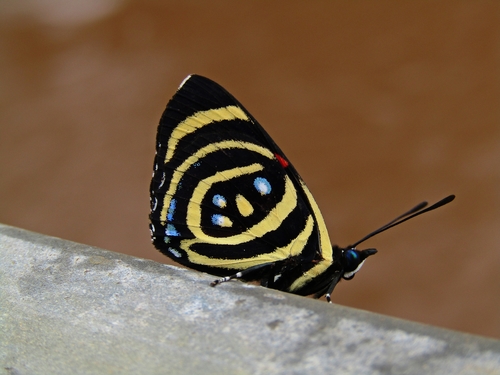
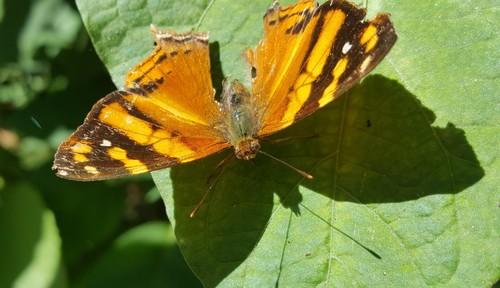
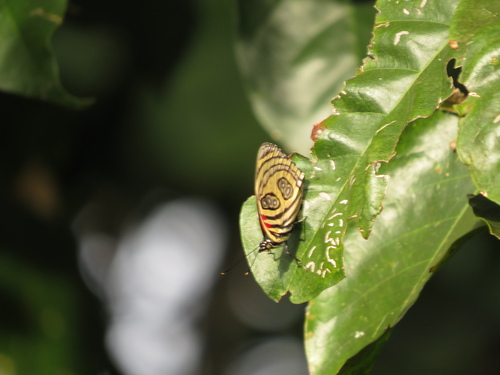
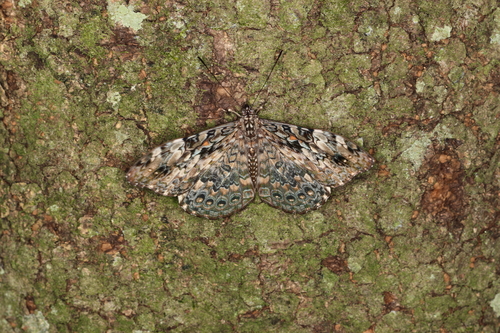
Eryphanis polyxena

Eryphanis polyxena

Eryphanis polyxena

Daily sighting probability ~10% · With luck
at Iguazú National Park

In 3 days ~20% in a week ~40%

8 Verified sightings at Iguazú National Park From 2019 to 2026
14 In all 2 parks
October Best month
☀️ Diurnal When it's spotted

About the Eryphanis polyxena

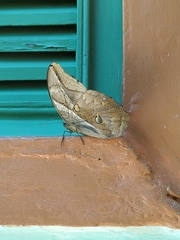
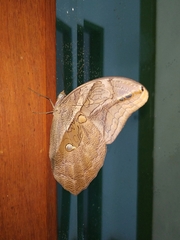
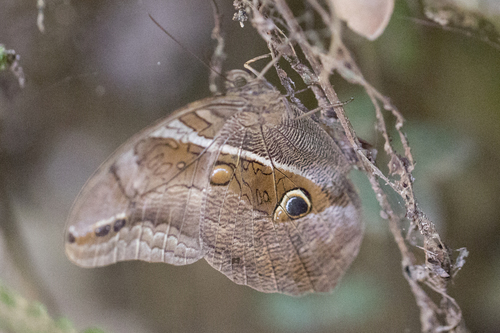
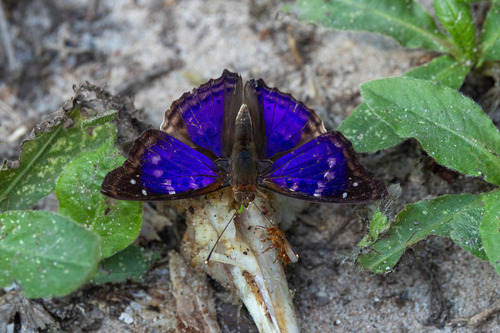
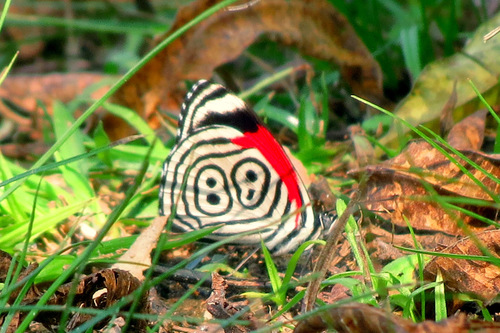
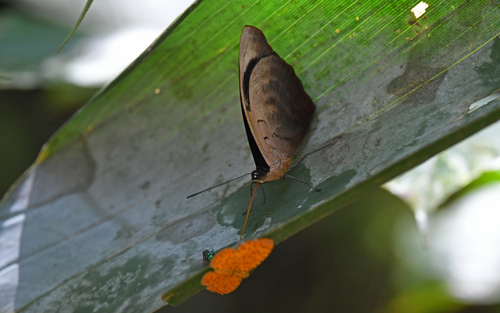
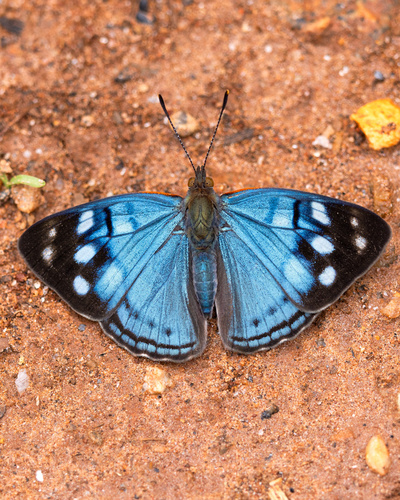
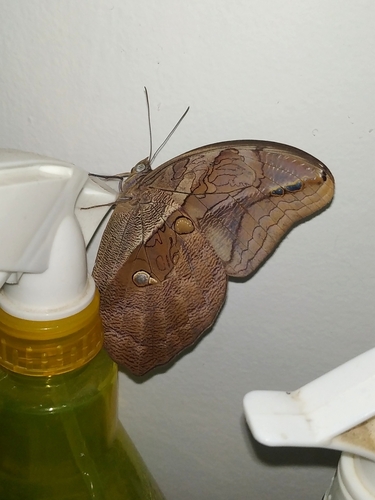
Eryphanis automedon, the Automedon giant owl, is a species of butterfly belonging to the family Nymphalidae. Eryphanis automedon has a wingspan reaching about 55–60 millimetres (2.2–2.4 in). In males the dorsal sides of the wings show night blue iridescent patches, extending from submedial to postmedial areas, with well defined borders separating the non-iridescent sections. Ventral sides vary from faded brown to caramel color, with various eyespots. The female wingspan is slightly larger, with a slightly different wing color pattern.

This butterfly can live up to six weeks and flies in the dark forests of Latin America. It is a fast flying butterfly. The caterpillars are cryptically colored and feed at night on Poaceae host plants (mainly bamboo leaves), of which the elongated chrysalis mimics the appearance of a dried leaf.

This butterfly is native to South America. It is present from Venezuela to the Guianas and Brazil and from Colombia to Paraguay, at an elevation of 0–1,000 metres (0–3,281 ft) above sea level. Eryphanis automedon automedon (Suriname) Eryphanis automedon lycomedon (C... Wikipedia →
Global Distribution

Parks Where Found

# Park Country Daily sighting probability
1 Iguazú National Park 🇦🇷 Argentina
~10%
2 Iguaçu National Park 🇧🇷 Brazil
~10%

Before you go

What are the chances of seeing an Eryphanis polyxena in Iguazú National Park?

With luck

About 10% of wildlife watchers report an Eryphanis polyxena sighting in Iguazú National Park on a given day, based on 8 verified sightings from GBIF citizen-science data from 2019 to 2026. It is the 204th most-seen of the 306 insects we can rate there. Over three days the chance rises to about 20%, and over a week to about 40%, if each day is a fresh chance.

When is the best time to see an Eryphanis polyxena in Iguazú National Park?

May–June and October–February

In those months about 10% of wildlife watchers report an Eryphanis polyxena in Iguazú National Park on a given day, against under 5% in March–April and July–September, the lowest months.

What time of day is best to see an Eryphanis polyxena?

Between 7 and 10 am

Across all the parks we cover, that three-hour window holds the most Eryphanis polyxena sightings with a recorded time, and nearly all of them come between 6 am and 6 pm: it is a daytime animal.

Is Iguazú National Park the best place to see an Eryphanis polyxena?

Yes

Of the 2 parks where we can rate Eryphanis polyxena sightings, Iguazú National Park has the highest daily chance: about 10%. Next come Iguaçu National Park (Brazil, about 10%).

Where does the Eryphanis polyxena sighting chance come from?

GBIF citizen-science records

It is estimated from how often the Eryphanis polyxena is recorded against all the insects logged in Iguazú National Park (8 verified sightings from 2019 to 2026), calibrated against known sighting rates. Figures are rounded to the nearest 10% because citizen-science data supports honest approximations, not decimals, and months with records from fewer than five people show "—". How it works.

← Back to Iguazú National Park