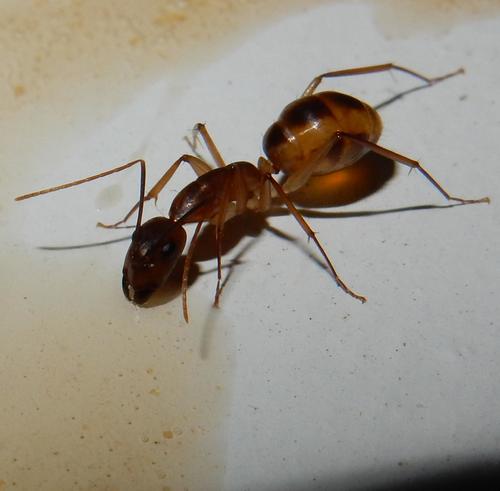
African Weaver Ant

African Weaver Ant

Oecophylla longinoda

Daily sighting probability ~30% · Possible
at iSimangaliso Wetland Park

In 3 days ~70% in a week ~90%

145 Verified sightings at iSimangaliso Wetland Park From 2019 to 2026
150 In all 2 parks
April Best month
☀️ Diurnal When it's spotted

About the African Weaver Ant

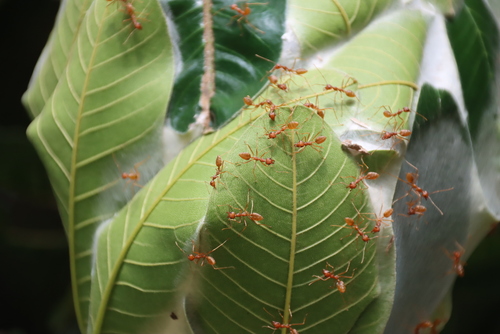
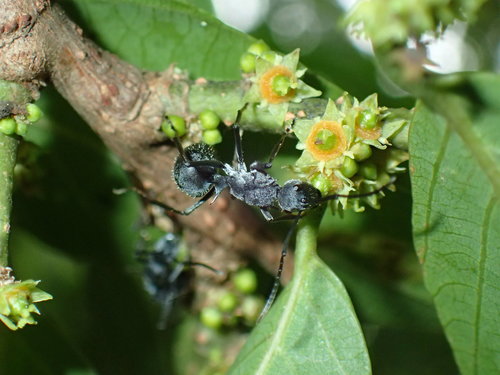
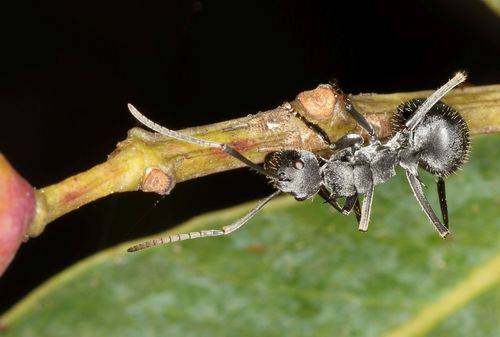
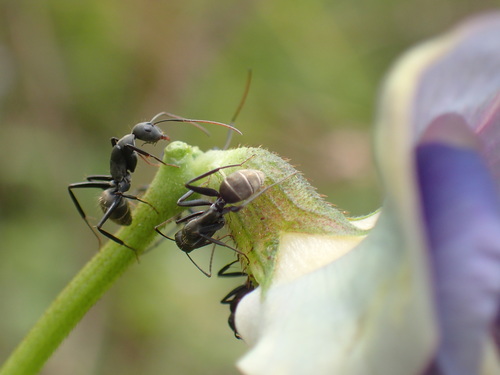
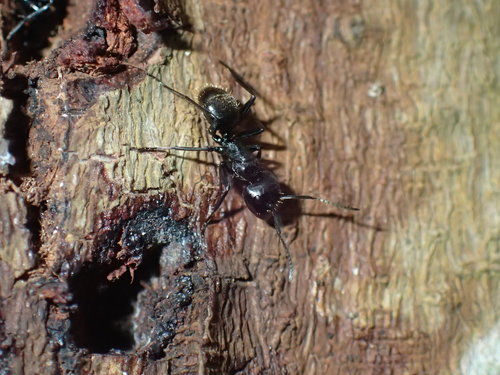
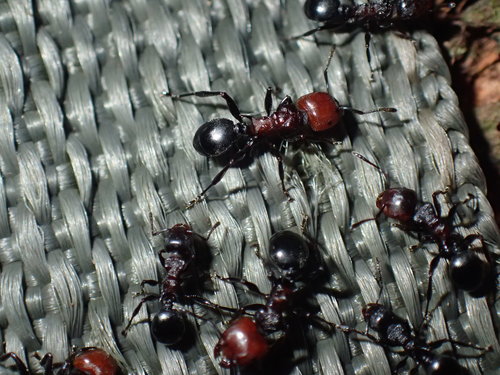
Oecophylla longinoda (common name weaver ant) is a species of arboreal ant found in the forested regions of tropical Africa. They are one of only two extant species of the genus, the other being Oecophylla smaragdina. They make nests in trees made of leaves stitched together using the silk produced by their larvae.

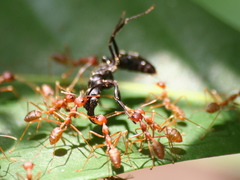
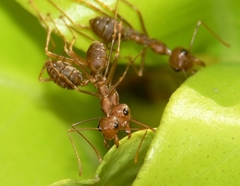
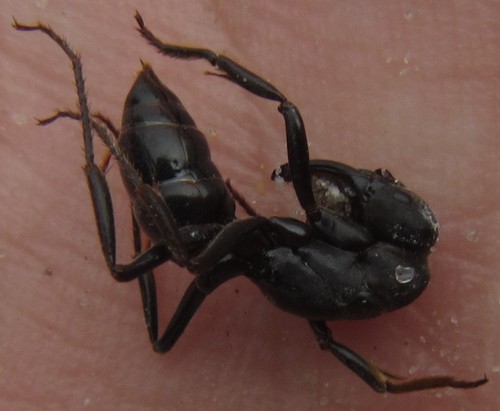
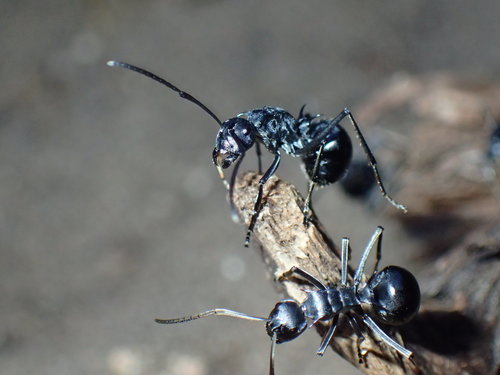
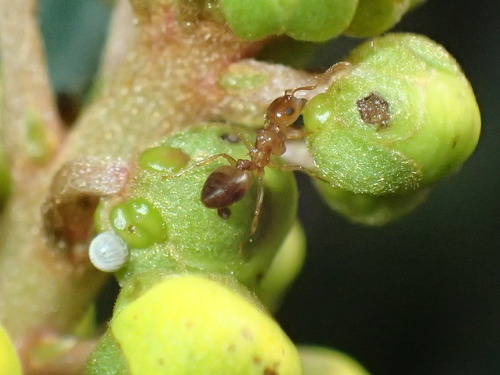
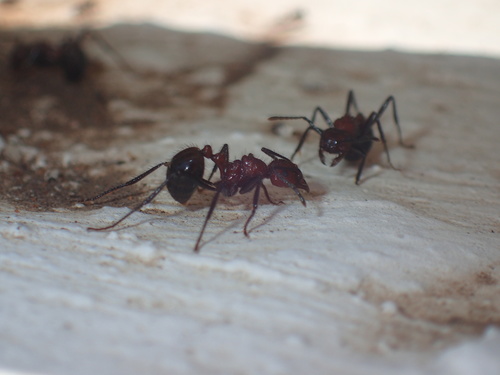
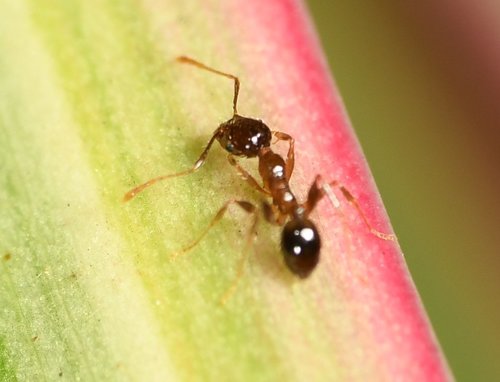
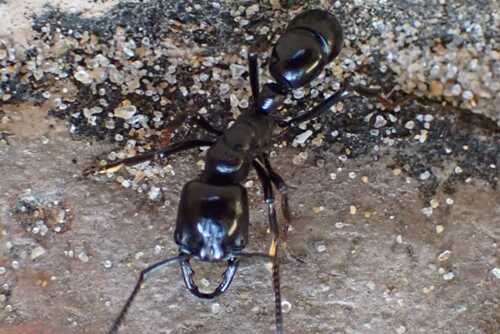
The worker is a fairly large ant with a length of 6 mm (0.24 in). Their antennae have 12 segments, the first segment exceeding in length the second and third combined. The clypeus, at the front of the head, is large, convex, and hangs over the outer edge of the mouthparts. The large mandibles have long, triangular teeth, which cross over one another when the ant is at rest. This ant ranges in colour from orangeish-brown to dark brown; the thorax is clad in fine pubescence, while the abdomen is covered with short, erect hairs. The tip of the abdomen has glands that produce pheromones. The feet have suction pads, which enable these ants to cling to surfaces with a firm grip.

This weaver ant is widely distributed across the rainforests of sub-Saharan Africa. It is found high in the canopy and one colony can dominate the crown... Wikipedia →

Global Distribution

Parks Where Found

# Park Country Daily sighting probability
1 iSimangaliso Wetland Park 🇿🇦 South Africa
~30%
2 Odzala-Kokoua National Park 🇨🇬 Republic of the Congo
~10%

Cities Where Found

# City Country Daily sighting probability
1 Abidjan 🇨🇮 Côte d'Ivoire
~40%

Before you go

What are the chances of seeing an African Weaver Ant in iSimangaliso Wetland Park?

Possible

About 30% of wildlife watchers report an African Weaver Ant sighting in iSimangaliso Wetland Park on a given day, based on 145 verified sightings from GBIF citizen-science data from 2019 to 2026. It is the 2nd most-seen of the 316 insects we can rate there. Over three days the chance rises to about 70%, and over a week to about 90%, if each day is a fresh chance.

When is the best time to see an African Weaver Ant in iSimangaliso Wetland Park?

April–May and October

In those months about 40% of wildlife watchers report an African Weaver Ant in iSimangaliso Wetland Park on a given day, against about 20% in January–February and November, the lowest months.

What time of day is best to see an African Weaver Ant?

Between 1 and 4 pm

Across all the parks we cover, that three-hour window holds the most African Weaver Ant sightings with a recorded time, and about 9 in 10 of them come between 6 am and 6 pm: it is a daytime animal.

Is iSimangaliso Wetland Park the best place to see an African Weaver Ant?

Yes

Of the 2 parks where we can rate African Weaver Ant sightings, iSimangaliso Wetland Park has the highest daily chance: about 30%. Next come Odzala-Kokoua National Park (Republic of the Congo, about 10%).

Which relatives of the African Weaver Ant live in iSimangaliso Wetland Park?

Same family: Formicidae

The closest relatives of the African Weaver Ant that you can see in iSimangaliso Wetland Park (family Formicidae, Ants) are Savanna Spiny Sugar Ant (about 20%), Silver Spiny Sugar Ant (about 10%) and African Stink Ant (about 10%), with each one's daily chance of a sighting.

Where does the African Weaver Ant sighting chance come from?

GBIF citizen-science records

It is estimated from how often the African Weaver Ant is recorded against all the insects logged in iSimangaliso Wetland Park (145 verified sightings from 2019 to 2026), calibrated against known sighting rates. Figures are rounded to the nearest 10% because citizen-science data supports honest approximations, not decimals, and months with records from fewer than five people show "—". How it works.

← Back to iSimangaliso Wetland Park