African Stink Ant

African Stink Ant

Paltothyreus tarsatus

Daily sighting probability ~10% · With luck
at iSimangaliso Wetland Park

In 3 days ~20% in a week ~50%

23 Verified sightings at iSimangaliso Wetland Park From 2019 to 2026
82 In all 7 parks
April Best month
☀️ Diurnal When it's spotted

About the African Stink Ant

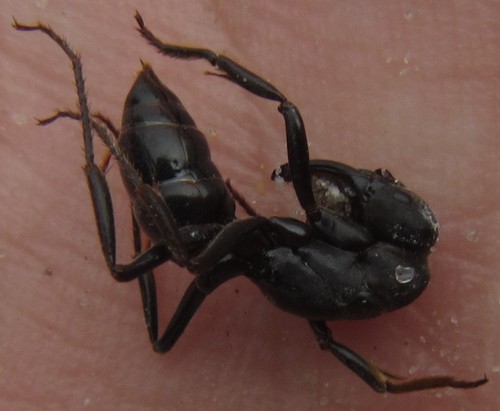
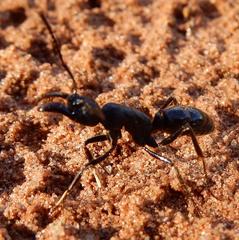
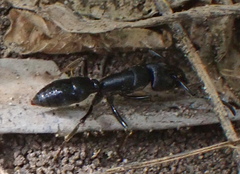
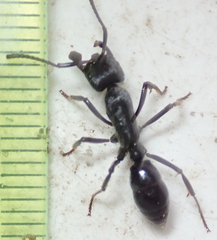
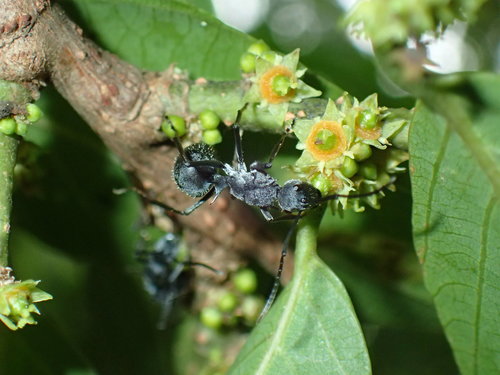
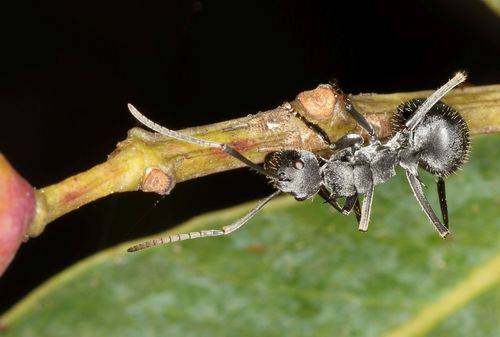
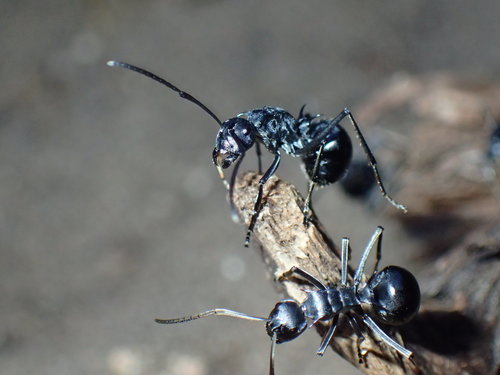
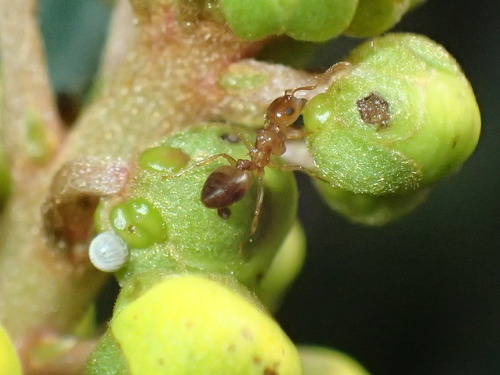
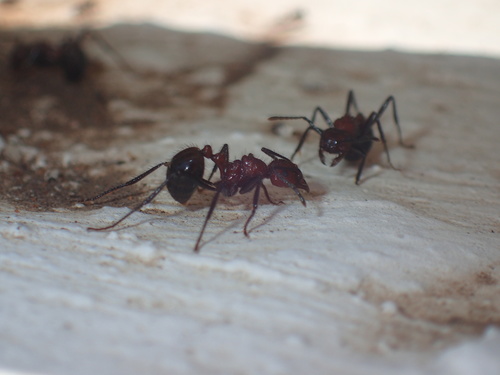
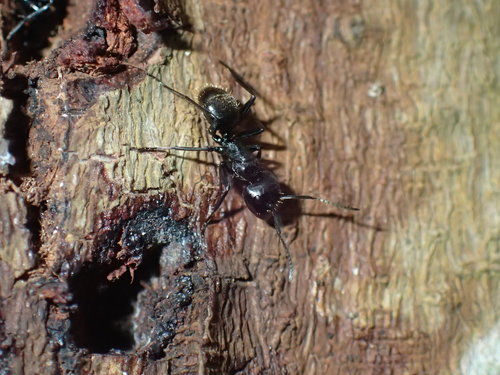
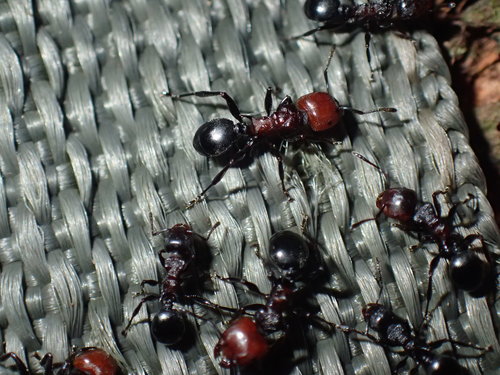
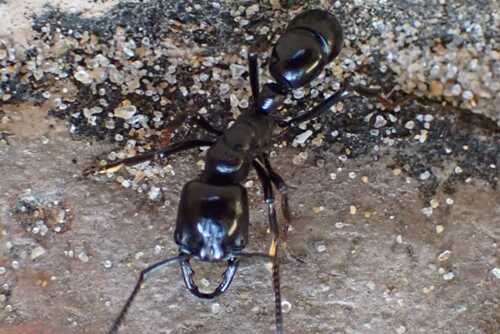
Paltothyreus (also known as African stink ant) is a monotypic genus of ants in the subfamily Ponerinae. Paltothyreus tarsatus, the single described species, is widely distributed in Sub-Saharan Africa. Workers are very large in size (17–20 mm); queens are similar to workers, but larger (23 mm) and winged.

Paltothyreus tarsatus construct shallow nests that cover a large home range. Most of the nest is shallow tunnels used by foragers to travel without risking predation and emerging far from the nest center. The nests can have as many as 5000 workers, a number very few ant species are able to match. Although the ants are predators and feed on animals as large as beetles, the frog Phrynomantis microps is sometimes found inside the nests as it uses them as a burrow. A skin secretion that inhibits the ant's aggression allows it to coexist with the ants.

Buniapone, sister genus of Paltothyreus Media related to Paltothyreus tarsatus at Wikimedia Commons Wikipedia →

Global Distribution

Parks Where Found

# Park Country Daily sighting probability
1 Waterberg Plateau Park 🇳🇦 Namibia
~40%
2 uMkhuze Game Reserve 🇿🇦 South Africa
~30%
3 Lake Mburo National Park 🇺🇬 Uganda
~20%
4 Moremi Game Reserve 🇧🇼 Botswana
~20%
5 Hwange National Park 🇿🇼 Zimbabwe
~20%
6 Chobe National Park 🇧🇼 Botswana
~10%
7 iSimangaliso Wetland Park 🇿🇦 South Africa
~10%

Cities Where Found

# City Country Daily sighting probability
1 Abidjan 🇨🇮 Côte d'Ivoire
~40%
2 Serrekunda 🇬🇲 Gambia
~20%
3 Kampala 🇺🇬 Uganda
~10%
4 Harare 🇿🇼 Zimbabwe
~10%

Before you go

What are the chances of seeing an African Stink Ant in iSimangaliso Wetland Park?

With luck

About 10% of wildlife watchers report an African Stink Ant sighting in iSimangaliso Wetland Park on a given day, based on 23 verified sightings from GBIF citizen-science data from 2019 to 2026. It is the 102nd most-seen of the 316 insects we can rate there. Over three days the chance rises to about 20%, and over a week to about 50%, if each day is a fresh chance.

When is the best time to see an African Stink Ant in iSimangaliso Wetland Park?

February–April, June–July and October–December

In those months about 10% of wildlife watchers report an African Stink Ant in iSimangaliso Wetland Park on a given day, against under 5% in January, May and August–September, the lowest months.

What time of day is best to see an African Stink Ant?

Between 8 and 11 am

Across all the parks we cover, that three-hour window holds the most African Stink Ant sightings with a recorded time, and about 8 in 10 of them come between 6 am and 6 pm: it is a daytime animal.

Is iSimangaliso Wetland Park the best place to see an African Stink Ant?

7th of 7

Of the 7 parks where we can rate African Stink Ant sightings, iSimangaliso Wetland Park ranks 7th at about 10%. The best odds are in Waterberg Plateau Park (Namibia, about 40%), uMkhuze Game Reserve (South Africa, about 30%) and Lake Mburo National Park (Uganda, about 20%).

Which relatives of the African Stink Ant live in iSimangaliso Wetland Park?

Same family: Formicidae

The closest relatives of the African Stink Ant that you can see in iSimangaliso Wetland Park (family Formicidae, Ants) are African Weaver Ant (about 30%), Savanna Spiny Sugar Ant (about 20%) and Silver Spiny Sugar Ant (about 10%), with each one's daily chance of a sighting.

Where does the African Stink Ant sighting chance come from?

GBIF citizen-science records

It is estimated from how often the African Stink Ant is recorded against all the insects logged in iSimangaliso Wetland Park (23 verified sightings from 2019 to 2026), calibrated against known sighting rates. Figures are rounded to the nearest 10% because citizen-science data supports honest approximations, not decimals, and months with records from fewer than five people show "—". How it works.

← Back to iSimangaliso Wetland Park