Cross-barred Snake

Cross-barred Snake

Dipsadoboa aulica

Silhouette: Alex Slavenko · PhyloPic

LCLeast ConcernNTVUENCR
Daily sighting probability ~10% · With luck
at iSimangaliso Wetland Park

In 3 days ~20% in a week ~50%

13 Verified sightings at iSimangaliso Wetland Park From 2019 to 2026
31 In all 2 parks
January Best month
☀️🌙 Day & Night When it's spotted

About the Cross-barred Snake

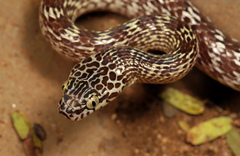
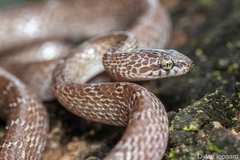
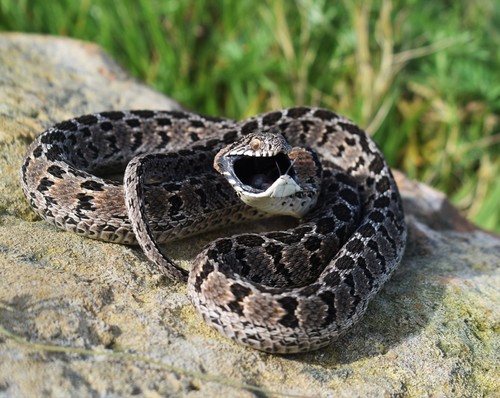
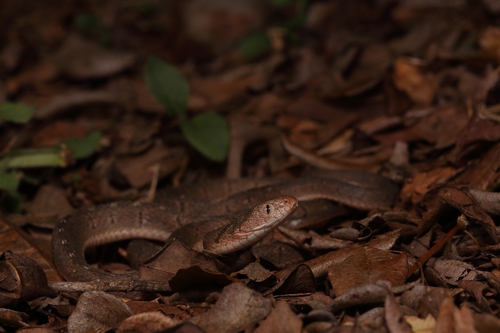
Dipsadoboa aulica, commonly known as the marbled tree snake, is a species of snake in the family Colubridae. The species is endemic to Africa, and is mildly venomous to humans. D. aulica is found in Eswatini, Malawi, Mozambique, Somalia, South Africa, Tanzania, and Zimbabwe.

D. aulica is a slender-bodied snake. Males may attain a snout-to-vent length (SVL) of 66 cm (26 in). Females are slightly smaller, growing to 63 cm (25 in) SVL. The smooth dorsal scales are arranged in 17 rows at midbody.

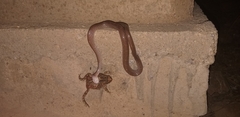
D. aulicus, is nocturnal and arboreal, hiding during the day in tree cavities or under bark. D. aulica preys primarily upon tree frogs and geckos, but will also eat toads, skinks, and small rodents. D. aulica, like all species in the genus Dipsadoboa, is oviparous. In midsummer sexually mature females lay 7-8 eggs. The eggs measure on average 25.5 x 11.5 mm (about 1 x 0.5 inch). Hatchlings measure on average 18 cm (about 7 inches) in total length (including tail).

Boulenger GA (1896). Catalogue of the Snakes in the British Museum (Natural History). Volume III., Containing... Wikipedia →

Global Distribution

Parks Where Found

# Park Country Daily sighting probability
1 iSimangaliso Wetland Park 🇿🇦 South Africa
~10%
2 Kruger National Park 🇿🇦 South Africa
~10%

Before you go

What are the chances of seeing a Cross-barred Snake in iSimangaliso Wetland Park?

With luck

About 10% of wildlife watchers report a Cross-barred Snake sighting in iSimangaliso Wetland Park on a given day, based on 13 verified sightings from GBIF citizen-science data from 2019 to 2026. It is the 26th most-seen of the 43 reptiles we can rate there. Over three days the chance rises to about 20%, and over a week to about 50%, if each day is a fresh chance.

When is the best time to see a Cross-barred Snake in iSimangaliso Wetland Park?

January

In that month about 20% of wildlife watchers report a Cross-barred Snake in iSimangaliso Wetland Park on a given day, against under 5% in March–June and September, the lowest months.

What time of day is best to see a Cross-barred Snake?

Between 7 and 10 pm

Across all the parks we cover, that three-hour window holds the most Cross-barred Snake sightings with a recorded time, and about 6 in 10 of them come between 6 pm and 6 am: it is seen both by day and at night.

Is iSimangaliso Wetland Park the best place to see a Cross-barred Snake?

Yes

Of the 2 parks where we can rate Cross-barred Snake sightings, iSimangaliso Wetland Park has the highest daily chance: about 10%. Next come Kruger National Park (South Africa, about 10%).

Which relatives of the Cross-barred Snake live in iSimangaliso Wetland Park?

Same family: Colubridae

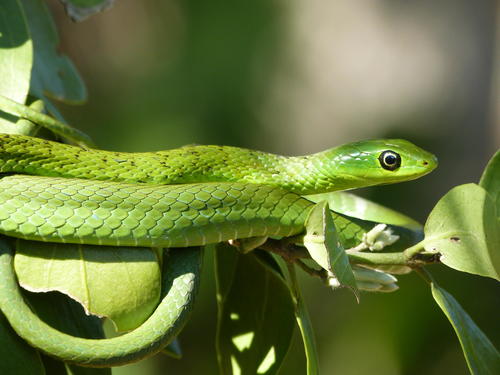
The closest relatives of the Cross-barred Snake that you can see in iSimangaliso Wetland Park (family Colubridae, Colubrid Snakes) are Eastern Green Snake (about 20%), Twig Snake (about 20%) and Green Water Snake (about 10%), with each one's daily chance of a sighting.

Where does the Cross-barred Snake sighting chance come from?

GBIF citizen-science records

It is estimated from how often the Cross-barred Snake is recorded against all the reptiles logged in iSimangaliso Wetland Park (13 verified sightings from 2019 to 2026), calibrated against known sighting rates. Figures are rounded to the nearest 10% because citizen-science data supports honest approximations, not decimals, and months with records from fewer than five people show "—". How it works.

← Back to iSimangaliso Wetland Park