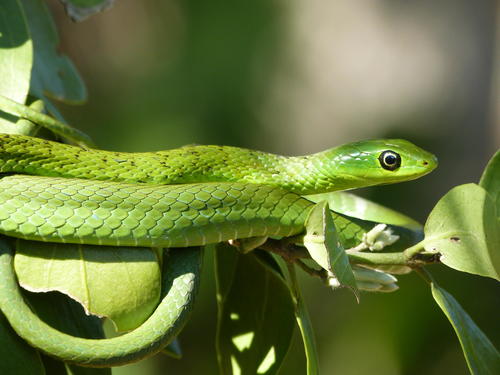
East African Egg Eater

East African Egg Eater

Dasypeltis medici

Silhouette: Alex Slavenko · PhyloPic

LCLeast ConcernNTVUENCR
Daily sighting probability ~10% · With luck
at iSimangaliso Wetland Park

In 3 days ~20% in a week ~40%

8 Verified sightings at iSimangaliso Wetland Park From 2019 to 2026
8 In 1 park
February Best month
☀️🌙 Day & Night When it's spotted

About the East African Egg Eater

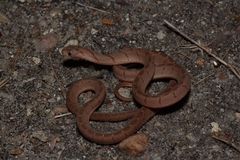
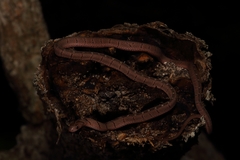
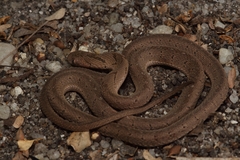
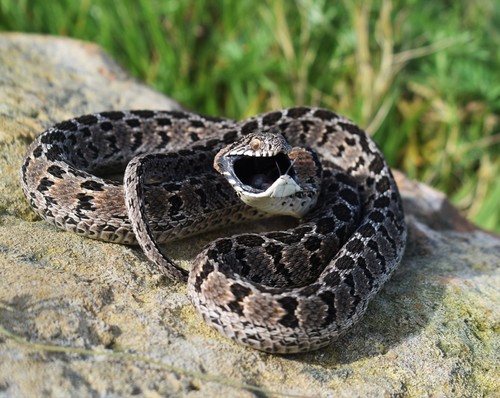
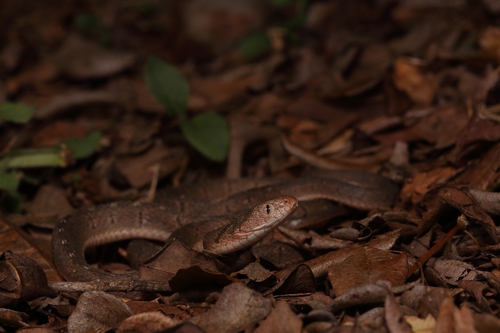
Dasypeltis medici, also known commonly as the East African egg-eater, the eastern forest egg-eater, and the rufous egg eater, is a species of nonvenomous snake in the subfamily Colubrinae of the family Colubridae. The species is endemic to Africa.

The specific name, medici, is in honor of Italian physiologist Michele Medici. Dasypeltis medici is found in Eswatini, Kenya, Malawi, Mozambique, Somalia, South Africa, Tanzania, Zambia, and Zimbabwe. The preferred habitat of Dasypeltis medici is lowland evergreen forest, at elevations from near sea level to 2,500 m (8,200 ft).

Dasypeltis medici may attain a snout-to-vent length (SVL) of 76 cm (30 in) for females, and 60 cm (24 in) for males. Dasypeltis medici, like all species in the genus Dasypeltis, feeds exclusively on birds' eggs. It can swallow an egg three times the size of its head. The egg is slit open by vertebral hypapophyses which extend into the esophagus. The collapsed empty shell is regurgitated.

Dasypeltis medici is oviparous. An adult female may lay a clutch of 6–28 elongate eggs, each egg measuring 24 mm × 8 mm (0.94 in... Wikipedia →
Global Distribution

Parks Where Found

# Park Country Daily sighting probability
1 iSimangaliso Wetland Park 🇿🇦 South Africa
~10%

More parks will be added in future updates.

Zoos & Centres Where Found

# Zoo / Centre Country
1 Prague Zoo 🇨🇿 Czechia In captivity
2 Rákosův pavilon 🇨🇿 Czechia In captivity
3 Velemlokárium 🇨🇿 Czechia In captivity

Before you go

What are the chances of seeing an East African Egg Eater in iSimangaliso Wetland Park?

With luck

About 10% of wildlife watchers report an East African Egg Eater sighting in iSimangaliso Wetland Park on a given day, based on 8 verified sightings from GBIF citizen-science data from 2019 to 2026. It is the 31st most-seen of the 43 reptiles we can rate there. Over three days the chance rises to about 20%, and over a week to about 40%, if each day is a fresh chance.

When is the best time to see an East African Egg Eater in iSimangaliso Wetland Park?

November to March

In those months about 10% of wildlife watchers report an East African Egg Eater in iSimangaliso Wetland Park on a given day, against under 5% in April to October, the lowest months. Those are among iSimangaliso Wetland Park's wettest months, with about 100 mm of rain a month against 30 mm in July.

What time of day is best to see an East African Egg Eater?

Between 6 and 9 pm

Across all the parks we cover, that three-hour window holds the most East African Egg Eater sightings with a recorded time, and about 6 in 10 of them come between 6 pm and 6 am: it is seen both by day and at night.

Where else can you see an East African Egg Eater?

Only iSimangaliso Wetland Park, in our data

iSimangaliso Wetland Park is the only park on Wallace's Line with enough records to rate East African Egg Eater sightings: about 10% of wildlife watchers there report one on a given day.

Where does the East African Egg Eater sighting chance come from?

GBIF citizen-science records

It is estimated from how often the East African Egg Eater is recorded against all the reptiles logged in iSimangaliso Wetland Park (8 verified sightings from 2019 to 2026), calibrated against known sighting rates. Figures are rounded to the nearest 10% because citizen-science data supports honest approximations, not decimals, and months with records from fewer than five people show "—". How it works.

← Back to iSimangaliso Wetland Park