Red-lipped Snake

Red-lipped Snake

Crotaphopeltis hotamboeia

Silhouette: Alex Slavenko · PhyloPic

LCLeast ConcernNTVUENCR
Daily sighting probability ~10% · With luck
at iSimangaliso Wetland Park

In 3 days ~30% in a week ~60%

20 Verified sightings at iSimangaliso Wetland Park From 2019 to 2026
204 In all 5 parks
January Best month
☀️ Diurnal When it's spotted

About the Red-lipped Snake

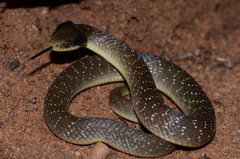
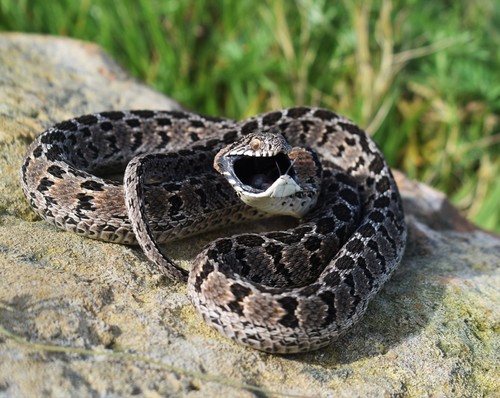
Crotaphopeltis hotamboeia, commonly known as the herald snake or the red-lipped snake, is a species of snake in the family Colubridae. The species is endemic to Sub-Saharan Africa. Crotaphopeltis hotamboeia can be identified by its olive green or grey body, multiple white speckles, distinctive black head, and red, yellow, white, or black upper lip. It can grow to an average total length (including tail) of 70 cm (28 in), but may reach up to 1 metre (39 inches) in total length.

It is mildly venomous and poses no threat to humans or domestic animals, according to the African Snakebite Institute. C. hotamboeia feeds on amphibians (including rain frogs), lizards, and other snakes (only in captivity). The red-lipped snake has been known to live for between 10 and 15 years. Adult females of C. hotamboeia lay between 6 and 19 eggs in early summer.

Endemic to Sub-Saharan Africa, the herald snake is present in Zambia, throughout South Africa (except for the Karoo and Northern Cape) as well as Lesotho, Eswatini, Zimbabwe, Nigeria, southern and central Mozambique, and northern Botswana.

The herald... Wikipedia →

Global Distribution

Parks Where Found

# Park Country Daily sighting probability
1 Garden Route National Park 🇿🇦 South Africa
~10%
2 iSimangaliso Wetland Park 🇿🇦 South Africa
~10%
3 Table Mountain National Park 🇿🇦 South Africa
~10%
4 Kruger National Park 🇿🇦 South Africa
~10%
5 Addo Elephant National Park 🇿🇦 South Africa
~10%

Cities Where Found

# City Country Daily sighting probability
1 Durban 🇿🇦 South Africa
~20%
2 Pretoria 🇿🇦 South Africa
~10%
3 Cape Town 🇿🇦 South Africa
<5%

Zoos & Centres Where Found

# Zoo / Centre Country
1 Gambia Reptile Farm 🇬🇲 Gambia In captivity
2 Lilongwe Wildlife Center 🇲🇼 Malawi In captivity

Before you go

What are the chances of seeing a Red-lipped Snake in iSimangaliso Wetland Park?

With luck

About 10% of wildlife watchers report a Red-lipped Snake sighting in iSimangaliso Wetland Park on a given day, based on 20 verified sightings from GBIF citizen-science data from 2019 to 2026. It is the 19th most-seen of the 43 reptiles we can rate there. Over three days the chance rises to about 30%, and over a week to about 60%, if each day is a fresh chance.

When is the best time to see a Red-lipped Snake in iSimangaliso Wetland Park?

January and April

In those months about 20% of wildlife watchers report a Red-lipped Snake in iSimangaliso Wetland Park on a given day, against under 5% in June–August and October, the lowest months.

What time of day is best to see a Red-lipped Snake?

Between 8 and 11 am

Across all the parks we cover, that three-hour window holds the most Red-lipped Snake sightings with a recorded time, and about 8 in 10 of them come between 6 am and 6 pm: it is a daytime animal.

Is iSimangaliso Wetland Park the best place to see a Red-lipped Snake?

Among the best

Of the 5 parks where we can rate Red-lipped Snake sightings, iSimangaliso Wetland Park ranks 2nd at about 10%, level with the leaders once rounded. The best odds are in Garden Route National Park (South Africa, about 10%).

Which relatives of the Red-lipped Snake live in iSimangaliso Wetland Park?

Same family: Colubridae

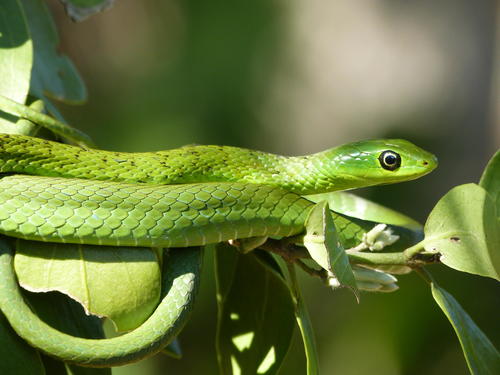
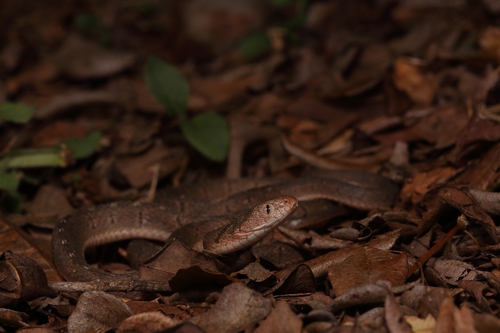
The closest relatives of the Red-lipped Snake that you can see in iSimangaliso Wetland Park (family Colubridae, Colubrid Snakes) are Eastern Green Snake (about 20%), Twig Snake (about 20%) and Green Water Snake (about 10%), with each one's daily chance of a sighting.

Where does the Red-lipped Snake sighting chance come from?

GBIF citizen-science records

It is estimated from how often the Red-lipped Snake is recorded against all the reptiles logged in iSimangaliso Wetland Park (20 verified sightings from 2019 to 2026), calibrated against known sighting rates. Figures are rounded to the nearest 10% because citizen-science data supports honest approximations, not decimals, and months with records from fewer than five people show "—". How it works.

← Back to iSimangaliso Wetland Park