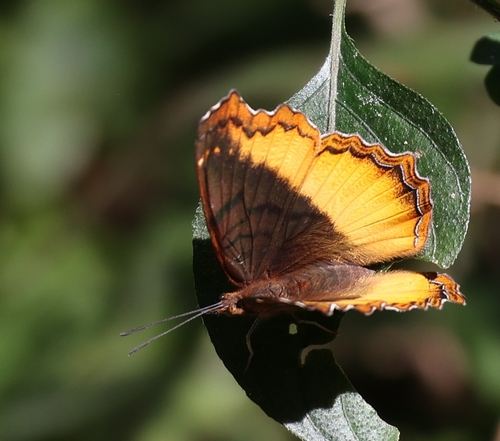
Whitebar Acraea

Whitebar Acraea

Telchinia encedon

Daily sighting probability ~10% · With luck
at iSimangaliso Wetland Park

In 3 days ~40% in a week ~70%

45 Verified sightings at iSimangaliso Wetland Park From 2019 to 2026
104 In all 5 parks
April Best month
☀️ Diurnal When it's spotted

About the Whitebar Acraea

Acraea encedon, the common acraea, white-barred acraea or encedon acraea, is a butterfly of the family Nymphalidae. It is found in sub-Saharan Africa and south-western Arabia. It is one of the species of Acraea sometimes separated in Telchinia.

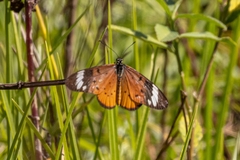
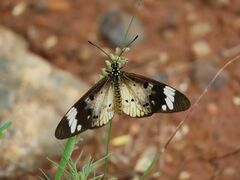
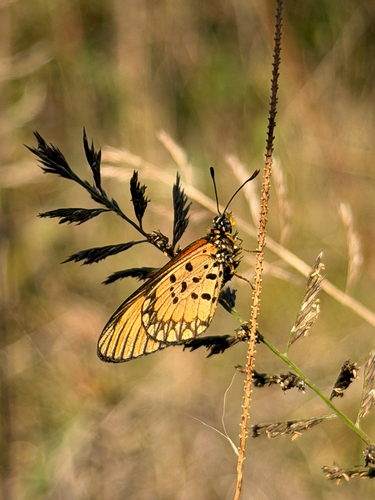
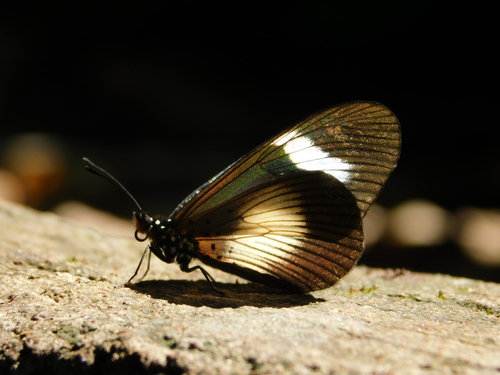
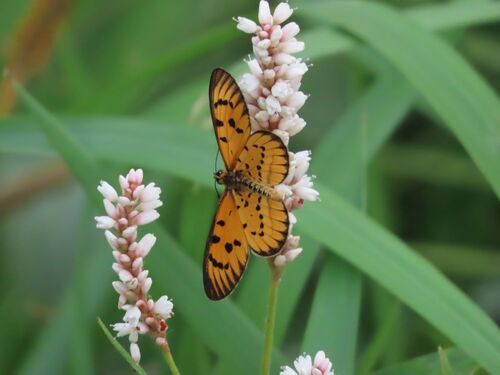
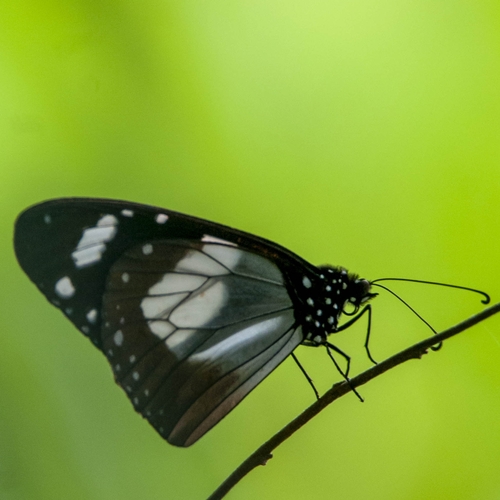
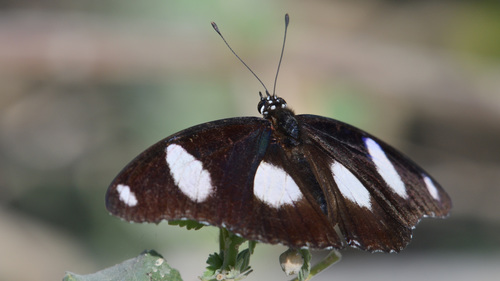
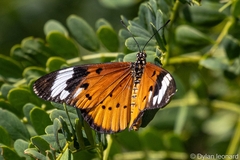
The wingspan is 40–50 mm (1.6–2.0 in), with the female being slightly larger than the male, but otherwise similar in pattern and colour. The apex of the forewing is blackish and divided by a white bar. The rest of the surface of the wings are usually orange with black spots, however paler varieties with a greyish or yellowish base colour are also found.

The butterfly is a polymorphic Müllerian mimic of Danaus chrysippus, which is a highly unusual phenomenon as Müllerian mimicry is almost always monomorphic. Hilltopping studies show differences in behavior, as the ones doing so engage in more interactive behaviors such as perching and investigating conspecifics. In contrast, the non-hilltopping individuals are observed to give more time patrolling. Factors including age influence this behavior.

A. encedon is a very variable and widely distributed species and appears in many forms but with no definite... Wikipedia →

Global Distribution

Parks Where Found

# Park Country Daily sighting probability
1 Ranomafana National Park 🇲🇬 Madagascar
~20%
2 uMkhuze Game Reserve 🇿🇦 South Africa
~20%
3 iSimangaliso Wetland Park 🇿🇦 South Africa
~10%
4 Nairobi National Park 🇰🇪 Kenya
~10%
5 Kruger National Park 🇿🇦 South Africa
~10%

Cities Where Found

# City Country Daily sighting probability
1 Kigali 🇷🇼 Rwanda
~30%
2 Kampala 🇺🇬 Uganda
~20%
3 Durban 🇿🇦 South Africa
~20%
4 Ouagadougou 🇧🇫 Burkina Faso
~20%
5 Antananarivo 🇲🇬 Madagascar
~20%
6 Harare 🇿🇼 Zimbabwe
~10%
7 Nairobi 🇰🇪 Kenya
~10%
8 Lusaka 🇿🇲 Zambia
~10%
9 Pretoria 🇿🇦 South Africa
~10%

Before you go

What are the chances of seeing a Whitebar Acraea in iSimangaliso Wetland Park?

With luck

About 10% of wildlife watchers report a Whitebar Acraea sighting in iSimangaliso Wetland Park on a given day, based on 45 verified sightings from GBIF citizen-science data from 2019 to 2026. It is the 42nd most-seen of the 316 insects we can rate there. Over three days the chance rises to about 40%, and over a week to about 70%, if each day is a fresh chance.

When is the best time to see a Whitebar Acraea in iSimangaliso Wetland Park?

April

In that month about 30% of wildlife watchers report a Whitebar Acraea in iSimangaliso Wetland Park on a given day, against under 5% in August, the lowest month.

What time of day is best to see a Whitebar Acraea?

Between noon and 3 pm

Across all the parks we cover, that three-hour window holds the most Whitebar Acraea sightings with a recorded time, and about 9 in 10 of them come between 6 am and 6 pm: it is a daytime animal.

Is iSimangaliso Wetland Park the best place to see a Whitebar Acraea?

3rd of 5

Of the 5 parks where we can rate Whitebar Acraea sightings, iSimangaliso Wetland Park ranks 3rd at about 10%. The best odds are in Ranomafana National Park (Madagascar, about 20%) and uMkhuze Game Reserve (South Africa, about 20%).

Which relatives of the Whitebar Acraea live in iSimangaliso Wetland Park?

Same genus: Acraea

The closest relatives of the Whitebar Acraea that you can see in iSimangaliso Wetland Park (genus Acraea, Acraeas) are Dancing Amber (about 30%), Wanderer (about 10%) and Dusky Acraea (about 10%), with each one's daily chance of a sighting.

Where does the Whitebar Acraea sighting chance come from?

GBIF citizen-science records

It is estimated from how often the Whitebar Acraea is recorded against all the insects logged in iSimangaliso Wetland Park (45 verified sightings from 2019 to 2026), calibrated against known sighting rates. Figures are rounded to the nearest 10% because citizen-science data supports honest approximations, not decimals, and months with records from fewer than five people show "—". How it works.

← Back to iSimangaliso Wetland Park