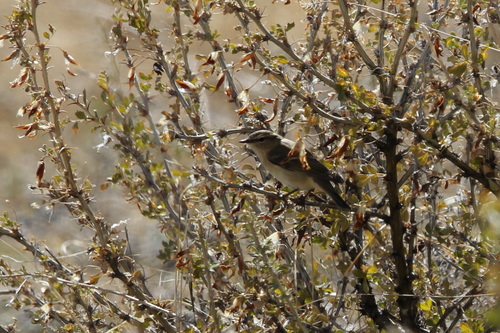
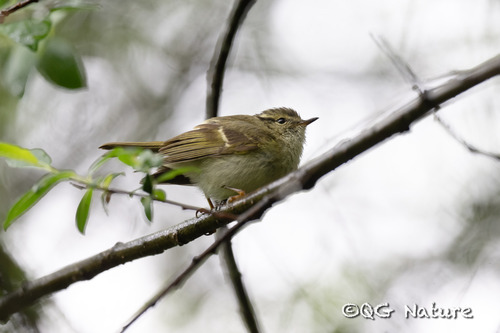
Pere David's Laughingthrush

Pere David's Laughingthrush

Garrulax davidi

Silhouette: Jiekun He · PhyloPic

Daily sighting probability <5% · Rare
at Jiuzhaigou National Park

In 3 days ~10% in a week ~30%

6 Verified sightings at Jiuzhaigou National Park From 2019 to 2026
6 In 1 park
June Best month

About the Pere David's Laughingthrush

The plain laughingthrush or Père David's laughingthrush (Pterorhinus davidi) is a species of bird in the family Leiothrichidae. It is endemic to central and northeastern China. Its natural habitat is temperate forests. The plain laughingthrush was described by the English zoologist Robert Swinhoe in 1868 while resident in Amoy, on the basis of a specimen sent from Beijing by Armand David, alongside another new specimen that would be described as the Beijing babbler. The letter accompanying the two specimens mentioned that it was very common in the mountains around Beijing and was a sedentary species, usually occupying the same habitats as the Beijing babbler. Though David had proposed the binomial name Pomatorhinus stridulus, Swinhoe described it under the name Pterorhinus davidi, erecting the new genus Pterorhinus (from the Greek for "feather nose", in reference to the bird's beak) to accommodate it. The specific epithet honours the aforementioned French missionary (1826-1900) who worked in China between 1858 and 1874. This species was normally placed in the genus Garrulax but following the publication of a comprehensive molecular phylogenetic study in 2018, the genus... Wikipedia →

Sounds

Recording0:26

China · 2024

© wresy · iNaturalist · CC BY-NC 4.0

Recording0:10

China · 2025

© 管牧山 · iNaturalist · CC BY-NC 4.0

Recording0:13

China · 2026

© Mike Yan · iNaturalist · CC BY-NC 4.0

Global Distribution

Parks Where Found

# Park Country Daily sighting probability
1 Jiuzhaigou National Park 🇨🇳 China
<5%

More parks will be added in future updates.

Cities Where Found

# City Country Daily sighting probability
1 Lanzhou 🇨🇳 China
~50%
2 Xining 🇨🇳 China
~30%
3 Beijing 🇨🇳 China
~10%
4 Shijiazhuang 🇨🇳 China
~10%

Before you go

What are the chances of seeing a Pere David's Laughingthrush in Jiuzhaigou National Park?

Rare

Under 5% of wildlife watchers report a Pere David's Laughingthrush sighting in Jiuzhaigou National Park on a given day, based on 6 verified sightings from GBIF citizen-science data from 2019 to 2026. It is the 115th most-seen of the 131 birds we can rate there. Over three days the chance rises to about 10%, and over a week to about 30%, if each day is a fresh chance.

When is the best time to see a Pere David's Laughingthrush in Jiuzhaigou National Park?

June

In that month about 10% of wildlife watchers report a Pere David's Laughingthrush in Jiuzhaigou National Park on a given day, against under 5% in April–May and July–December, the lowest months. That is one of Jiuzhaigou National Park's wettest months, with about 160 mm of rain against 15 mm in December. January to March have too few records to rate.

Where else can you see a Pere David's Laughingthrush?

Only Jiuzhaigou National Park, in our data

Jiuzhaigou National Park is the only park on Wallace's Line with enough records to rate Pere David's Laughingthrush sightings: under 5% of wildlife watchers there report one on a given day.

Which relatives of the Pere David's Laughingthrush live in Jiuzhaigou National Park?

Same genus: Garrulax

The closest relatives of the Pere David's Laughingthrush that you can see in Jiuzhaigou National Park (genus Garrulax, Typical Laughingthrushes) are Snowy-cheeked Laughingthrush (about 30%) and Giant Laughingthrush (about 20%), with each one's daily chance of a sighting.

Where does the Pere David's Laughingthrush sighting chance come from?

GBIF citizen-science records

It is estimated from how often the Pere David's Laughingthrush is recorded against all the birds logged in Jiuzhaigou National Park (6 verified sightings from 2019 to 2026), calibrated against known sighting rates. Figures are rounded to the nearest 10% because citizen-science data supports honest approximations, not decimals, and months with records from fewer than five people show "—". How it works.


← Back to Jiuzhaigou National Park