Salim Ali's Swift

Salim Ali's Swift

Apus salimalii

Silhouette: Ferran Sayol · PhyloPic

Daily sighting probability ~30% · Possible
at Jiuzhaigou National Park

In 3 days ~60% in a week ~90%

37 Verified sightings at Jiuzhaigou National Park From 2019 to 2026
37 In 1 park
June Best month
🌅 Crepuscular When it's spotted

About the Salim Ali's Swift

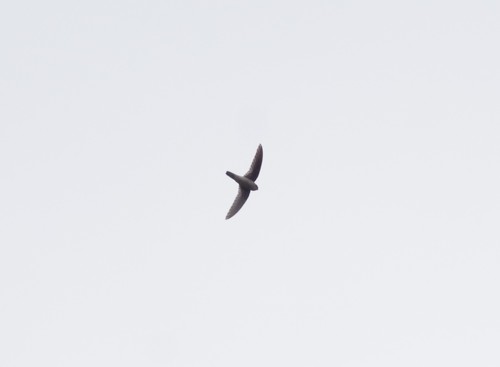
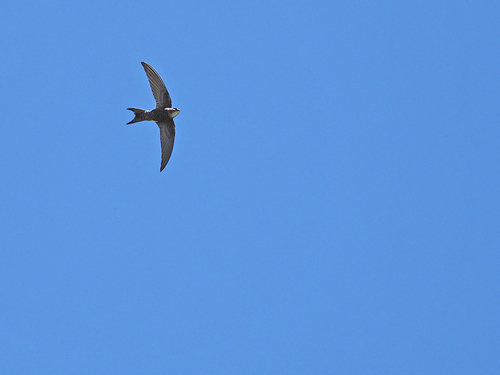
Salim Ali's swift (Apus salimalii) is a small bird, superficially similar to a house martin. It is, however, completely unrelated to those passerine species, since swifts are in the order Apodiformes. The resemblances between the groups are due to convergent evolution reflecting similar life styles.

These birds have very short legs which they use only for clinging to vertical surfaces, almost never settling voluntarily on the ground. The scientific name of their genus comes from the Greek απους, apous, meaning "without feet". Salim Ali's swifts spend most of their lives in the air, living on the insects they catch in their beaks.

Salim Ali's swifts breed from the eastern Tibetan Plateau eastwards through western Sichuan province. This species is migratory; however, its wintering range is unknown. This swift is longer tailed and has a narrower white rump compared to other species in the complex. A 2011 study split this species from the fork-tailed swift complex, with many taxomonists recognizing it as a full species.

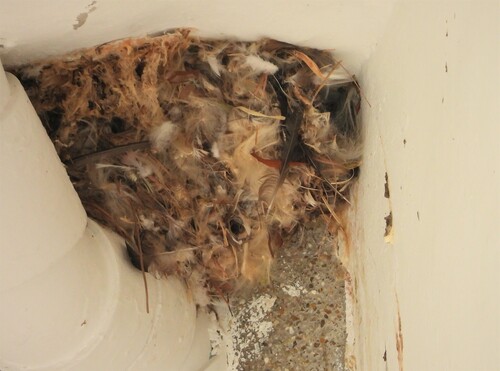
These swifts build their nests on cliffs, laying 2 or 3 eggs. A swift will return to the same site year after year, rebuilding its nest when necessary. Salim Ali's swifts are similar in size to common swift, and they are black except for a white rump. They can be distinguished from a partially leucistic common swift by the deeper tail fork, longer wings, bigger head and larger white throat patch. It was previously mis-categorized as an alternative name for Apus pacificus kanoi.

The common name and specific name of the species honors Indian ornithologist Salim Ali. Wikipedia →
Sounds

Flight call0:53

China · 2024

© Geoff Carey · XC1082468 · CC BY-NC-SA 4.0

Call0:20

China · 2024

© Peter Boesman · XC916083 · CC BY-NC-ND 4.0

Global Distribution

Parks Where Found

# Park Country Daily sighting probability
1 Jiuzhaigou National Park 🇨🇳 China
~30%

More parks will be added in future updates.

Before you go

What are the chances of seeing a Salim Ali's Swift in Jiuzhaigou National Park?

Possible

About 30% of wildlife watchers report a Salim Ali's Swift sighting in Jiuzhaigou National Park on a given day, based on 37 verified sightings from GBIF citizen-science data from 2019 to 2026. It is the 24th most-seen of the 131 birds we can rate there. Over three days the chance rises to about 60%, and over a week to about 90%, if each day is a fresh chance.

When is the best time to see a Salim Ali's Swift in Jiuzhaigou National Park?

June

In that month about 40% of wildlife watchers report a Salim Ali's Swift in Jiuzhaigou National Park on a given day, against about 10% in November, the lowest month. That is one of Jiuzhaigou National Park's wettest months, with about 160 mm of rain against 15 mm in December. January to March have too few records to rate.

What time of day is best to see a Salim Ali's Swift?

Between 3 and 6 am

Across all the parks we cover, that three-hour window holds the most Salim Ali's Swift sightings with a recorded time, and about 6 in 10 of them come between 6 am and 6 pm: it is most active around dawn and dusk.

Where else can you see a Salim Ali's Swift?

Only Jiuzhaigou National Park, in our data

Jiuzhaigou National Park is the only park on Wallace's Line with enough records to rate Salim Ali's Swift sightings: about 30% of wildlife watchers there report one on a given day.

Where does the Salim Ali's Swift sighting chance come from?

GBIF citizen-science records

It is estimated from how often the Salim Ali's Swift is recorded against all the birds logged in Jiuzhaigou National Park (37 verified sightings from 2019 to 2026), calibrated against known sighting rates. Figures are rounded to the nearest 10% because citizen-science data supports honest approximations, not decimals, and months with records from fewer than five people show "—". How it works.

← Back to Jiuzhaigou National Park