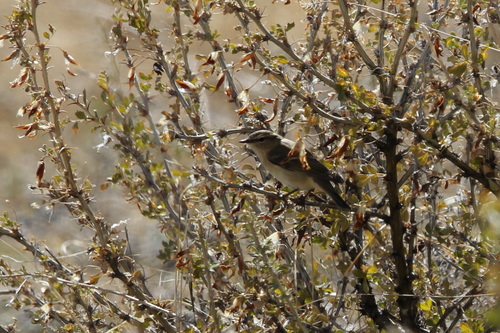
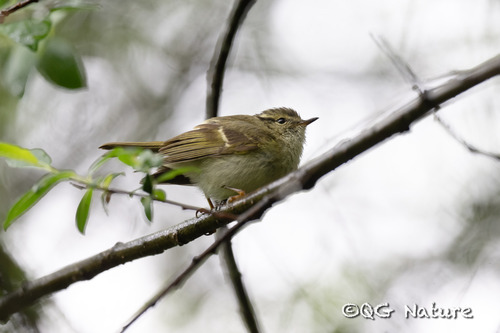
Sichuan Treecreeper

Sichuan Treecreeper

Certhia tianquanensis

Silhouette: Andy Wilson · PhyloPic

LCLeast ConcernNTVUENCR Endemic
Daily sighting probability <5% · Rare
at Jiuzhaigou National Park

In 3 days ~10% in a week ~30%

6 Verified sightings at Jiuzhaigou National Park From 2019 to 2026
6 In 1 park
October Best month

About the Sichuan Treecreeper

The Sichuan treecreeper (Certhia tianquanensis) is a rare species of bird in the treecreeper family, Certhiidae. It was described as new to science (initially as a subspecies of the common treecreeper C. familiaris) in 1995 from 14 specimens taken at four sites in the mountains of western Sichuan, China. In 2002, it was realized that these birds constituted a distinct species, and subsequent research suggests it is closest to the Nepal treecreeper (C. nipalensis).

This bird is relatively large with a long tail. Its bill is strikingly short while the throat is whitish and darker underparts. Sichuan treecreeper sings aloud with a rapid and high-pitched trill. This species is believed to be a relict species breeding in open old-growth stands of the conifer Faber's fir (Abies fabri) at high altitude (2,500–2,830 m or 8,200–9,280 ft), although it is thought to undertake localized altitudinal migrations in the winter (occurring down to at least 1,600 m or 5,200 ft).

It is known from five sites: Labahe Natural Reserve (Tianquin County), Dayi County, Shuanghe town (Ebian County), Wawu Shan (Hongya County), and Wujipung in Wolong Biosphere Reserve. Within this small area, the species is thought to be patchily distributed because it seems to be confined to old stands of the Faber's fir.

The species forages for invertebrates in the upper story of large trees by creeping along branches and trunks. Intensive logging of primary coniferous forests in the last century, even at high altitudes in the mountains of western China, has seriously reduced the potential range of this species. The Wawu Shan table mountain has steep slopes which are inaccessible to lumberjacks in the absence of extensive road construction, but it is not yet formally protected, and there are plans to open up the regions for tourism by building a cable railway.

The population was estimated at less than 1000 adult individuals, occurring over a range of 19,690 km2 (7,600 sq mi). Formerly classified as vulnerable species by the IUCN, new research has shown it to be not as rare as it was believed. Consequently, it is downlisted to near threatened status in 2008. Wikipedia →

Sounds

Song0:29

China · 2012

© Frank Lambert · XC111675 · CC BY-NC-ND 4.0

Call0:26

China · 2006

© Nick Athanas · XC20026 · CC BY-NC-SA 3.0

Call1:03

China · 2024

© Peter Boesman · XC916136 · CC BY-NC-ND 4.0

Global Distribution

Parks Where Found

# Park Country Daily sighting probability
1 Jiuzhaigou National Park 🇨🇳 China
<5%

More parks will be added in future updates.

Before you go

What are the chances of seeing a Sichuan Treecreeper in Jiuzhaigou National Park?

Rare

Under 5% of wildlife watchers report a Sichuan Treecreeper sighting in Jiuzhaigou National Park on a given day, based on 6 verified sightings from GBIF citizen-science data from 2019 to 2026. It is the 115th most-seen of the 131 birds we can rate there. Over three days the chance rises to about 10%, and over a week to about 30%, if each day is a fresh chance.

When is the best time to see a Sichuan Treecreeper in Jiuzhaigou National Park?

October

In that month about 20% of wildlife watchers report a Sichuan Treecreeper in Jiuzhaigou National Park on a given day, against under 5% in April–August and November–December, the lowest months. January to March have too few records to rate.

Where else can you see a Sichuan Treecreeper?

Only Jiuzhaigou National Park, in our data

Jiuzhaigou National Park is the only park on Wallace's Line with enough records to rate Sichuan Treecreeper sightings: under 5% of wildlife watchers there report one on a given day.

Where does the Sichuan Treecreeper sighting chance come from?

GBIF citizen-science records

It is estimated from how often the Sichuan Treecreeper is recorded against all the birds logged in Jiuzhaigou National Park (6 verified sightings from 2019 to 2026), calibrated against known sighting rates. Figures are rounded to the nearest 10% because citizen-science data supports honest approximations, not decimals, and months with records from fewer than five people show "—". How it works.

← Back to Jiuzhaigou National Park