Desert Ironclad Beetle

Desert Ironclad Beetle

Asbolus verrucosus

Daily sighting probability ~10% · With luck
at Joshua Tree National Park

In 3 days ~20% in a week ~40%

11 Verified sightings at Joshua Tree National Park From 2019 to 2026
35 In all 2 parks
August Best month
🌅 Crepuscular When it's spotted

About the Desert Ironclad Beetle

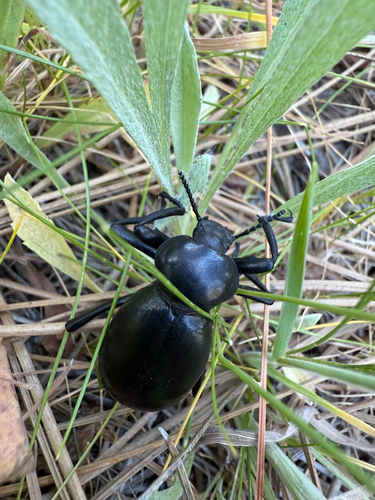
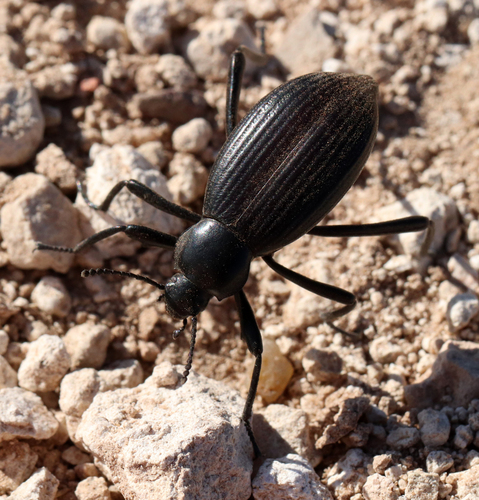
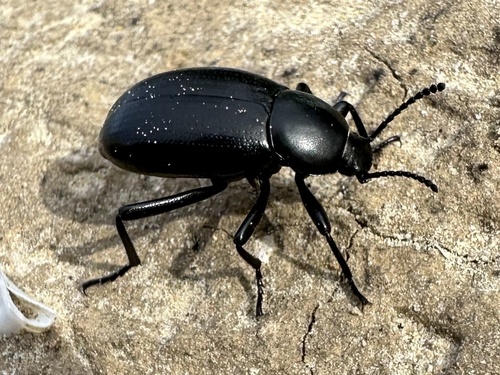
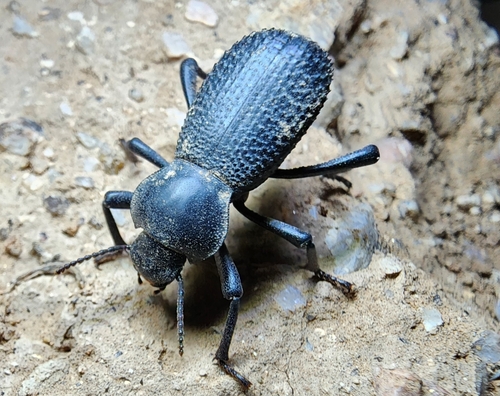
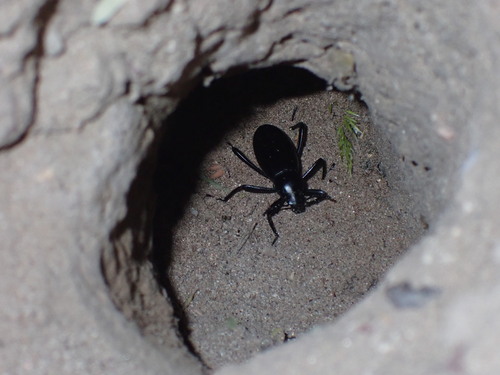
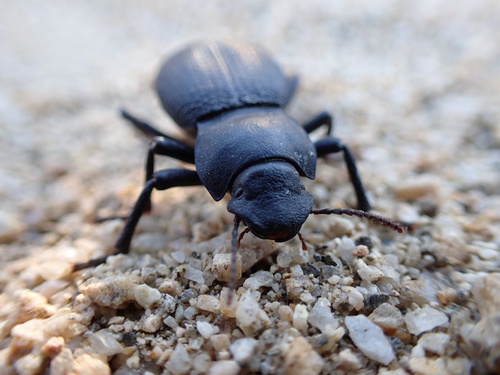
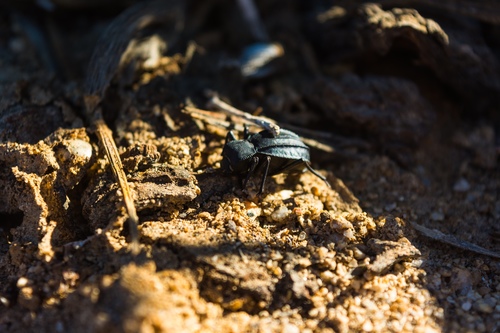
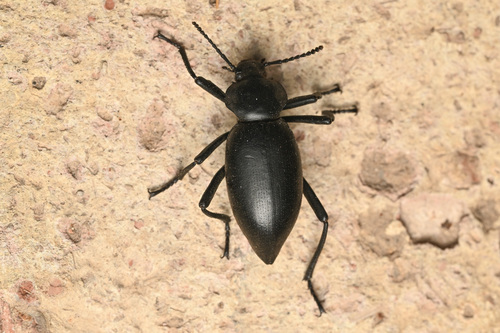
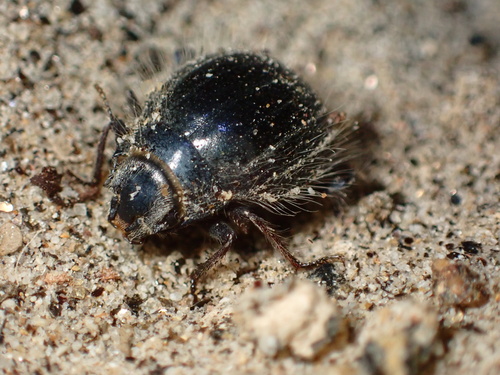
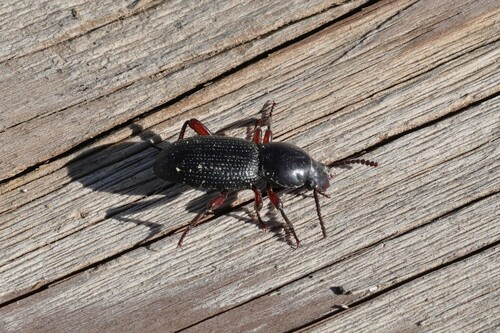
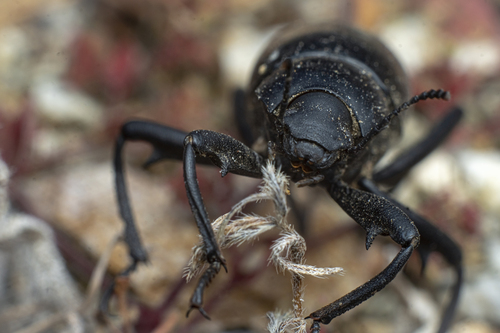
Asbolus verrucosus LeConte, 1851, also known as the desert ironclad beetle or blue death feigning beetle, is a species of darkling beetle native to southwestern United States (southern California to Utah and New Mexico) and northwestern Mexico, where it inhabits dry, sandy habitats such as the Sonoran and Mojave Deserts. It is highly adapted to hot environments and is omnivorous, consuming dead insects, fruits, lichen, and other plant matter. When threatened, the beetles are able to feign death. A. verrucosus larvae may reflex bleed during their death-feigning ritual. This releases hemolymph which acts as an adhesive, partially covering the larvae in sand and debris, helping evade desert-dwelling predators. The species is becoming increasingly popular in the pet trade, due to their ease of care, hardiness, and longevity.

The blue death feigning beetle grows to around 18–21 mm (0.71–0.83 in) length. The species name verrucosus, meaning 'warty', refers to the characteristic bumps on the beetle's elytra. Their powdery blue hue is due to a wax coating on their bodies that prevents loss of moisture. Males are slightly smaller than females, and have bristly red hairs on... Wikipedia →

Global Distribution

Parks Where Found

# Park Country Daily sighting probability
1 Death Valley National Park 🇺🇸 United States
~20%
2 Joshua Tree National Park 🇺🇸 United States
~10%

Cities Where Found

# City Country Daily sighting probability
1 Las Vegas 🇺🇸 United States
~10%

Before you go

What are the chances of seeing a Desert Ironclad Beetle in Joshua Tree National Park?

With luck

About 10% of wildlife watchers report a Desert Ironclad Beetle sighting in Joshua Tree National Park on a given day, based on 11 verified sightings from GBIF citizen-science data from 2019 to 2026. It is the 112th most-seen of the 190 insects we can rate there. Over three days the chance rises to about 20%, and over a week to about 40%, if each day is a fresh chance.

When is the best time to see a Desert Ironclad Beetle in Joshua Tree National Park?

March–May, August and October

In those months about 10% of wildlife watchers report a Desert Ironclad Beetle in Joshua Tree National Park on a given day, against under 5% in June–July, September and November–February, the lowest months.

What time of day is best to see a Desert Ironclad Beetle?

Between 6 and 9 pm

Across all the parks we cover, that three-hour window holds the most Desert Ironclad Beetle sightings with a recorded time, and about half of them come between 6 am and 6 pm: it is most active around dawn and dusk.

Is Joshua Tree National Park the best place to see a Desert Ironclad Beetle?

2nd of 2

Of the 2 parks where we can rate Desert Ironclad Beetle sightings, Joshua Tree National Park ranks 2nd at about 10%. The best odds are in Death Valley National Park (United States, about 20%).

Which relatives of the Desert Ironclad Beetle live in Joshua Tree National Park?

Same family: Tenebrionidae

The closest relatives of the Desert Ironclad Beetle that you can see in Joshua Tree National Park (family Tenebrionidae, Darkling Beetles) are Armored Stink Beetle (about 30%), Eleodes grandicollis (about 20%) and Rough-Lipped Darkling Beetle (about 10%), with each one's daily chance of a sighting.

Where does the Desert Ironclad Beetle sighting chance come from?

GBIF citizen-science records

It is estimated from how often the Desert Ironclad Beetle is recorded against all the insects logged in Joshua Tree National Park (11 verified sightings from 2019 to 2026), calibrated against known sighting rates. Figures are rounded to the nearest 10% because citizen-science data supports honest approximations, not decimals, and months with records from fewer than five people show "—". How it works.

← Back to Joshua Tree National Park