Long-tailed Brush Lizard

Long-tailed Brush Lizard

Urosaurus graciosus

Silhouette: Gopal Murali · PhyloPic

LCLeast ConcernNTVUENCR
Daily sighting probability ~10% · With luck
at Joshua Tree National Park

In 3 days ~20% in a week ~30%

7 Verified sightings at Joshua Tree National Park From 2019 to 2026
7 In 1 park
October Best month
☀️ Diurnal When it's spotted

About the Long-tailed Brush Lizard

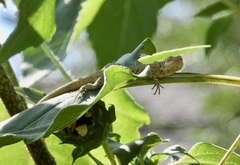
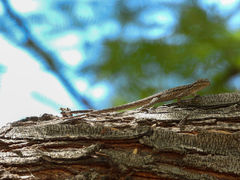
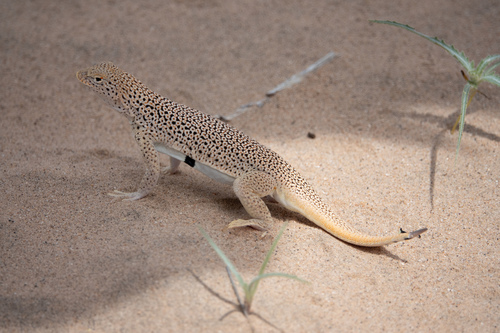
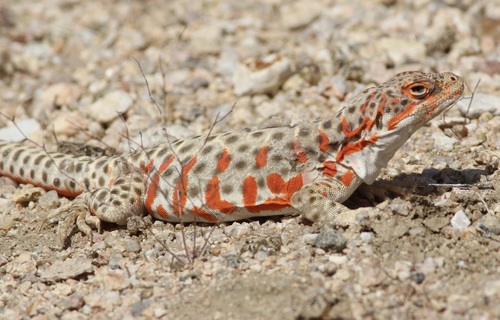
The western long-tailed brush lizard (Urosaurus graciosus) is a species of lizard in the family Phrynosomatidae. The species is native to the southwestern United States and adjacent northern Mexico. U. graciosus occurs in the Mojave Desert and the northwestern Sonoran Desert in the U.S. states of California, Arizona and Nevada, and in the Mexican states of Baja California and Sonora.

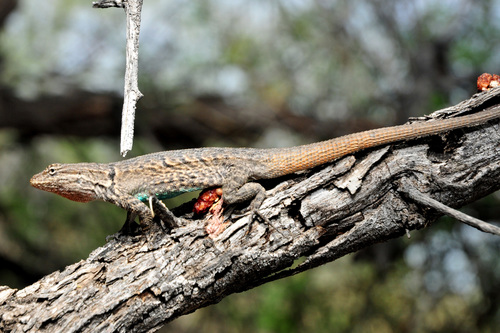
This species received its common name, long-tailed brush lizard, due to its tail, which is more than twice the body length, and due to its almost always being encountered on a tree or shrub. The long-tailed brush lizard's gray or tan coloration keeps it well camouflaged against branches while it waits for insects. Unlike most other phrynosomatid lizards, which bury in the sand at night during warm weather, U. graciosus spends the night on the tips of branches.

U. graciosus is distinguishable from its close relative the tree lizard, Urosaurus ornatus, by the presence of a tail more than two times its snout-vent length and the absence of a series of smaller scales running down the middle of the band of enlarged dorsal... Wikipedia →
Global Distribution

Parks Where Found

# Park Country Daily sighting probability
1 Joshua Tree National Park 🇺🇸 United States
~10%

More parks will be added in future updates.

Before you go

What are the chances of seeing a Long-tailed Brush Lizard in Joshua Tree National Park?

With luck

About 10% of wildlife watchers report a Long-tailed Brush Lizard sighting in Joshua Tree National Park on a given day, based on 7 verified sightings from GBIF citizen-science data from 2019 to 2026. It is the 35th most-seen of the 39 reptiles we can rate there. Over three days the chance rises to about 20%, and over a week to about 30%, if each day is a fresh chance.

When is the best time to see a Long-tailed Brush Lizard in Joshua Tree National Park?

April–June and October

In those months about 10% of wildlife watchers report a Long-tailed Brush Lizard in Joshua Tree National Park on a given day, against under 5% in July–September and November–March, the lowest months.

What time of day is best to see a Long-tailed Brush Lizard?

Between 9 am and noon

Across all the parks we cover, that three-hour window holds the most Long-tailed Brush Lizard sightings with a recorded time, and about 8 in 10 of them come between 6 am and 6 pm: it is a daytime animal.

Where else can you see a Long-tailed Brush Lizard?

Only Joshua Tree National Park, in our data

Joshua Tree National Park is the only park on Wallace's Line with enough records to rate Long-tailed Brush Lizard sightings: about 10% of wildlife watchers there report one on a given day.

Which relatives of the Long-tailed Brush Lizard live in Joshua Tree National Park?

Same family: Phrynosomatidae

The closest relatives of the Long-tailed Brush Lizard that you can see in Joshua Tree National Park (family Phrynosomatidae, Phrynosomatid Lizards) are Common Side-blotched Lizard (about 90%), Desert Spiny Lizard (about 70%) and Western Fence Lizard (about 60%), with each one's daily chance of a sighting.

Where does the Long-tailed Brush Lizard sighting chance come from?

GBIF citizen-science records

It is estimated from how often the Long-tailed Brush Lizard is recorded against all the reptiles logged in Joshua Tree National Park (7 verified sightings from 2019 to 2026), calibrated against known sighting rates. Figures are rounded to the nearest 10% because citizen-science data supports honest approximations, not decimals, and months with records from fewer than five people show "—". How it works.

← Back to Joshua Tree National Park