Northern Brown Snake

Northern Brown Snake

Pseudonaja nuchalis

Silhouette: SeismicShrimp · PhyloPic

Endemic
Daily sighting probability ~20% · Possible
at Kakadu National Park

In 3 days ~40% in a week ~80%

12 Verified sightings at Kakadu National Park From 2019 to 2026
12 In 1 park
March Best month
☀️🌙 Day & Night When it's spotted

About the Northern Brown Snake

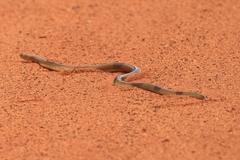
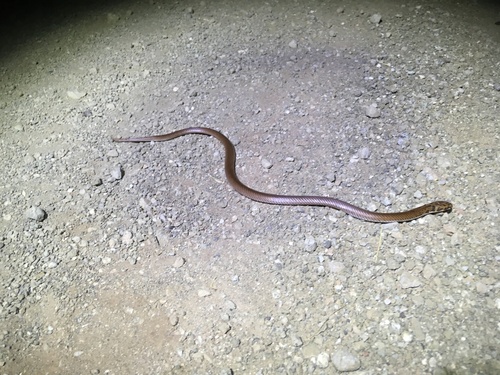
Pseudonaja nuchalis, the northern brown snake or gwardar, is a species of very fast, highly venomous elapid snake native to Australia. Its colour and pattern are rather variable, depending largely on its location. The name gwardar is a word meaning "go the long way around" in an Aboriginal language. This may be regarded as advice for people who come across the species in the wild: that is, while P. nuchalis is generally cautious, shy, and inclined to retreat rather than attack, it will defend itself if cornered.

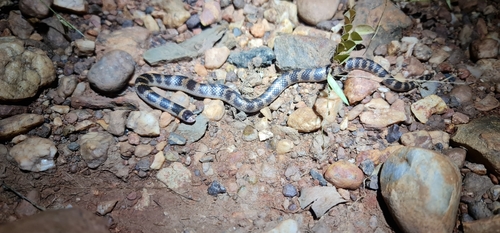
The northern brown snake grows up to 1.8 m (5 ft 10.87 in) in total length (including tail). Its back can feature shades of orange-brown with flecks and bands, or appear plain. Its belly is cream to orange with pink blotches. Some individuals have jet black heads (this can cause it to be confused with the black-headed python), while others feature a black 'V' shape on the back of their neck, below their head.

The northern brown snake has a wide distribution and is found across the north of the Australian continent, including the Northern Territory, Queensland and Western Australia. The northern brown snake is a ground-dwelling... Wikipedia →

Global Distribution

Parks Where Found

# Park Country Daily sighting probability
1 Kakadu National Park 🇦🇺 Australia
~20%

More parks will be added in future updates.

Zoos & Centres Where Found

# Zoo / Centre Country
1 Ralph Perkins II Wildlife Center and Woods Garden 🇺🇸 United States In captivity

Before you go

What are the chances of seeing a Northern Brown Snake in Kakadu National Park?

Possible

About 20% of wildlife watchers report a Northern Brown Snake sighting in Kakadu National Park on a given day, based on 12 verified sightings from GBIF citizen-science data from 2019 to 2026. It is the 25th most-seen of the 54 reptiles we can rate there. Over three days the chance rises to about 40%, and over a week to about 80%, if each day is a fresh chance.

When is the best time to see a Northern Brown Snake in Kakadu National Park?

March–April and November

In those months about 30% of wildlife watchers report a Northern Brown Snake in Kakadu National Park on a given day, against under 5% in October and December–February, the lowest months.

What time of day is best to see a Northern Brown Snake?

Between 7 and 10 pm

Across all the parks we cover, that three-hour window holds the most Northern Brown Snake sightings with a recorded time, and about half of them come between 6 am and 6 pm: it is seen both by day and at night.

Where else can you see a Northern Brown Snake?

Only Kakadu National Park, in our data

Kakadu National Park is the only park on Wallace's Line with enough records to rate Northern Brown Snake sightings: about 20% of wildlife watchers there report one on a given day.

Which relatives of the Northern Brown Snake live in Kakadu National Park?

Same family: Elapidae

The closest relatives of the Northern Brown Snake that you can see in Kakadu National Park (family Elapidae, Elapid Snakes) are Mulga Snake (about 20%), Papuan Whipsnake (about 20%) and Rough-scaled Death Adder (about 20%), with each one's daily chance of a sighting.

Where does the Northern Brown Snake sighting chance come from?

GBIF citizen-science records

It is estimated from how often the Northern Brown Snake is recorded against all the reptiles logged in Kakadu National Park (12 verified sightings from 2019 to 2026), calibrated against known sighting rates. Figures are rounded to the nearest 10% because citizen-science data supports honest approximations, not decimals, and months with records from fewer than five people show "—". How it works.

← Back to Kakadu National Park