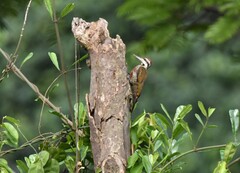
Fire-bellied Woodpecker

Fire-bellied Woodpecker

Chloropicus pyrrhogaster

Silhouette: Pepe Reigada · PhyloPic

Daily sighting probability ~40% · Likely
at Kakum National Park

In 3 days ~80% in a week >90%

242 Verified sightings at Kakum National Park From 2019 to 2026
248 In all 2 parks
July Best month
☀️ Diurnal When it's spotted

About the Fire-bellied Woodpecker

The fire-bellied woodpecker (Chloropicus pyrrhogaster) is a species of bird in the family Picidae. It is found in Benin, Ivory Coast, Ghana, Guinea, Liberia, Mali, Nigeria, Sierra Leone, Togo and western Cameroon. A common species, the IUCN has assessed its conservation status as being of "least concern". Some taxonomic authorities place this species in Dendropicos.

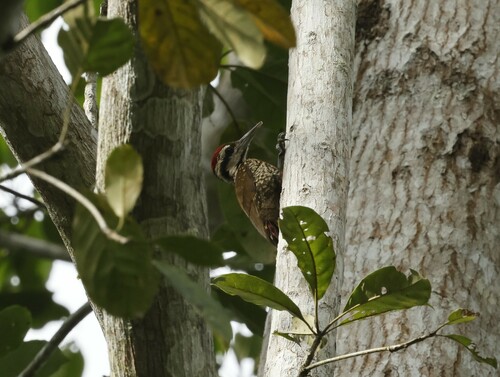
The upper parts of the fire-bellied woodpecker are olive or bronze with slight barring. The wings are brown with some light barring and the upper-tail blackish. The rump and upper tail coverts are crimson. The head and throat are white, boldly marked with a blackish malar streak that extends onto the breast, and a post-ocular streak extending onto the ear-coverts. The breast is cream with dark chevrons on the flanks, the central region and belly being scarlet as far as the vent. The long, sharp beak is grey as are the legs. The sexes are different; the male has a red crown and nape while the female has this area black. The female has a longer tail and shorter beak than the male, and the red on her belly is less distinct. Juveniles are duller and browner than adults, and both sexes have some red on the crown...
Wikipedia →

Sounds

Call0:25

Ghana · 2022

© Peter Boesman · XC718989 · CC BY-NC-ND 4.0

Drumming0:44

Ivory Coast · 2020

© Étienne Leroy · XC519020 · CC BY-NC-SA 4.0

Call1:23

Ghana · 2001

© András Schmidt · XC745798 · CC BY-NC-SA 4.0

Global Distribution

Parks Where Found

# Park Country Daily sighting probability
1 Kakum National Park 🇬🇭 Ghana
~40%
2 Taï National Park 🇨🇮 Ivory Coast
~10%

Before you go

What are the chances of seeing a Fire-bellied Woodpecker in Kakum National Park?

Likely

About 40% of wildlife watchers report a Fire-bellied Woodpecker sighting in Kakum National Park on a given day, based on 242 verified sightings from GBIF citizen-science data from 2019 to 2026. It is the 22nd most-seen of the 250 birds we can rate there. Over three days the chance rises to about 80%, and over a week to over 90%, if each day is a fresh chance.

When is the best time to see a Fire-bellied Woodpecker in Kakum National Park?

July

In that month about 60% of wildlife watchers report a Fire-bellied Woodpecker in Kakum National Park on a given day, against about 30% in February, the lowest month.

What time of day is best to see a Fire-bellied Woodpecker?

Between 6 and 9 am

Across all the parks we cover, that three-hour window holds the most Fire-bellied Woodpecker sightings with a recorded time, and about 8 in 10 of them come between 6 am and 6 pm: it is a daytime animal.

Is Kakum National Park the best place to see a Fire-bellied Woodpecker?

Yes

Of the 2 parks where we can rate Fire-bellied Woodpecker sightings, Kakum National Park has the highest daily chance: about 40%. Next come Taï National Park (Ivory Coast, about 10%).

Which relatives of the Fire-bellied Woodpecker live in Kakum National Park?

Same family: Picidae

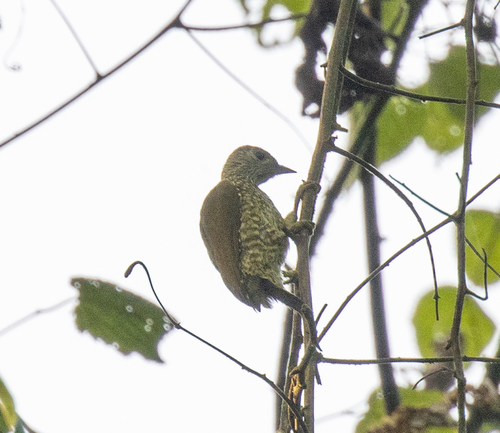
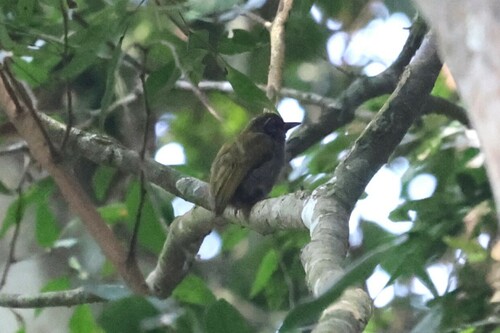
The closest relatives of the Fire-bellied Woodpecker that you can see in Kakum National Park (family Picidae, Woodpeckers) are Melancholy Woodpecker (about 20%), Buff-Spotted Woodpecker (about 10%) and African Piculet (about 10%), with each one's daily chance of a sighting.

Where does the Fire-bellied Woodpecker sighting chance come from?

GBIF citizen-science records

It is estimated from how often the Fire-bellied Woodpecker is recorded against all the birds logged in Kakum National Park (242 verified sightings from 2019 to 2026), calibrated against known sighting rates. Figures are rounded to the nearest 10% because citizen-science data supports honest approximations, not decimals, and months with records from fewer than five people show "—". How it works.

← Back to Kakum National Park