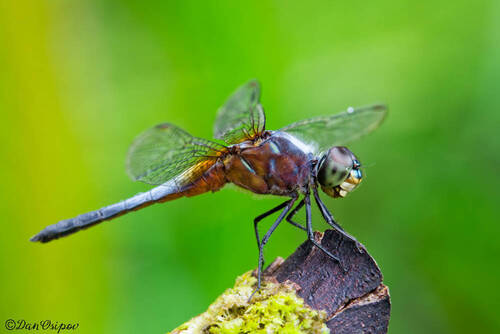
Dingy Dusk-Darter

Dingy Dusk-Darter

Zyxomma petiolatum

Daily sighting probability ~10% · With luck
at Khao Sok National Park

In 3 days ~30% in a week ~60%

6 Verified sightings at Khao Sok National Park From 2019 to 2026
6 In 1 park
January Best month
☀️ Diurnal When it's spotted

About the Dingy Dusk-Darter

Zyxomma petiolatum, known by the common names long-tailed duskdarter, brown dusk hawk and dingy duskflyer, is a species of dragonfly in the family Libellulidae. It is widespread in many Asian countries, New Guinea, northern Australia and islands in the Pacific.

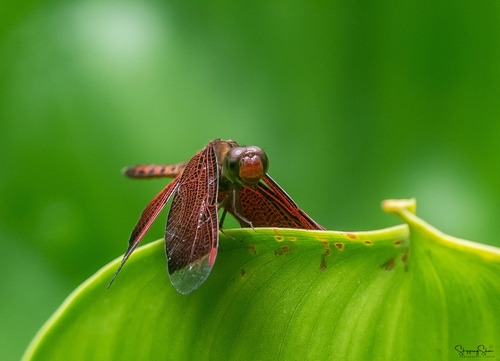
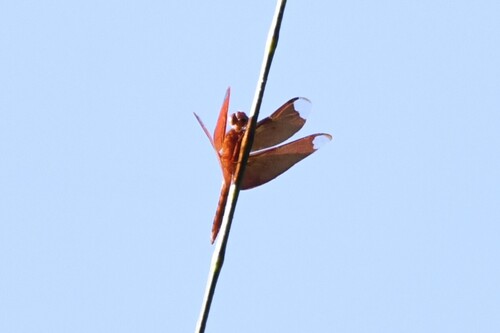
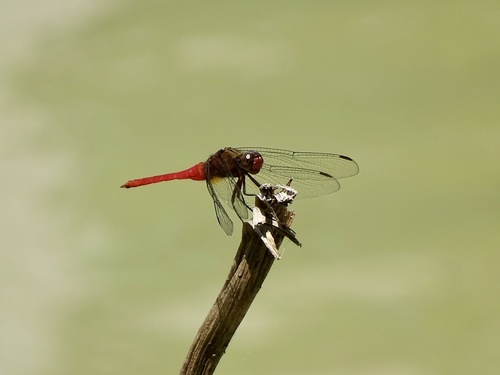
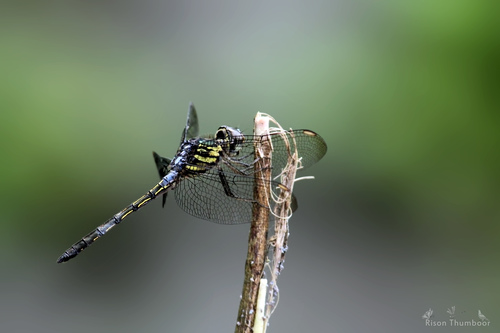
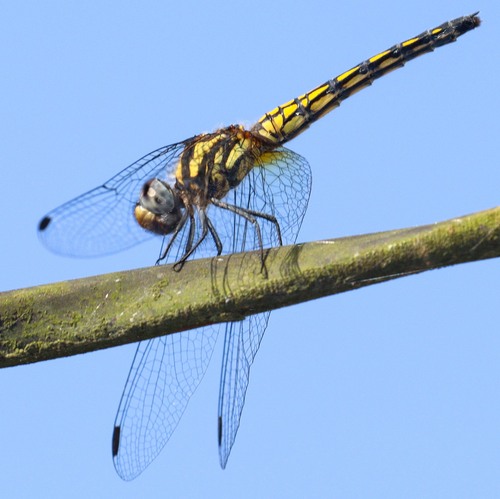
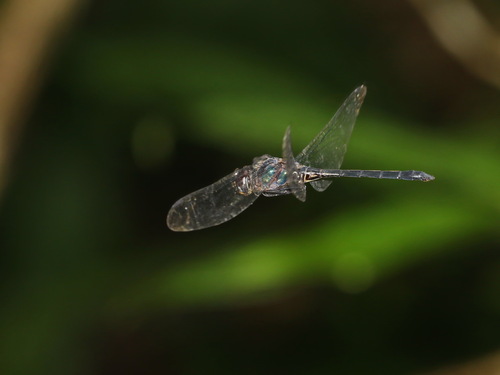
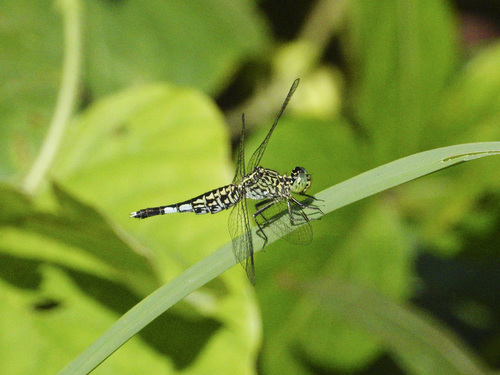
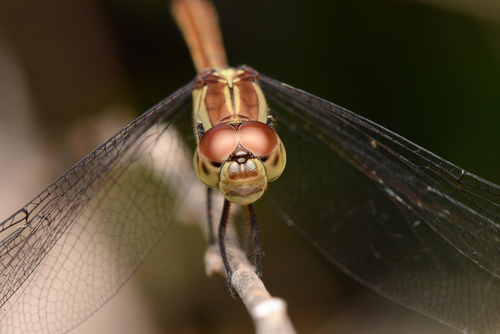
It is a medium-sized chocolate-brown colored dragonfly with emerald-green eyes. Female is similar to the males. It breeds in small pools, ponds, swamps and slow flowing rivers. It is crepuscular but may also be active during overcast days. Usually seen in the evening as an extremely rapid flyer, flying low over water-bodies, hawking midges and mosquitoes. In daytime it roosts among vegetation and can be difficult to find.

The genus name Zyxomma is derived from the Greek ζεῦξις (zeuxis, "yoking" or "joining together") and ὄμμα (omma, "eye"), referring to the large, adjoining eyes. The species name petiolatum is derived from the Latin petiolus ("small foot" or "leaf stalk"), referring to the excessively slender part of the abdomen.

List of odonates of Sri Lanka List of odonates of India List of odonata of Kerala List of Odonata species of Australia Wikipedia →

Global Distribution

Parks Where Found

# Park Country Daily sighting probability
1 Khao Sok National Park 🇹🇭 Thailand
~10%

More parks will be added in future updates.

Cities Where Found

# City Country Daily sighting probability
1 Kozhikode 🇮🇳 India
~20%
2 Yogyakarta 🇮🇩 Indonesia
~20%
3 Ponnani 🇮🇳 India
~10%
4 Kochi 🇮🇳 India
~10%
5 Colombo [Sri Jayawardenepura Kotte] 🇱🇰 Sri Lanka
~10%
6 Tasikmalaya 🇮🇩 Indonesia
~10%
7 Kolkata 🇮🇳 India
~10%
8 Kollam 🇮🇳 India
~10%
9 Kaohsiung 🇹🇼 Taiwan
~10%
10 Guangzhou 🇨🇳 China
<5%

Before you go

What are the chances of seeing a Dingy Dusk-Darter in Khao Sok National Park?

With luck

About 10% of wildlife watchers report a Dingy Dusk-Darter sighting in Khao Sok National Park on a given day, based on 6 verified sightings from GBIF citizen-science data from 2019 to 2026. It is the 82nd most-seen of the 104 insects we can rate there. Over three days the chance rises to about 30%, and over a week to about 60%, if each day is a fresh chance.

When is the best time to see a Dingy Dusk-Darter in Khao Sok National Park?

January

In that month about 30% of wildlife watchers report a Dingy Dusk-Darter in Khao Sok National Park on a given day, against under 5% in February to November, the lowest months. That is one of Khao Sok National Park's driest months, with about 70 mm of rain against 280 mm in October.

What time of day is best to see a Dingy Dusk-Darter?

Between 3 and 6 pm

Across all the parks we cover, that three-hour window holds the most Dingy Dusk-Darter sightings with a recorded time, and nearly all of them come between 6 am and 6 pm: it is a daytime animal.

Where else can you see a Dingy Dusk-Darter?

Only Khao Sok National Park, in our data

Khao Sok National Park is the only park on Wallace's Line with enough records to rate Dingy Dusk-Darter sightings: about 10% of wildlife watchers there report one on a given day.

Which relatives of the Dingy Dusk-Darter live in Khao Sok National Park?

Same family: Libellulidae

The closest relatives of the Dingy Dusk-Darter that you can see in Khao Sok National Park (family Libellulidae, Skimmers) are Crimson Marsh Glider (about 40%), Common Parasol (about 40%) and Russet Percher (about 30%), with each one's daily chance of a sighting.

Where does the Dingy Dusk-Darter sighting chance come from?

GBIF citizen-science records

It is estimated from how often the Dingy Dusk-Darter is recorded against all the insects logged in Khao Sok National Park (6 verified sightings from 2019 to 2026), calibrated against known sighting rates. Figures are rounded to the nearest 10% because citizen-science data supports honest approximations, not decimals, and months with records from fewer than five people show "—". How it works.

← Back to Khao Sok National Park