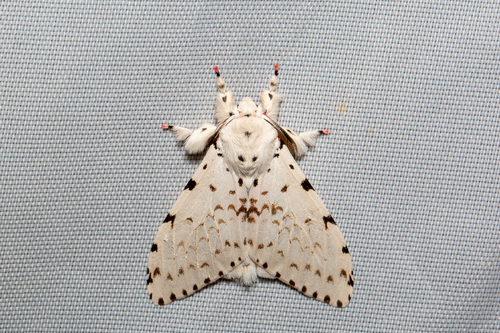
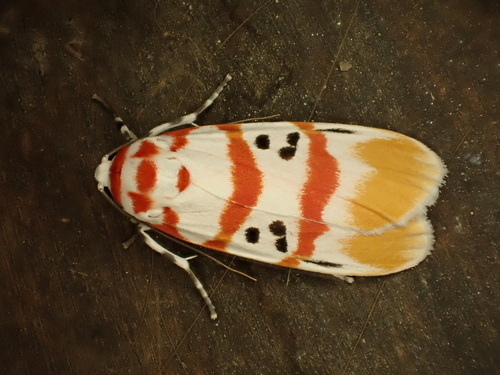
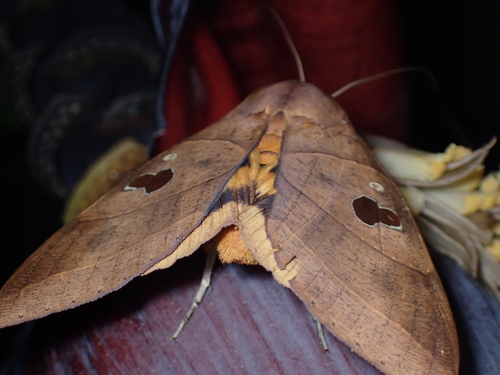
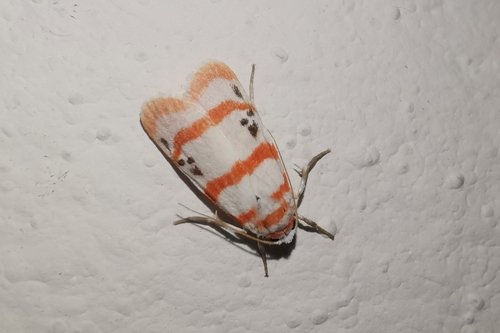
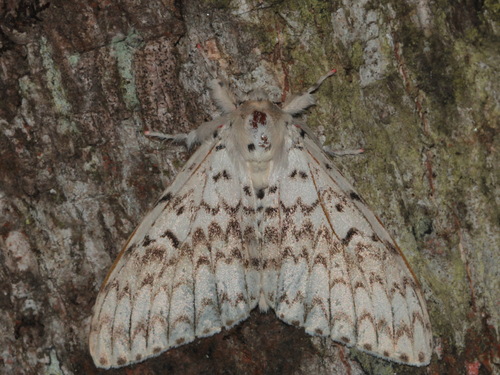
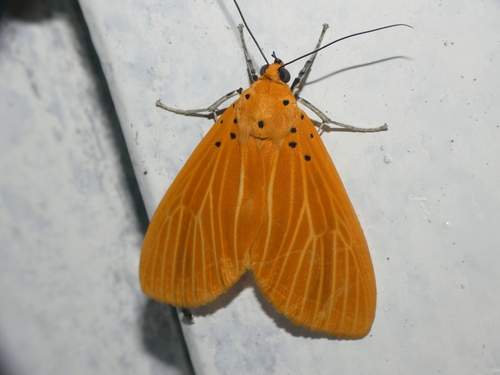
Clouded Tiger Moth

Clouded Tiger Moth

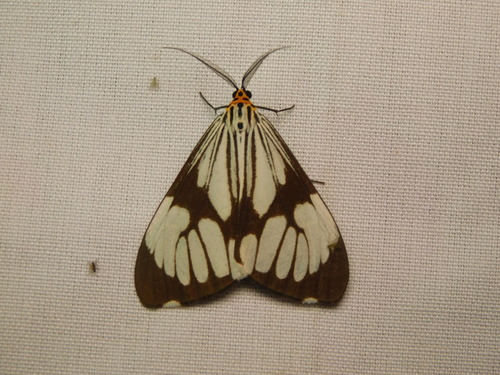
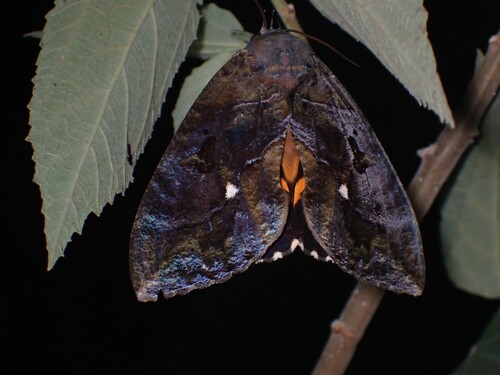
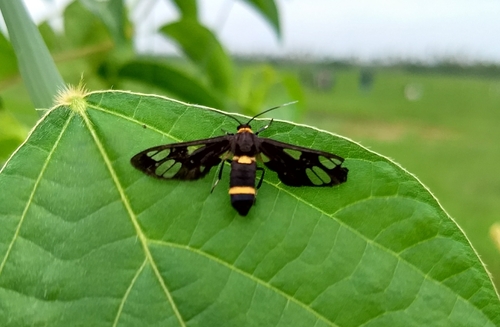
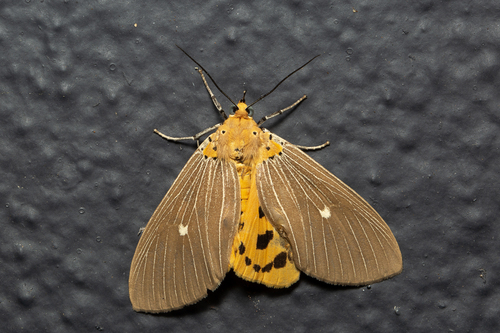
Creatonotos transiens

Daily sighting probability ~10% · With luck
at Khao Yai National Park

In 3 days ~20% in a week ~40%

6 Verified sightings at Khao Yai National Park From 2019 to 2026
61 In all 5 parks
July Best month
🌙 Nocturnal When it's spotted

About the Clouded Tiger Moth

Creatonotos transiens is a species of moth in the family Erebidae. The species was first scientifically described by Francis Walker in 1855. C. transiens is found in China (Shanxi, Shaanxi, central China, Tibet, Yunnan, Sichuan, Hong Kong, Hainan, Guizhou, Hubei, Hunan, Zhejiang, Fujian), Taiwan, Japan (Ryukyu), eastern Afghanistan, Pakistan, India, Bangladesh, Nepal, Bhutan, Myanmar, Indochina, Borneo, Bali and Lombok. Records attributed to the Philippines are likely referable to Creatonotos wilemani Rothschild, 1933, as Dubalotov & Holloway noted misplaced wilemani material in The Natural History Museum, London, collections. Records attributed to Sulawesi are referable to Creatonotos kishidai Dubalotov & Holloway, 2007

This list follows Holloway's interpretation from Moths of Borneo, part 6, as updated in Dubalotov & Holloway ([2006], 2007) Creatonotos transiens transiens (India, northern Pakistan) Creatonotos transiens albina (Daniel, 1971) (Afghanistan) Wikipedia →
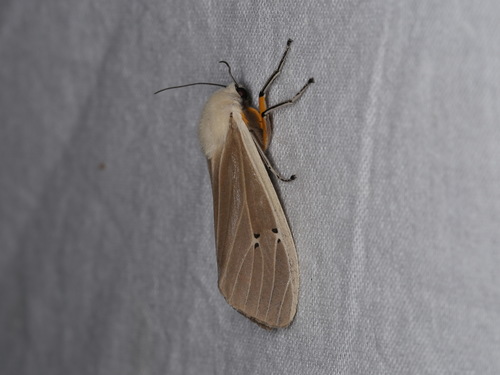
Global Distribution

Parks Where Found

# Park Country Daily sighting probability
1 Kanha National Park 🇮🇳 India
~30%
2 Eravikulam National Park 🇮🇳 India
~20%
3 Taroko National Park 🇹🇼 Taiwan
~10%
4 Kaeng Krachan National Park 🇹🇭 Thailand
~10%
5 Khao Yai National Park 🇹🇭 Thailand
~10%

Cities Where Found

# City Country Daily sighting probability
1 Dehradun 🇮🇳 India
~20%
2 Tasikmalaya 🇮🇩 Indonesia
~10%
3 Naha 🇯🇵 Japan
~10%
4 Bandung 🇮🇩 Indonesia
~10%
5 Kolkata 🇮🇳 India
~10%
6 Hong Kong 🇨🇳 China
~10%
7 Pune 🇮🇳 India
~10%
8 Tuen Mun 🇨🇳 China
~10%
9 Bengaluru 🇮🇳 India
~10%
10 Taipei 🇹🇼 Taiwan
~10%

Before you go

What are the chances of seeing a Clouded Tiger Moth in Khao Yai National Park?

With luck

About 10% of wildlife watchers report a Clouded Tiger Moth sighting in Khao Yai National Park on a given day, based on 6 verified sightings from GBIF citizen-science data from 2019 to 2026. It is the 183rd most-seen of the 221 insects we can rate there. Over three days the chance rises to about 20%, and over a week to about 40%, if each day is a fresh chance.

When is the best time to see a Clouded Tiger Moth in Khao Yai National Park?

July

In that month about 30% of wildlife watchers report a Clouded Tiger Moth in Khao Yai National Park on a given day, against under 5% in August, October and December–June, the lowest months. That is one of Khao Yai National Park's wettest months, with about 270 mm of rain against 15 mm in December.

What time of day is best to see a Clouded Tiger Moth?

Between 7 and 10 pm

Across all the parks we cover, that three-hour window holds the most Clouded Tiger Moth sightings with a recorded time, and about 8 in 10 of them come between 6 pm and 6 am: it is mostly seen at night.

Is Khao Yai National Park the best place to see a Clouded Tiger Moth?

5th of 5

Of the 5 parks where we can rate Clouded Tiger Moth sightings, Khao Yai National Park ranks 5th at about 10%. The best odds are in Kanha National Park (India, about 30%), Eravikulam National Park (India, about 20%) and Taroko National Park (Taiwan, about 10%).

Which relatives of the Clouded Tiger Moth live in Khao Yai National Park?

Same family: Erebidae

The closest relatives of the Clouded Tiger Moth that you can see in Khao Yai National Park (family Erebidae, Underwing, Tiger, Tussock, and Allied Moths) are Lymantria bivittata (about 20%), Cyana bellissima (about 10%) and Yellow Underwing (about 10%), with each one's daily chance of a sighting.

Where does the Clouded Tiger Moth sighting chance come from?

GBIF citizen-science records

It is estimated from how often the Clouded Tiger Moth is recorded against all the insects logged in Khao Yai National Park (6 verified sightings from 2019 to 2026), calibrated against known sighting rates. Figures are rounded to the nearest 10% because citizen-science data supports honest approximations, not decimals, and months with records from fewer than five people show "—". How it works.

← Back to Khao Yai National Park