Cricula Silkmoth

Cricula Silkmoth

Cricula trifenestrata

Daily sighting probability ~20% · Possible
at Kinabalu Park

In 3 days ~50% in a week ~80%

20 Verified sightings at Kinabalu Park From 2019 to 2026
29 In all 2 parks
May Best month
☀️🌙 Day & Night When it's spotted

About the Cricula Silkmoth

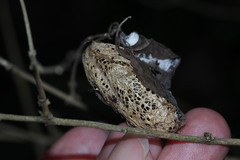
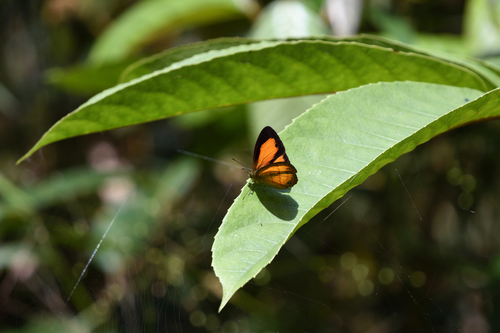
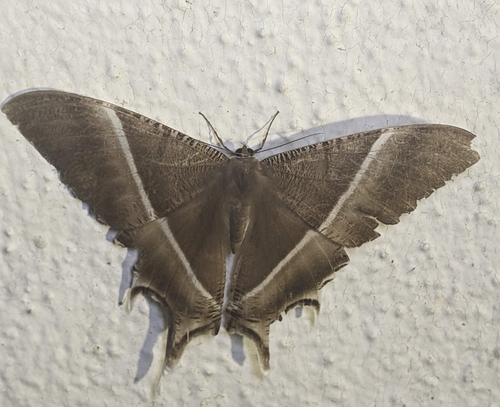
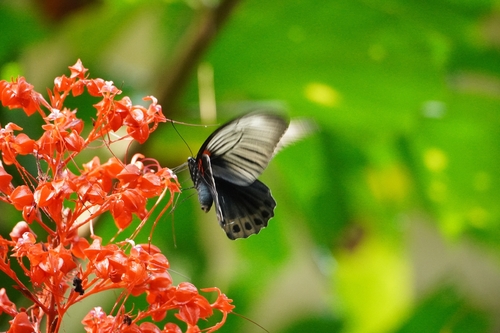
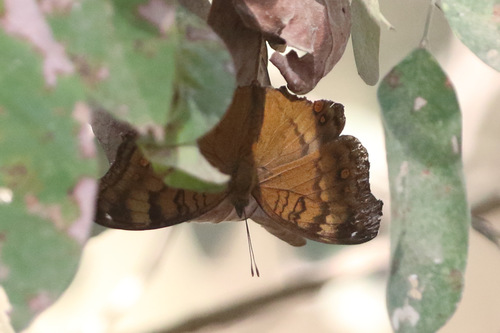
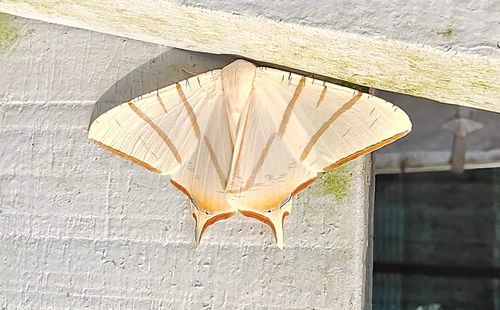
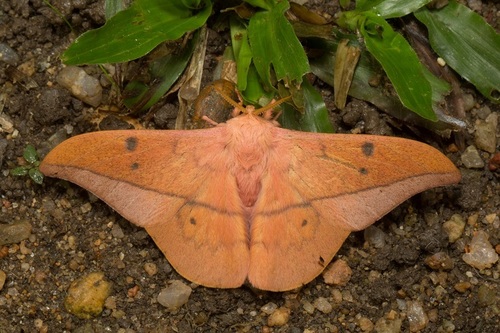
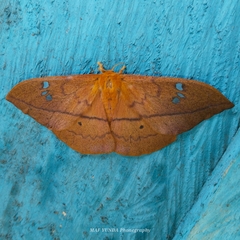
Cricula trifenestrata, the cricula silkmoth, is a species of wild silk moth of the family Saturniidae. It is found from India to the Philippines, Sulawesi, Java, and Sri Lanka. The wingspan is 65–100 mm. Adults are on wing from May to June with a possible second brood from August to September. Male is brown, ochreous, yellowish to reddish. Forewings are consisted with a waved anti-medial dark line and a small hyaline spot beyond the end of the cell, with one or two others above it. The upper one is a dark spot. Hindwings with oblique line continued to the inner margin before the middle. There is a hyaline spot beyond the cell. Ventral side is much purple.

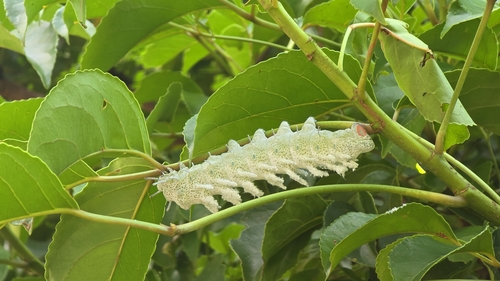
Female is red. There are three large irregularly shaped hyaline spots beyond the cell of the forewing, often with one or two small sides inside them. Larva is blackish brown with red spots in color and hairy. There are six setiferous tubercles in each somite from 2nd to 11th. First somite and anal claspers are crimson colored. Legs and prolegs are brown colored.

The larvae have been recorded on Anacardium, Mangifera, Spondias, Careya, Bischofia, Canarium, Quercus, Cinnamomum, Machilus, Persea, Acrocarpus, Ziziphus... Wikipedia →
Global Distribution

Parks Where Found

# Park Country Daily sighting probability
1 Periyar National Park 🇮🇳 India
~30%
2 Kinabalu Park 🇲🇾 Malaysia
~20%

Cities Where Found

# City Country Daily sighting probability
1 Tasikmalaya 🇮🇩 Indonesia
~20%
2 Bandung 🇮🇩 Indonesia
~20%
3 Jakarta 🇮🇩 Indonesia
~10%

Before you go

What are the chances of seeing a Cricula Silkmoth in Kinabalu Park?

Possible

About 20% of wildlife watchers report a Cricula Silkmoth sighting in Kinabalu Park on a given day, based on 20 verified sightings from GBIF citizen-science data from 2019 to 2026. It is the 46th most-seen of the 297 insects we can rate there. Over three days the chance rises to about 50%, and over a week to about 80%, if each day is a fresh chance.

When is the best time to see a Cricula Silkmoth in Kinabalu Park?

May

In that month about 40% of wildlife watchers report a Cricula Silkmoth in Kinabalu Park on a given day, against under 5% in December and January, the lowest months.

What time of day is best to see a Cricula Silkmoth?

Between 11 am and 2 pm

Across all the parks we cover, that three-hour window holds the most Cricula Silkmoth sightings with a recorded time, and about half of them come between 6 pm and 6 am: it is seen both by day and at night.

Is Kinabalu Park the best place to see a Cricula Silkmoth?

2nd of 2

Of the 2 parks where we can rate Cricula Silkmoth sightings, Kinabalu Park ranks 2nd at about 20%. The best odds are in Periyar National Park (India, about 30%).

Which relatives of the Cricula Silkmoth live in Kinabalu Park?

Same family: Saturniidae

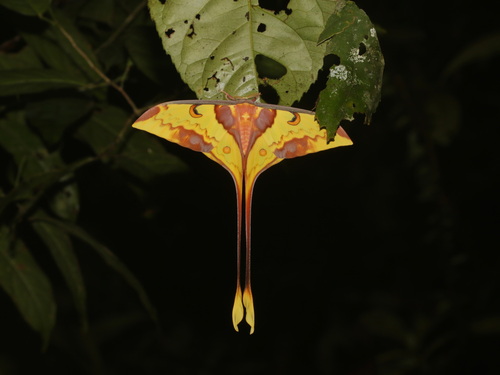
The closest relatives of the Cricula Silkmoth that you can see in Kinabalu Park (family Saturniidae, Emperor and Giant Silk Moths) are Atlas Moth (about 30%) and Malaysian Moon Moth (about 10%), with each one's daily chance of a sighting.

Where does the Cricula Silkmoth sighting chance come from?

GBIF citizen-science records

It is estimated from how often the Cricula Silkmoth is recorded against all the insects logged in Kinabalu Park (20 verified sightings from 2019 to 2026), calibrated against known sighting rates. Figures are rounded to the nearest 10% because citizen-science data supports honest approximations, not decimals, and months with records from fewer than five people show "—". How it works.

← Back to Kinabalu Park