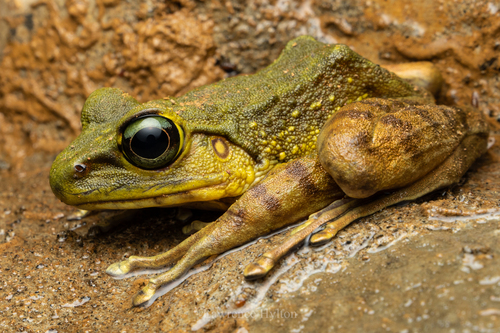
Kinabalu Sticky Frog

Kinabalu Sticky Frog

Kalophrynus baluensis

Silhouette: Dmitry Bogdanov (vectorized by T. Michael Keesey) · PhyloPic

LCNTNear ThreatenedVUENCR Endemic
Daily sighting probability ~40% · Likely
at Kinabalu Park

In 3 days ~80% in a week >90%

64 Verified sightings at Kinabalu Park From 2019 to 2026
64 In 1 park
December Best month
☀️ Diurnal When it's spotted

About the Kinabalu Sticky Frog

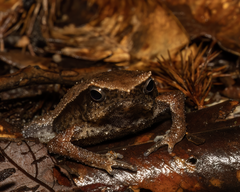
Kalophrynus baluensis (common names: Malaysian grainy frog, Balu sticky frog, Kinabalu sticky frog) is a species of frog in the family Microhylidae. It is endemic to Mount Kinabalu in Sabah (East Malaysia, Borneo). Kalophrynus baluensis is unusual in that it appears to have diverged from its closest known relative that is not endemic to Mount Kinabalu before the mountain reached its present elevation. Most other Mount Kinabalu endemics are younger than the mountain (approximately 6 million years), and thus appear to have evolved there relatively recently.

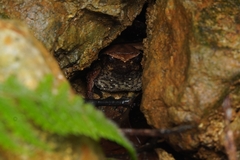
Kalophrynus baluensis is a stocky, short-legged frog. Females grow to 39 mm (1.5 in) in snout–vent length; males stay slightly smaller. Its brown colouration makes its perfectly camouflaged in its habitat, the leaf litter layer on the forest floor.

Natural habitats of Kalophrynus baluensis are montane oak-chestnut forests at elevations of 1,300–1,800 m (4,300–5,900 ft) asl. They are usually encountered on the forest floor. Male advertisement calls have been heard some distance away from water, suggesting that it might breed in phytotelmata.

There are no major threats to the species,... Wikipedia →

Sounds

Advertisement call1:03

Malaysia · 2011

© Marc Anderson · XC1061213 · CC BY-NC-ND 4.0

Global Distribution

Parks Where Found

# Park Country Daily sighting probability
1 Kinabalu Park 🇲🇾 Malaysia
~40%

More parks will be added in future updates.

Before you go

What are the chances of seeing a Kinabalu Sticky Frog in Kinabalu Park?

Likely

About 40% of wildlife watchers report a Kinabalu Sticky Frog sighting in Kinabalu Park on a given day, based on 64 verified sightings from GBIF citizen-science data from 2019 to 2026. It is the 7th most-seen of the 40 amphibians we can rate there. Over three days the chance rises to about 80%, and over a week to over 90%, if each day is a fresh chance.

When is the best time to see a Kinabalu Sticky Frog in Kinabalu Park?

December

In that month about 60% of wildlife watchers report a Kinabalu Sticky Frog in Kinabalu Park on a given day, against about 20% in March–April and October, the lowest months.

What time of day is best to see a Kinabalu Sticky Frog?

Between 1 and 4 pm

Across all the parks we cover, that three-hour window holds the most Kinabalu Sticky Frog sightings with a recorded time, and about 9 in 10 of them come between 6 am and 6 pm: it is a daytime animal.

Where else can you see a Kinabalu Sticky Frog?

Only Kinabalu Park, in our data

Kinabalu Park is the only park on Wallace's Line with enough records to rate Kinabalu Sticky Frog sightings: about 40% of wildlife watchers there report one on a given day.

Where does the Kinabalu Sticky Frog sighting chance come from?

GBIF citizen-science records

It is estimated from how often the Kinabalu Sticky Frog is recorded against all the amphibians logged in Kinabalu Park (64 verified sightings from 2019 to 2026), calibrated against known sighting rates. Figures are rounded to the nearest 10% because citizen-science data supports honest approximations, not decimals, and months with records from fewer than five people show "—". How it works.

← Back to Kinabalu Park