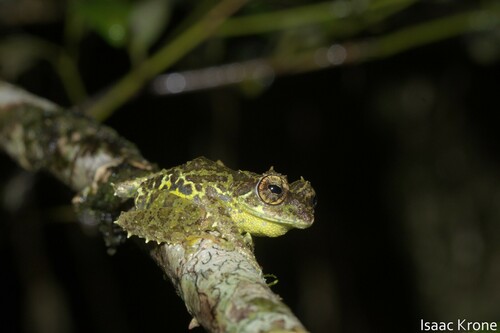
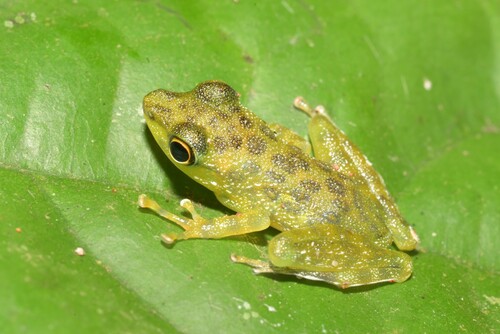
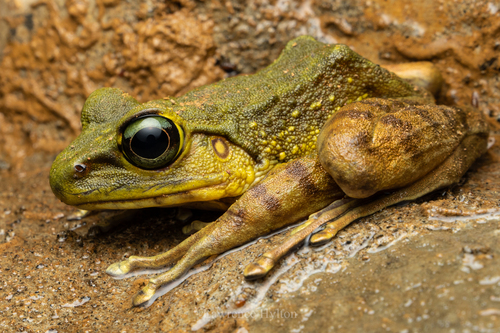
Seep Frog

Seep Frog

Occidozyga baluensis

Silhouette: Jose Carlos Arenas-Monroy · PhyloPic

Daily sighting probability ~20% · Possible
at Kinabalu Park

In 3 days ~40% in a week ~70%

13 Verified sightings at Kinabalu Park From 2019 to 2026
20 In all 2 parks
February Best month
☀️ Diurnal When it's spotted

About the Seep Frog

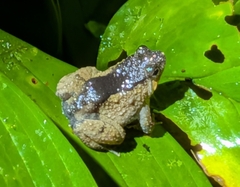
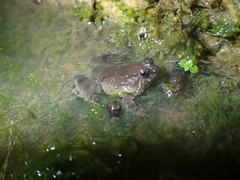
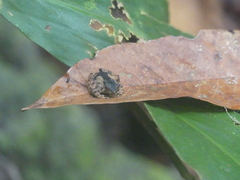
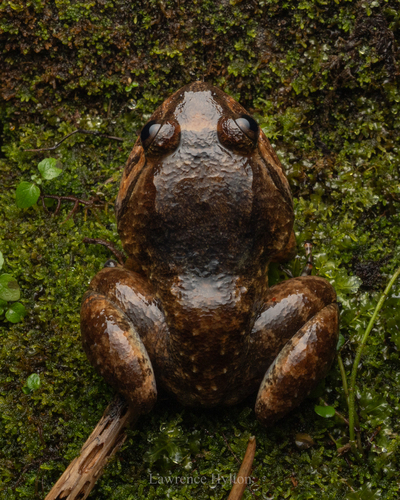
The seep frog or Balu oriental frog (Occidozyga baluensis) is a species of frog in the family Dicroglossidae. It is probably endemic to Borneo. Occidozyga baluensis is found in northwestern Borneo (Sarawak, Malaysia, Brunei, and Kalimantan, Indonesia) and was also recorded once in Lampung, Sumatra, although the latter is questionable. Its name refers to its type locality, "Mount Kina Balu, North Borneo".

Occidozyga baluensis are small–medium-sized frogs. Males grow to a snout–vent length of about 25 mm (0.98 in) and females to 35 mm (1.4 in). Dorsal colouration is variable, brown, grey, or olive, sometimes with dark markings. Some individuals have a vertebral stripe. The belly is cream with an abundance of brown spots. Tadpoles have a long tail with low tail fin; the tip is pointed. The mouth is terminal in position and the orifice appears quite small.

Occidozyga baluensis inhabit shallow ponds or water-filled depressions where clear water seeps out at the base of a slope. Tadpoles live in the shallow water film that covers the leaf litter in seepage areas. They are predatory and ingest small invertebrates. The species is threatened by habitat... Wikipedia →

Global Distribution

Parks Where Found

# Park Country Daily sighting probability
1 Danum Valley Conservation Area 🇲🇾 Malaysia
~20%
2 Kinabalu Park 🇲🇾 Malaysia
~20%

Before you go

What are the chances of seeing a Seep Frog in Kinabalu Park?

Possible

About 20% of wildlife watchers report a Seep Frog sighting in Kinabalu Park on a given day, based on 13 verified sightings from GBIF citizen-science data from 2019 to 2026. It is the 30th most-seen of the 40 amphibians we can rate there. Over three days the chance rises to about 40%, and over a week to about 70%, if each day is a fresh chance.

When is the best time to see a Seep Frog in Kinabalu Park?

February

In that month about 30% of wildlife watchers report a Seep Frog in Kinabalu Park on a given day, against under 5% in January, March, May–June, September and November, the lowest months. That is one of Kinabalu Park's driest months, with about 180 mm of rain against 550 mm in June.

What time of day is best to see a Seep Frog?

Between 1 and 4 pm

Across all the parks we cover, that three-hour window holds the most Seep Frog sightings with a recorded time, and about 8 in 10 of them come between 6 am and 6 pm: it is a daytime animal.

Is Kinabalu Park the best place to see a Seep Frog?

Among the best

Of the 2 parks where we can rate Seep Frog sightings, Kinabalu Park ranks 2nd at about 20%, level with the leaders once rounded. The best odds are in Danum Valley Conservation Area (Malaysia, about 20%).

Which relatives of the Seep Frog live in Kinabalu Park?

Same family: Dicroglossidae

The closest relatives of the Seep Frog that you can see in Kinabalu Park (family Dicroglossidae, Fork-tongued Frogs) are Alpine Cricket Frog (about 10%) and Limnonectes mocquardi (about 10%), with each one's daily chance of a sighting.

Where does the Seep Frog sighting chance come from?

GBIF citizen-science records

It is estimated from how often the Seep Frog is recorded against all the amphibians logged in Kinabalu Park (13 verified sightings from 2019 to 2026), calibrated against known sighting rates. Figures are rounded to the nearest 10% because citizen-science data supports honest approximations, not decimals, and months with records from fewer than five people show "—". How it works.

← Back to Kinabalu Park