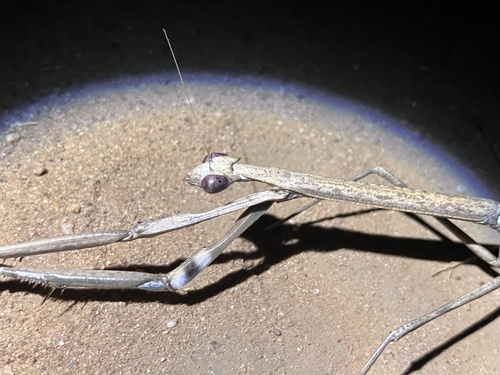
Common Ghost Mantis

Common Ghost Mantis

Phyllocrania paradoxa

Daily sighting probability <5% · Rare
at Kruger National Park

In 3 days ~10% in a week ~30%

10 Verified sightings at Kruger National Park From 2019 to 2026
10 In 1 park
November Best month
🌅 Crepuscular When it's spotted

About the Common Ghost Mantis

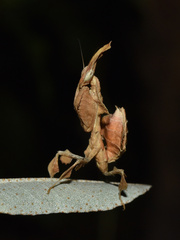
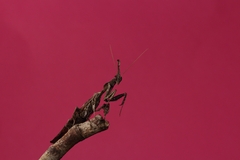
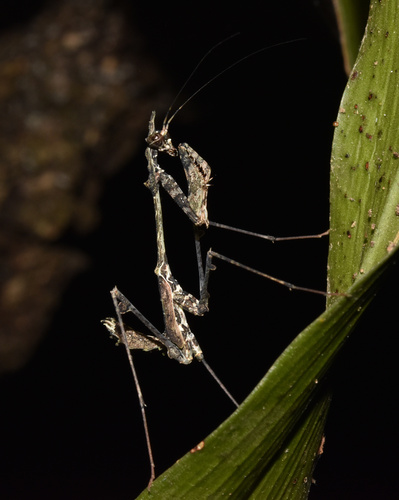
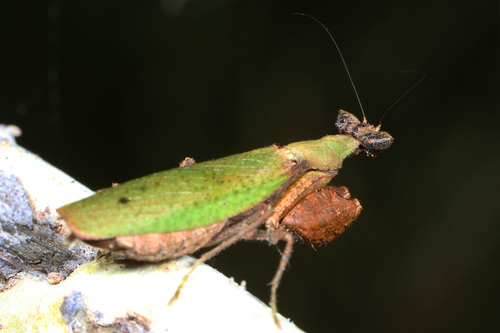
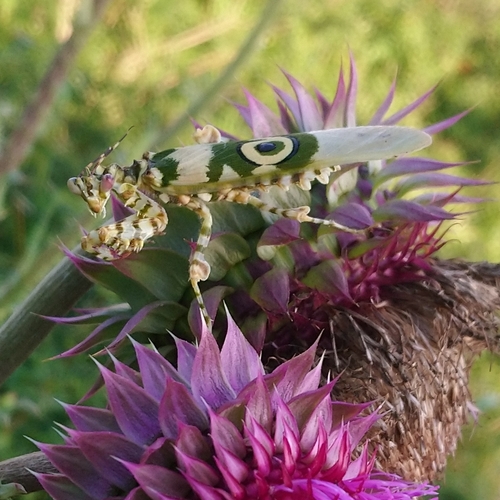
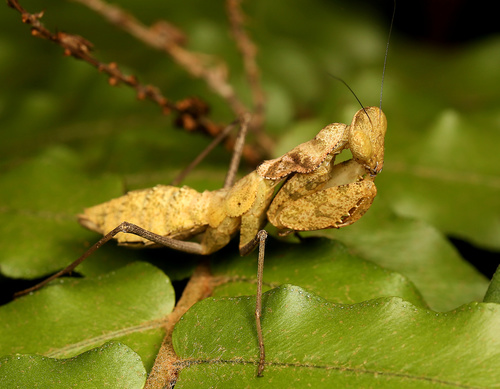
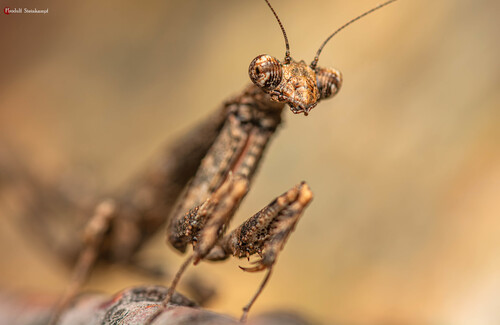
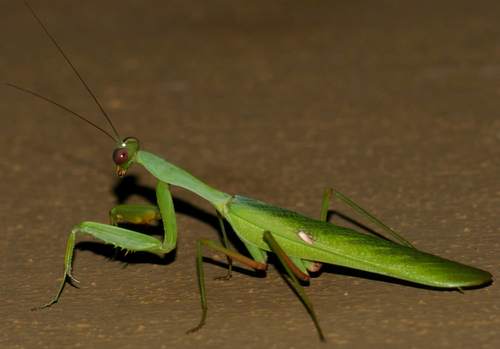
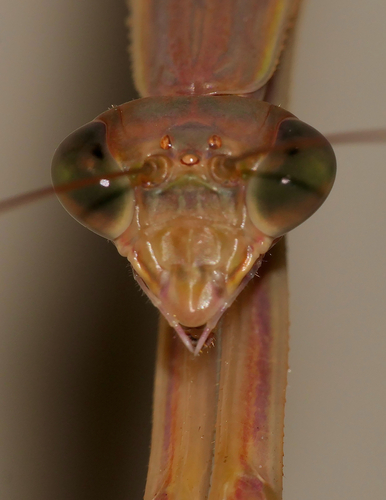
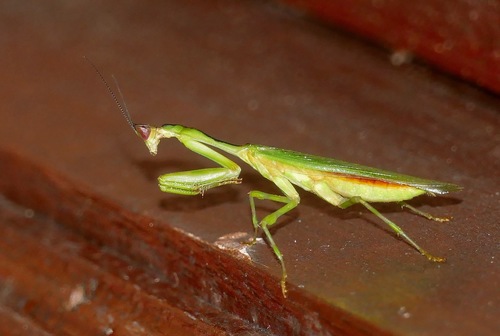
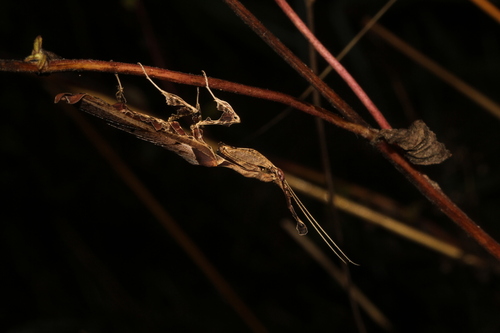
Phyllocrania paradoxa, common name ghost mantis, is a small species of mantis from Africa remarkable for its leaf-like body. It is one of the three species in the genus Phyllocrania, known for its distinct and exclusive camouflaged appearance of a dry, weathered leaf.

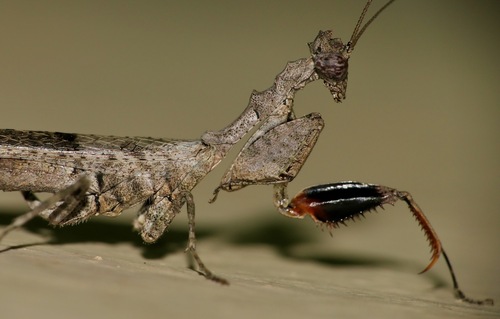
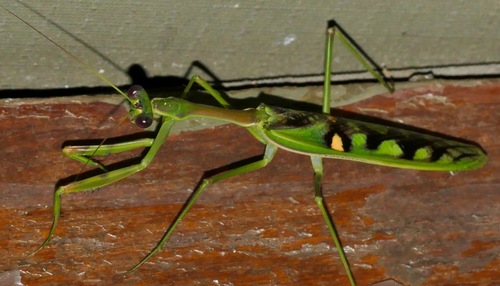
Compared to many other praying mantises, the ghost mantis is a "miniature species", growing to only about 45 to 50 mm (1.8 to 2.0 in) long. It occurs in various brownish shades from very dark brown (almost black) to greenish gray. An individual's colors change between molts and are also dependent on light and humidity levels.

Phyllocrania paradoxa is camouflaged so as to appear as dead, dried-up leaf material. It has an elongated head, a flattened, extended prothorax, and leaf-like protrusions from its limbs. This mantis also has a forewing that looks like a desiccated leaf, and the "creases" in the wings are actually shadings of pigment. In the wild, the ghost praying mantis effectively blends in against dead leaves. Predators such as birds tend to overlook insects that resemble their background, and by staying still, the ghost praying mantis can go unnoticed.

If threatened, big nymphs and adult females... Wikipedia →
Global Distribution

Parks Where Found

# Park Country Daily sighting probability
1 Kruger National Park 🇿🇦 South Africa
<5%

More parks will be added in future updates.

Cities Where Found

# City Country Daily sighting probability
1 Harare 🇿🇼 Zimbabwe
~10%
2 Pretoria 🇿🇦 South Africa
~10%
3 Johannesburg 🇿🇦 South Africa
~10%
4 Durban 🇿🇦 South Africa
<5%

Before you go

What are the chances of seeing a Common Ghost Mantis in Kruger National Park?

Rare

Under 5% of wildlife watchers report a Common Ghost Mantis sighting in Kruger National Park on a given day, based on 10 verified sightings from GBIF citizen-science data from 2019 to 2026. It is the 392nd most-seen of the 748 insects we can rate there. Over three days the chance rises to about 10%, and over a week to about 30%, if each day is a fresh chance.

When is the best time to see a Common Ghost Mantis in Kruger National Park?

February and November

In those months about 10% of wildlife watchers report a Common Ghost Mantis in Kruger National Park on a given day, against under 5% in March–October and December–January, the lowest months. Those are among Kruger National Park's wettest months, with about 80 mm of rain a month against almost none in August.

What time of day is best to see a Common Ghost Mantis?

Between 2 and 5 pm

Across all the parks we cover, that three-hour window holds the most Common Ghost Mantis sightings with a recorded time, and about half of them come between 6 am and 6 pm: it is most active around dawn and dusk.

Where else can you see a Common Ghost Mantis?

Only Kruger National Park, in our data

Kruger National Park is the only park on Wallace's Line with enough records to rate Common Ghost Mantis sightings: under 5% of wildlife watchers there report one on a given day.

Which relatives of the Common Ghost Mantis live in Kruger National Park?

Same family: Hymenopodidae

The closest relatives of the Common Ghost Mantis that you can see in Kruger National Park (family Hymenopodidae, Flower Mantises) are Common Bark Mantid (about 10%) and Cryptic Mantis (about 10%), with each one's daily chance of a sighting.

Where does the Common Ghost Mantis sighting chance come from?

GBIF citizen-science records

It is estimated from how often the Common Ghost Mantis is recorded against all the insects logged in Kruger National Park (10 verified sightings from 2019 to 2026), calibrated against known sighting rates. Figures are rounded to the nearest 10% because citizen-science data supports honest approximations, not decimals, and months with records from fewer than five people show "—". How it works.

← Back to Kruger National Park