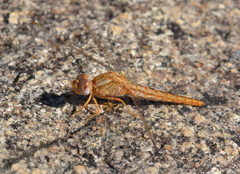
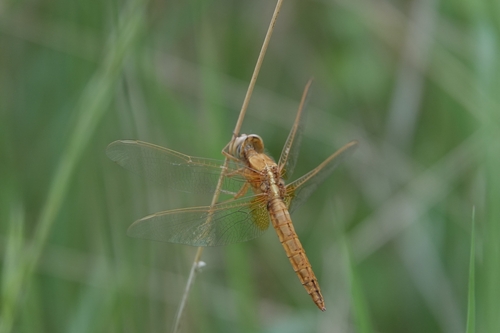
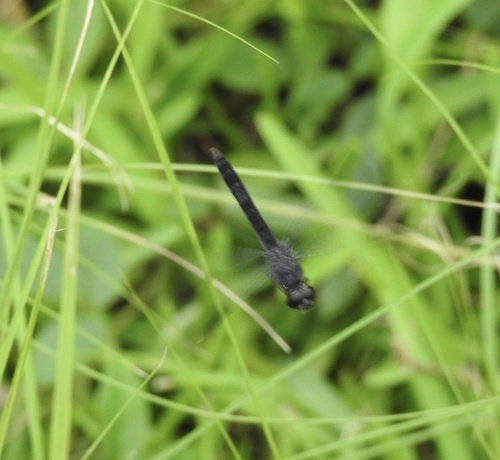
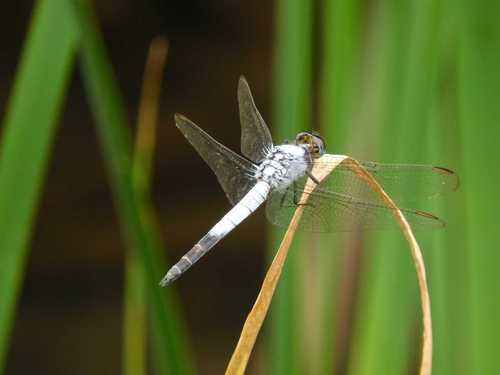
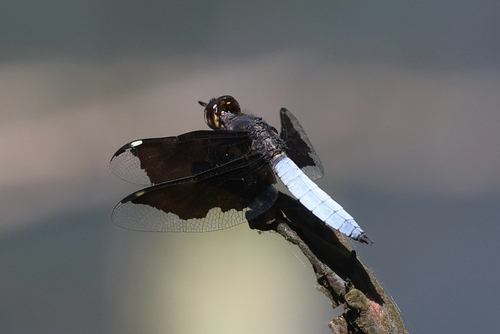
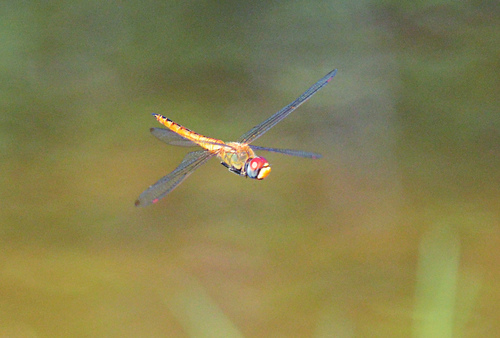
Little Scarlet

Little Scarlet

Crocothemis sanguinolenta

Daily sighting probability <5% · Rare
at Kruger National Park

In 3 days ~10% in a week ~20%

18 Verified sightings at Kruger National Park From 2019 to 2026
101 In all 5 parks
February Best month
☀️ Diurnal When it's spotted

About the Little Scarlet

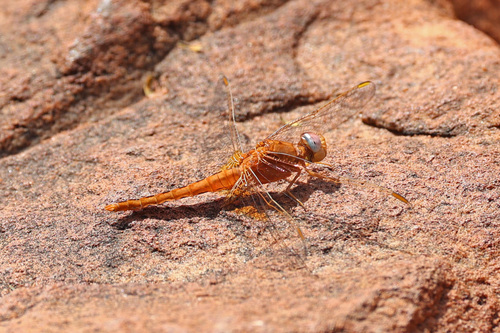
Crocothemis sanguinolenta is a species of dragonfly in the family Libellulidae. It is found in Africa south of the Sahara (including Madagascar), in the Levant, and in the south of the Arabian Peninsula. It is found in or near fresh water in a wide variety of habitats, from semi-arid bush to tropical forest.

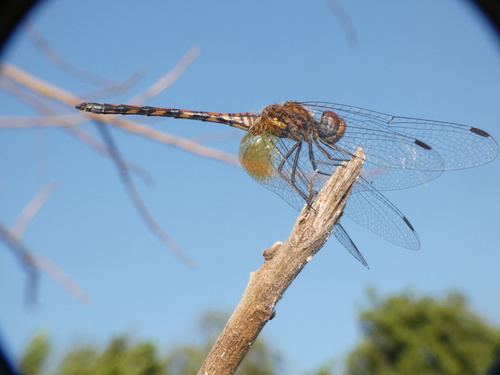
Common names for this species include little scarlet, slim scarlet-darter and small scarlet. Over most of its range, Crocothemis sanguinolenta is easily confused with Crocothemis erythraea, but C. sanguinolenta has a narrower abdomen (3 mm or less wide), the lateral carinae of S3 to S7 are usually marked with black dashes, and the pterostigmata are short and usually the same colour as the abdomen (red in mature males). The abdomen of Crocothemis erythraea is 3.5 mm or more wide, the lateral carinae of S3 to S7 are generally unmarked, and the pterostigmata are longer and less brightly coloured than the abdomen.

Little scarlet Species text in the Online Atlas of South African Odonata Wikipedia →
Global Distribution

Parks Where Found

# Park Country Daily sighting probability
1 Waterberg Plateau Park 🇳🇦 Namibia
~40%
2 De Hoop Nature Reserve 🇿🇦 South Africa
~10%
3 Garden Route National Park 🇿🇦 South Africa
~10%
4 Table Mountain National Park 🇿🇦 South Africa
~10%
5 Kruger National Park 🇿🇦 South Africa
<5%

Cities Where Found

# City Country Daily sighting probability
1 Pretoria 🇿🇦 South Africa
<5%

Before you go

What are the chances of seeing a Little Scarlet in Kruger National Park?

Rare

Under 5% of wildlife watchers report a Little Scarlet sighting in Kruger National Park on a given day, based on 18 verified sightings from GBIF citizen-science data from 2019 to 2026. It is the 472nd most-seen of the 748 insects we can rate there. Over three days the chance rises to about 10%, and over a week to about 20%, if each day is a fresh chance.

When is the best time to see a Little Scarlet in Kruger National Park?

February

In that month about 10% of wildlife watchers report a Little Scarlet in Kruger National Park on a given day, against under 5% in March to January, the lowest months. That is one of Kruger National Park's wettest months, with about 110 mm of rain against almost none in August.

What time of day is best to see a Little Scarlet?

Between 11 am and 2 pm

Across all the parks we cover, that three-hour window holds the most Little Scarlet sightings with a recorded time, and about 9 in 10 of them come between 6 am and 6 pm: it is a daytime animal.

Where does the Little Scarlet sighting chance come from?

GBIF citizen-science records

It is estimated from how often the Little Scarlet is recorded against all the insects logged in Kruger National Park (18 verified sightings from 2019 to 2026), calibrated against known sighting rates. Figures are rounded to the nearest 10% because citizen-science data supports honest approximations, not decimals, and months with records from fewer than five people show "—". How it works.

← Back to Kruger National Park