Waterberg Plateau Park
🇳🇦 Namibia
Southern Africa, Namibia 683 spp. recorded
Waterberg Plateau Park is a protected tropical savanna rising steeply above the plains of central Namibia. This massive sandstone tableland stands apart from surrounding parks through its sheer cliffs and densely wooded plateaus, creating an isolated upland refuge for diverse regional wildlife.
-20.340° S 17.353° E
🦜 Nature

253 Species sighted
5,211 Verified sightings From 2019 to 2026
Aug Best month
⭐ Iconic Species


📊 Most Spotted


⭐ Iconic Species
📊 Most Spotted


📊 Most Spotted




📊 Most Spotted



📊 Most Spotted
📊 Most Spotted
🌙 Most active after dark




+ 547 more species with insufficient data
Recent sightings in Waterberg Plateau Park
LIVEiNaturalistSighting Calendar
How many species you'd see in a day
44Jan
43Feb
46Mar
22Apr
41May
13Jun
38Jul
52Aug
35Sep
37Oct
43Nov
43Dec
Sighting Zones
Warmer areas are where all species together are recorded most often.
-
Waterberg Plateau Viewpoint
Daily sight. prob.vs avg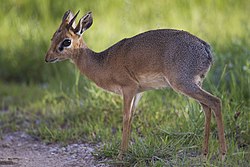 Kirk's Dik-dik~90%+10%
 Chacma Baboon~90%+10%
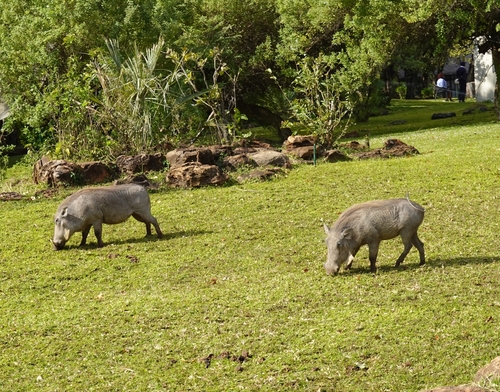
 Common Warthog~90%+20%
 Rock Hyrax~90%+10%
 Banded Mongoose~80%+10%
 Kalahari Tree Skink~70%+10%
 Grey Go-Away-Bird~70%-20%
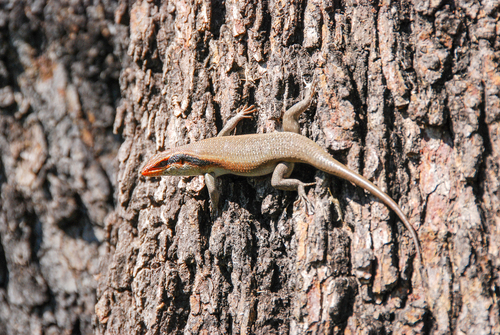
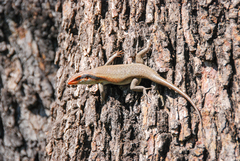 Wahlberg’s Striped Skink~70%+20%
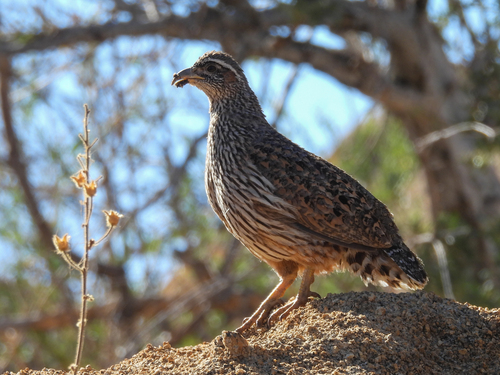
 Red-billed Francolin~60%-30%
 Red-shouldered Glossy-starling~60%-10%
 African Red-eyed Bulbul~50%-30%
 African Grey Hornbill~50%-20%
-
Waterberg Wilderness Lodge
Daily sight. prob.vs avg -
Okatjikona
Daily sight. prob.vs avg- Grey Go-Away-Bird>90%+10%
 Southern Yellow-billed Hornbill>90%+50%
- Red-shouldered Glossy-starling>90%+40%
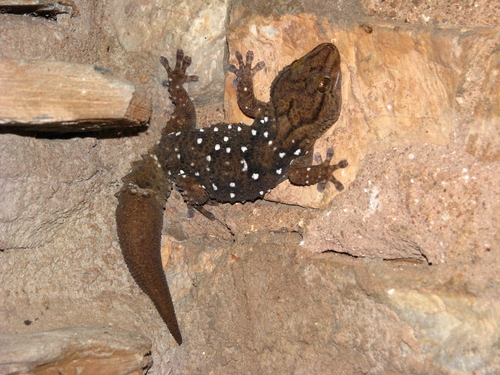
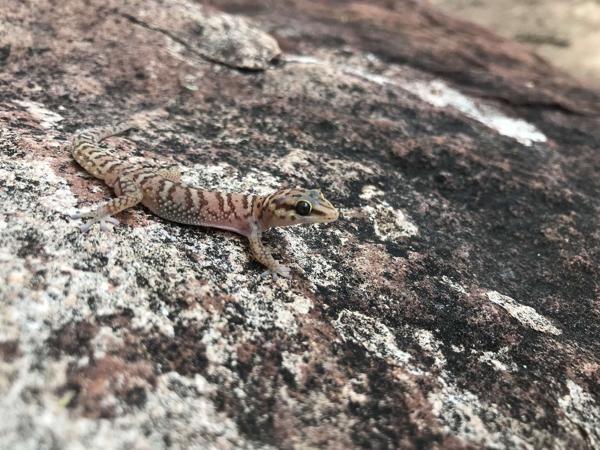 Waterberg Thick-toed Gecko~80%+50%
- Wahlberg’s Striped Skink~80%+20%
- Rock Hyrax~70%-10%
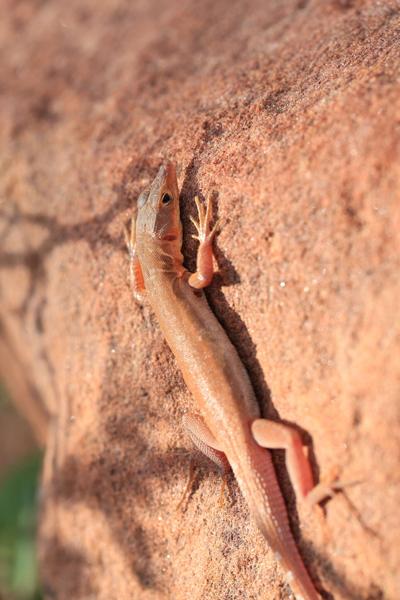 Ruben's Sand Lizard~70%+10%
- Chacma Baboon~50%-30%
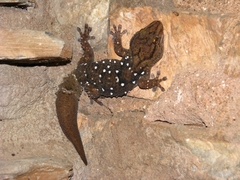 Fischer's Thick-toed Gecko~50%+10%
 Leopard Tortoise~50%+10%
- Kirk's Dik-dik~50%-40%


🏕️ Experience
Essentials
Entrance
Paid
Tourism
Low
Typical stay
1–2
daysTrails
Easy
World Heritage
No
Climate
Temp °C Rain mm
JanFebMarAprMayJunJulAugSepOctNovDec
0.0 Excellent
Wallace's Line Score
How good is this park for seeing wildlife? 🦜
Biodiversity
GoodHow rich is the wildlife?
3.5
Species by taxon
🦅 Birds 442
🐒 Mammals 107
🦎 Reptiles 115
🐸 Amphibians 19
683 Total Species
828 Global average across 316 parks
25 Threatened 13 Endemic
🔭
Sighting
ExcellentHow likely to see animals?
4.8
🎯
Top-12 Avg Probability
77% 📊
Coverage (184 species at ≥5% of 683 in the inventory)
27% 🔀
Taxon variety in top 12 (6 bird, 5 mammal, 1 reptile)
76% 🔭
Species per 10 outings (distinct species a visitor would meet over 10 outings — effort held equal across parks)
112 🌟
Iconic-group species (≥15%) (every species from the 19 iconic groups — monkeys, cats, toucans, macaws, sloths, crocodilians… — not just the 4 highlighted above)
26 ⭐
High-prob species (>40%)
38 🏕️
Experience
ExcellentHow easy and pleasant is the visit?
4.8
Climate Pleasant High
Entrance Paid Low
Tourism Low High
Trails Easy High
World Heritage No —
What visitors say
In the rock crevices, we spot rock hyraxes, a first for us on this trip.
Unfortunately, we didn’t spot any rhinos, but we did see some other amazing animals like giraffes, oryx, eland, red hartebeest, blue wildebeest, and kudu.
As we slowly wound our way up the gentle slopes, passing a beautiful kudu, we watched as the sun slipped behind the plateau – drawing us from warm light into its sweeping shadow.
Of course, I missed the Rüppel’s Parrot, but Richard saw it flying by at speed.
Before you go
What animals can you see in Waterberg Plateau Park?
683 species
Waterberg Plateau Park has 683 recorded vertebrate species. The ones wildlife watchers report most often on a given day are Red-billed Francolin (over 90%), Kirk's Dik-dik (about 90%), Grey Go-Away-Bird (about 90%), African Red-eyed Bulbul (about 80%) and Rock Hyrax (about 80%). Among reptiles, the most-seen is Kalahari Tree Skink (about 60%).
When is the best time to visit Waterberg Plateau Park for wildlife?
April–May and August
In those months the park's 12 most-seen species average about 80% on a given day, against about 70% in June–July and September–March. Those are among Waterberg Plateau Park's driest months, with about 5 mm of rain a month against 110 mm in January.
Can you see a White Rhinoceros in Waterberg Plateau Park?
Yes
About 40% of wildlife watchers report a White Rhinoceros sighting in Waterberg Plateau Park on a given day, based on 19 verified sightings from GBIF citizen-science data from 2019 to 2026. The best time is June and July (about 60%).
Can you see a Southern Giraffe in Waterberg Plateau Park?
Yes
About 60% of wildlife watchers report a Southern Giraffe sighting in Waterberg Plateau Park on a given day, based on 19 verified sightings from GBIF citizen-science data from 2019 to 2026. The best time is May (about 80%).
Can you see a Greater Kudu in Waterberg Plateau Park?
Yes
About 50% of wildlife watchers report a Greater Kudu sighting in Waterberg Plateau Park on a given day, based on 16 verified sightings from GBIF citizen-science data from 2019 to 2026. The best time is January (about 80%).
Can you see a Kirk's Dik-dik in Waterberg Plateau Park?
Yes
About 90% of wildlife watchers report a Kirk's Dik-dik sighting in Waterberg Plateau Park on a given day, based on 58 verified sightings from GBIF citizen-science data from 2019 to 2026. The best time is February–May, July, September–October and December (about 90%).
Where in Waterberg Plateau Park is wildlife easiest to see?
Around Waterberg Plateau Viewpoint
The richest sighting zone is around Waterberg Plateau Viewpoint, followed by Waterberg Wilderness Lodge and Okatjikona, ranked by how many of the park's headline animals visitors can expect to see in each. See the zones on the map.
Is Waterberg Plateau Park good for wildlife watching?
4.3 out of 5
On the Wallace's Line Score, Waterberg Plateau Park rates 4.3/5: 68th of 316 parks worldwide and 41st in Africa. 49 of its species are reported by about 40% or more of wildlife watchers on a given day.