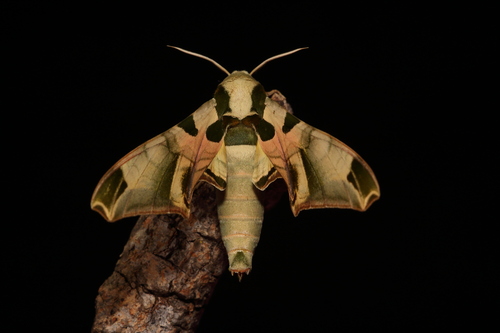
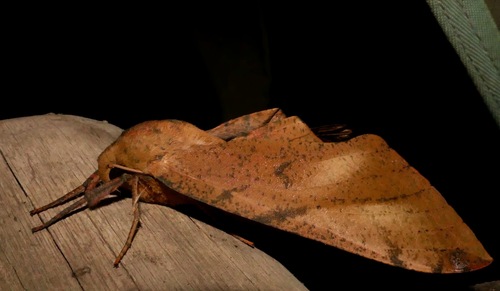
Pellucid Hawkmoth

Pellucid Hawkmoth

Cephonodes hylas

Daily sighting probability <5% · Rare
at Kruger National Park

In 3 days ~10% in a week ~30%

18 Verified sightings at Kruger National Park From 2019 to 2026
27 In all 2 parks
January Best month
☀️ Diurnal When it's spotted

About the Pellucid Hawkmoth

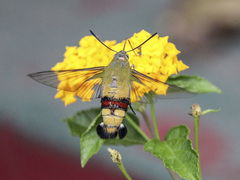
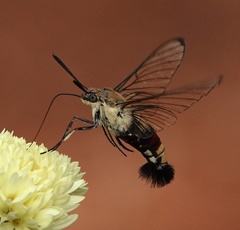
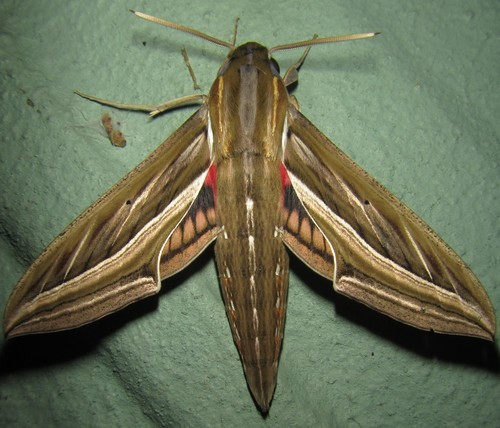
Cephonodes hylas, or the coffee bee hawkmoth, pellucid hawk moth or coffee clearwing, is a moth of the family Sphingidae. The species was first described by Carl Linnaeus in 1771. A widely distributed moth, it is found in the Near East, Middle East, Africa, India, Sri Lanka, Japan, Southeast Asia and Australia.

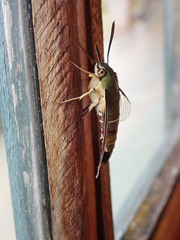
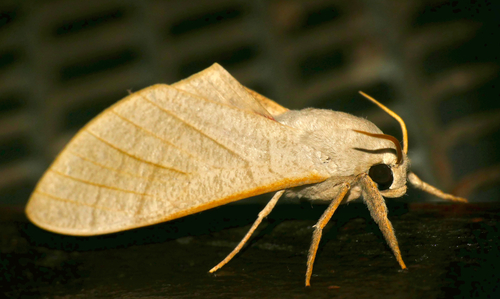
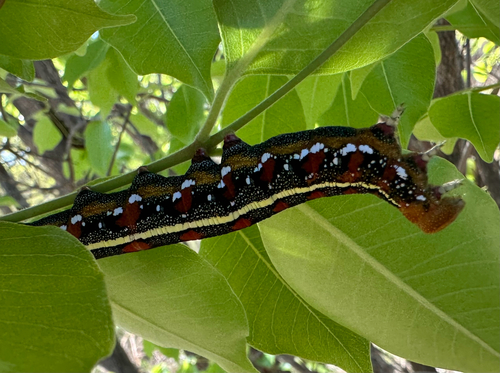
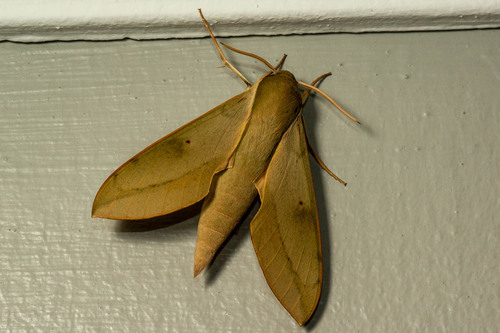
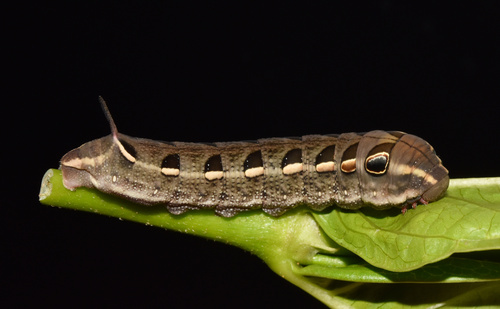
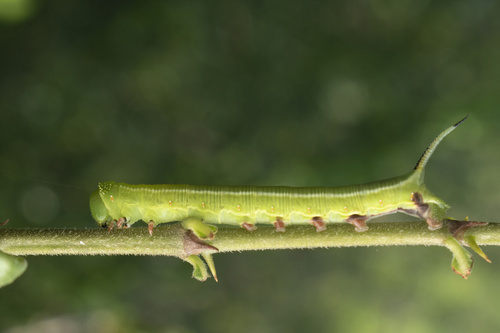
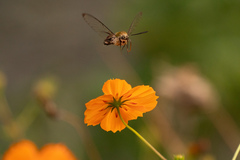
It has transparent wings and a stout body like a bumblebee. Its wingspan ranges between 45 and 73 mm. Its marginal borders are very narrow and black. The abdomen varies in colour from yellow to green. Nominate subspecies have bright reddish 3rd and 4th abdominal segments. The larva have two color forms, green and dark. In the green-colored form, the body is greenish with a white-bordered blue dorsal line and a whitish sub-dorsal line ending in a yellow streak at the base of the horn. The head and spiracles are blue. In the dark-colored form, the head is brown or pale orange and the rest of the body is smoky black. The pupa is dark brown.

Larvae are sluggish but eat greedily and continuously. Its larvae feed on Burchellia, Gardenia, Kraussia, Pavetta and Vangueria species. Parasitoids such as Ooencyrtus papilionis and Blepharipa zebrine can be found... Wikipedia →
Global Distribution

Parks Where Found

# Park Country Daily sighting probability
1 iSimangaliso Wetland Park 🇿🇦 South Africa
~10%
2 Kruger National Park 🇿🇦 South Africa
<5%

Cities Where Found

# City Country Daily sighting probability
1 Nagoya 🇯🇵 Japan
~20%
2 Shanghai 🇨🇳 China
~10%
3 Osaka 🇯🇵 Japan
~10%
4 Prayagraj 🇮🇳 India
~10%
5 Hyderabad 🇮🇳 India
~10%
6 Chennai 🇮🇳 India
~10%
7 Harare 🇿🇼 Zimbabwe
~10%
8 Mumbai 🇮🇳 India
~10%
9 Tokyo 🇯🇵 Japan
~10%
10 Hangzhou 🇨🇳 China
~10%

Before you go

What are the chances of seeing a Pellucid Hawkmoth in Kruger National Park?

Rare

Under 5% of wildlife watchers report a Pellucid Hawkmoth sighting in Kruger National Park on a given day, based on 18 verified sightings from GBIF citizen-science data from 2019 to 2026. It is the 290th most-seen of the 748 insects we can rate there. Over three days the chance rises to about 10%, and over a week to about 30%, if each day is a fresh chance.

When is the best time to see a Pellucid Hawkmoth in Kruger National Park?

November to February

In those months about 10% of wildlife watchers report a Pellucid Hawkmoth in Kruger National Park on a given day, against under 5% in March to October, the lowest months. Those are among Kruger National Park's wettest months, with about 90 mm of rain a month against almost none in August.

What time of day is best to see a Pellucid Hawkmoth?

Between noon and 3 pm

Across all the parks we cover, that three-hour window holds the most Pellucid Hawkmoth sightings with a recorded time, and about 9 in 10 of them come between 6 am and 6 pm: it is a daytime animal.

Is Kruger National Park the best place to see a Pellucid Hawkmoth?

2nd of 2

Of the 2 parks where we can rate Pellucid Hawkmoth sightings, Kruger National Park ranks 2nd at under 5%. The best odds are in iSimangaliso Wetland Park (South Africa, about 10%).

Which relatives of the Pellucid Hawkmoth live in Kruger National Park?

Same family: Sphingidae

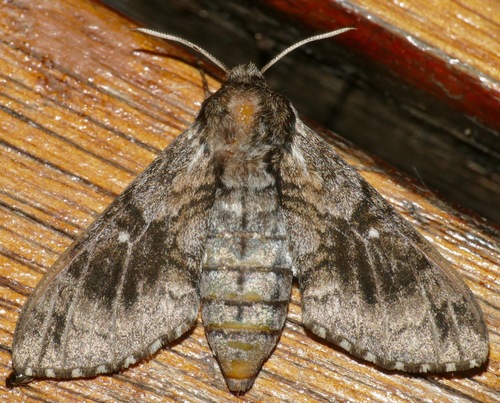
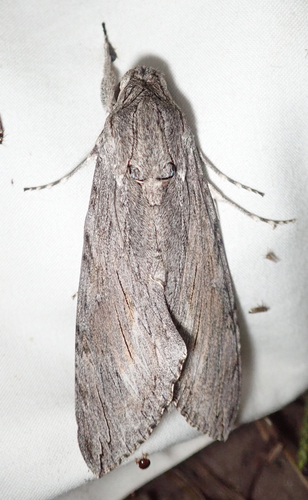
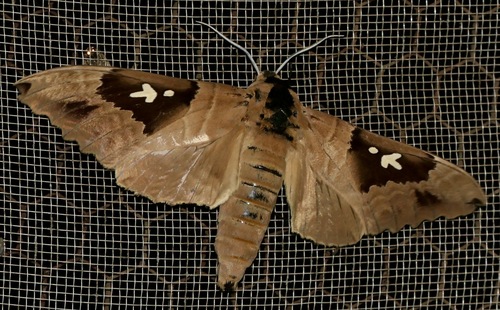
The closest relatives of the Pellucid Hawkmoth that you can see in Kruger National Park (family Sphingidae, Sphinx Moths) are Wavy Polyptychus (about 10%), Vine Hawkmoth (about 10%) and Marshalls Hawk (about 10%), with each one's daily chance of a sighting.

Where does the Pellucid Hawkmoth sighting chance come from?

GBIF citizen-science records

It is estimated from how often the Pellucid Hawkmoth is recorded against all the insects logged in Kruger National Park (18 verified sightings from 2019 to 2026), calibrated against known sighting rates. Figures are rounded to the nearest 10% because citizen-science data supports honest approximations, not decimals, and months with records from fewer than five people show "—". How it works.

← Back to Kruger National Park