Red-legged Wot-wot

Red-legged Wot-wot

Phlyctimantis maculatus

Silhouette: Jose Carlos Arenas-Monroy · PhyloPic

Daily sighting probability <5% · Rare
at Kruger National Park

In 3 days ~10% in a week ~20%

5 Verified sightings at Kruger National Park From 2019 to 2026
79 In all 2 parks
December Best month
🌙 Nocturnal When it's spotted

About the Red-legged Wot-wot

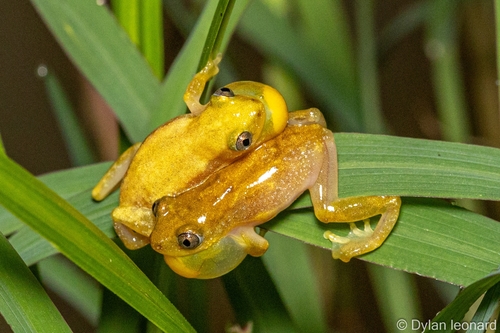
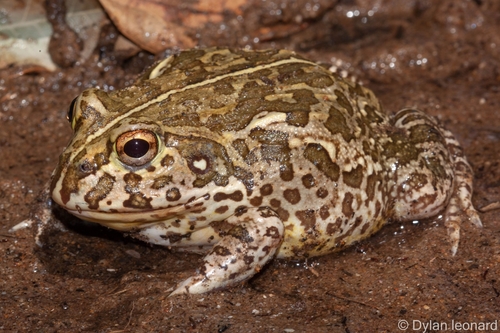
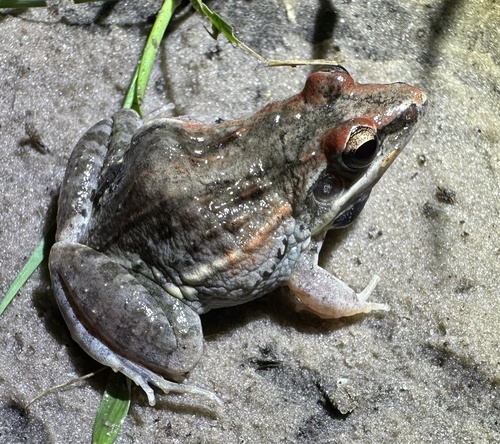
Hylambates maculatus is a species of frog in the family Hyperoliidae. They are silvery greyish-brown with dark brown to black spots, and derive their name from bright red coloring on the ventral side of their hind legs. Adult body length is typically 6 to 7.5 centimeters. These frogs have vertical pupils. Common names include red-legged running frog, brown-spotted tree frog, red-legged Kassina, red-legged pan frog, spotted running frog, tiger leg running frog, and vlei frog.

Hylambates maculatus is endemic to the tropical and sub-tropical areas of Africa's east coast (Kenya, Tanzania, Malawi, Mozambique, Zimbabwe, South Africa, and Eswatini). The frog thrives in varying terrain including shrubland, grassland, savannah, and forest as long as there exists a ready source of fresh water or high humidity. Its natural habitats are dry savanna, moist savanna, subtropical or tropical dry shrubland, subtropical or tropical moist shrubland, temperate grassland, subtropical or tropical dry lowland grassland, subtropical or tropical seasonally wet or flooded lowland grassland, swamps, intermittent freshwater lakes, freshwater marshes, intermittent freshwater marches, arable land,... Wikipedia →

Sounds

Recording0:21

South Africa · 2023

© apusaffinis · iNaturalist · CC BY-NC 4.0

Recording0:05

South Africa · 2022

© Dave Richardson · iNaturalist · CC BY 4.0

Recording1:01

South Africa · 2022

© magdastlucia · iNaturalist · CC BY-NC 4.0

Global Distribution

Parks Where Found

# Park Country Daily sighting probability
1 iSimangaliso Wetland Park 🇿🇦 South Africa
~20%
2 Kruger National Park 🇿🇦 South Africa
<5%

Before you go

What are the chances of seeing a Red-legged Wot-wot in Kruger National Park?

Rare

Under 5% of wildlife watchers report a Red-legged Wot-wot sighting in Kruger National Park on a given day, based on 5 verified sightings from GBIF citizen-science data from 2019 to 2026. It is the 26th most-seen of the 28 amphibians we can rate there. Over three days the chance rises to about 10%, and over a week to about 20%, if each day is a fresh chance.

When is the best time to see a Red-legged Wot-wot in Kruger National Park?

March and December

In those months about 10% of wildlife watchers report a Red-legged Wot-wot in Kruger National Park on a given day, against under 5% in January–February and April–November, the lowest months. Those are among Kruger National Park's wettest months, with about 65 mm of rain a month against almost none in August.

What time of day is best to see a Red-legged Wot-wot?

Between 7 and 10 pm

Across all the parks we cover, that three-hour window holds the most Red-legged Wot-wot sightings with a recorded time, and about 7 in 10 of them come between 6 pm and 6 am: it is mostly seen at night.

Is Kruger National Park the best place to see a Red-legged Wot-wot?

2nd of 2

Of the 2 parks where we can rate Red-legged Wot-wot sightings, Kruger National Park ranks 2nd at under 5%. The best odds are in iSimangaliso Wetland Park (South Africa, about 20%).

Which relatives of the Red-legged Wot-wot live in Kruger National Park?

Same family: Hyperoliidae

The closest relatives of the Red-legged Wot-wot that you can see in Kruger National Park (family Hyperoliidae, African Reed Frogs) are Painted Reed Frog (about 10%) and Senegal Kassina (about 10%), with each one's daily chance of a sighting.

Where does the Red-legged Wot-wot sighting chance come from?

GBIF citizen-science records

It is estimated from how often the Red-legged Wot-wot is recorded against all the amphibians logged in Kruger National Park (5 verified sightings from 2019 to 2026), calibrated against known sighting rates. Figures are rounded to the nearest 10% because citizen-science data supports honest approximations, not decimals, and months with records from fewer than five people show "—". How it works.

← Back to Kruger National Park