Wahlberg's Velvet Gecko

Wahlberg's Velvet Gecko

Homopholis wahlbergii

Silhouette: Jose Carlos Arenas-Monroy · PhyloPic

LCLeast ConcernNTVUENCR
Daily sighting probability ~10% · With luck
at Kruger National Park

In 3 days ~30% in a week ~50%

52 Verified sightings at Kruger National Park From 2019 to 2026
57 In all 2 parks
November Best month
🌅 Crepuscular When it's spotted

About the Wahlberg's Velvet Gecko

Wahlberg's velvet gecko (Homopholis wahlbergii) is a species of large gecko, a lizard in the family Gekkonidae. The species occurs exclusively in Southern Africa. The specific name, wahlbergii, is in honour of Swedish naturalist Johan August Wahlberg. The spelling walbergii was corrected to wahlbergii by Smith (1849) in an errata within an addenda slip (unpaginated).

H. wahlbergii is endemic to Miombo and Mopane bushveld of Botswana, South Africa, Eswatini, Zimbabwe, and Mozambique. The largest part of its range covers Zimbabwe. H. wahlbergii shelters under tree bark, rocks, empty bird nests, and other places in coastal bush and mesic and arid savannas.

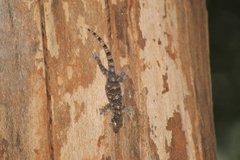
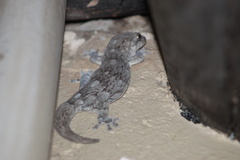
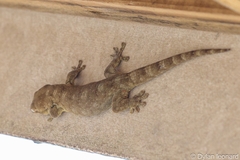
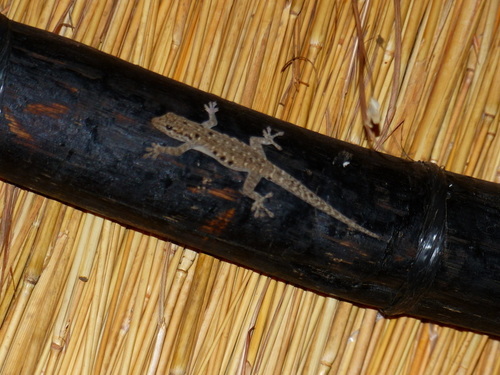
Wahlberg's velvet gecko is so called because the skin looks and feels like velvet. The back varies from dark grey to soft grey-brown and may be crossed with paler chevrons or crossbars or have mottled paler areas nestled along the centre of its back and spine. Adults may attain a total length (including tail) of 21 cm (8.3 in), but average total length is 14–18 cm (5.5–7.1 in).

H. wahlbergii is nocturnal; however, it has been observed to occasionally... Wikipedia →

Global Distribution

Parks Where Found

# Park Country Daily sighting probability
1 Kruger National Park 🇿🇦 South Africa
~10%
2 iSimangaliso Wetland Park 🇿🇦 South Africa
~10%

Before you go

What are the chances of seeing a Wahlberg's Velvet Gecko in Kruger National Park?

With luck

About 10% of wildlife watchers report a Wahlberg's Velvet Gecko sighting in Kruger National Park on a given day, based on 52 verified sightings from GBIF citizen-science data from 2019 to 2026. It is the 24th most-seen of the 62 reptiles we can rate there. Over three days the chance rises to about 30%, and over a week to about 50%, if each day is a fresh chance.

When is the best time to see a Wahlberg's Velvet Gecko in Kruger National Park?

November

In that month about 20% of wildlife watchers report a Wahlberg's Velvet Gecko in Kruger National Park on a given day, against under 5% in March, May and July, the lowest months.

What time of day is best to see a Wahlberg's Velvet Gecko?

Between 7 and 10 pm

Across all the parks we cover, that three-hour window holds the most Wahlberg's Velvet Gecko sightings with a recorded time, and about 6 in 10 of them come between 6 pm and 6 am: it is most active around dawn and dusk.

Is Kruger National Park the best place to see a Wahlberg's Velvet Gecko?

Yes

Of the 2 parks where we can rate Wahlberg's Velvet Gecko sightings, Kruger National Park has the highest daily chance: about 10%. Next come iSimangaliso Wetland Park (South Africa, about 10%).

Which relatives of the Wahlberg's Velvet Gecko live in Kruger National Park?

Same family: Gekkonidae

The closest relatives of the Wahlberg's Velvet Gecko that you can see in Kruger National Park (family Gekkonidae, Typical Geckos) are Tropical House Gecko (about 30%), Cape Dwarf Gecko (about 30%) and Turner's Thick-toed Gecko (about 20%), with each one's daily chance of a sighting.

Where does the Wahlberg's Velvet Gecko sighting chance come from?

GBIF citizen-science records

It is estimated from how often the Wahlberg's Velvet Gecko is recorded against all the reptiles logged in Kruger National Park (52 verified sightings from 2019 to 2026), calibrated against known sighting rates. Figures are rounded to the nearest 10% because citizen-science data supports honest approximations, not decimals, and months with records from fewer than five people show "—". How it works.

← Back to Kruger National Park