Silverbird

Silverbird

Empidornis semipartitus

Silhouette: Martin Bulla, based on François Desbordes' illustration · PhyloPic

LCLeast ConcernNTVUENCR
Daily sighting probability <5% · Rare
at Lake Manyara National Park

In 3 days ~10% in a week ~20%

12 Verified sightings at Lake Manyara National Park From 2019 to 2026
3,868 In all 8 parks
March Best month
☀️ Diurnal When it's spotted

About the Silverbird

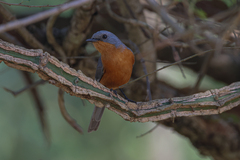
The silverbird (Empidornis semipartitus) is an Old World flycatcher native to Eastern Africa, from Sudan to Tanzania. The species is the only member of the genus Empidornis, although it is sometimes placed in the genus Melaenornis.

The silverbird is a stunning flycatcher of open areas west of the Rift Valley, silvery grey above and tawny orange below. Juveniles have black-bordered tawny spots on upperparts, mottled buff and black on throats and breasts. The species is 18 cm (7.1 in) long and weighs 22–23 g (0.78–0.81 oz).

The call of the silverbird uses short phrases which are slightly thrush-like. Sometimes the terminal note is higher and thinner, eee-sleeur-eeee or sweet siursur-eet-seet; also a longer eep-eep churEErip, eep-eep cherip chch chchch eee, embellished with chattering and seep notes.

Dale A. Zimmerman, Birds of Kenya and Northern Tanzania, Princeton University Press, 1999 del Hoyo, J.; Elliot, A. & Christie D. (editors). (2006). Handbook of the Birds of the World. Volume 11: Old World Flycatchers to Old World Warblers. Lynx Edicions. ISBN 84-96553-06-X.

Image at ADW Wikipedia →

Sounds

Song1:30

Uganda · 2022

© Peter Boesman · XC739658 · CC BY-NC-ND 4.0

Begging call0:11

Kenya · 2016

© James Bradley · XC344250 · CC BY-NC-SA 4.0

Call0:04

Uganda · 2015

© Martin St-Michel · XC287951 · CC BY-NC-SA 4.0

Global Distribution

Parks Where Found

# Park Country Daily sighting probability
1 Murchison Falls National Park 🇺🇬 Uganda
~50%
2 Serengeti National Park 🇹🇿 Tanzania
~50%
3 Kidepo Valley National Park 🇺🇬 Uganda
~40%
4 Tarangire National Park 🇹🇿 Tanzania
~30%
5 Ngorongoro Conservation Area 🇹🇿 Tanzania
~20%
6 Masai Mara National Reserve 🇰🇪 Kenya
~10%
7 Lake Manyara National Park 🇹🇿 Tanzania
<5%
8 Arusha National Park 🇹🇿 Tanzania
<5%

Before you go

What are the chances of seeing a Silverbird in Lake Manyara National Park?

Rare

Under 5% of wildlife watchers report a Silverbird sighting in Lake Manyara National Park on a given day, based on 12 verified sightings from GBIF citizen-science data from 2019 to 2026. It is the 227th most-seen of the 307 birds we can rate there. Over three days the chance rises to about 10%, and over a week to about 20%, if each day is a fresh chance.

When is the best time to see a Silverbird in Lake Manyara National Park?

March and April

In those months about 10% of wildlife watchers report a Silverbird in Lake Manyara National Park on a given day, against under 5% in May to February, the lowest months. Those are among Lake Manyara National Park's wettest months, with about 180 mm of rain a month against 15 mm in September.

What time of day is best to see a Silverbird?

Between 8 and 11 am

Across all the parks we cover, that three-hour window holds the most Silverbird sightings with a recorded time, and about 8 in 10 of them come between 6 am and 6 pm: it is a daytime animal.

Which relatives of the Silverbird live in Lake Manyara National Park?

Same family: Muscicapidae

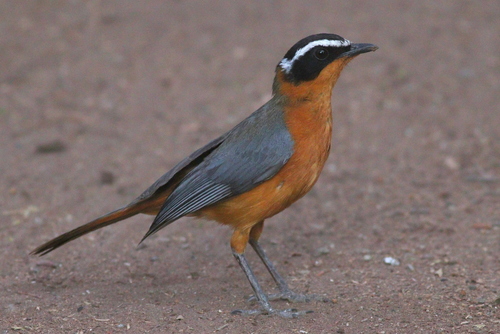
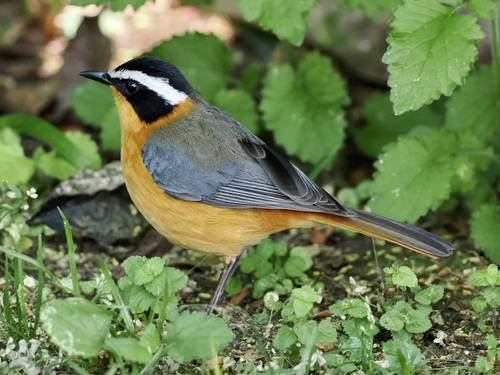
The closest relatives of the Silverbird that you can see in Lake Manyara National Park (family Muscicapidae, Old World Flycatchers, Robins, and Chats) are Spotted Morning-Thrush (about 40%), African Gray Flycatcher (about 20%) and White-browed Robin-Chat (about 20%), with each one's daily chance of a sighting.

Where does the Silverbird sighting chance come from?

GBIF citizen-science records

It is estimated from how often the Silverbird is recorded against all the birds logged in Lake Manyara National Park (12 verified sightings from 2019 to 2026), calibrated against known sighting rates. Figures are rounded to the nearest 10% because citizen-science data supports honest approximations, not decimals, and months with records from fewer than five people show "—". How it works.

← Back to Lake Manyara National Park