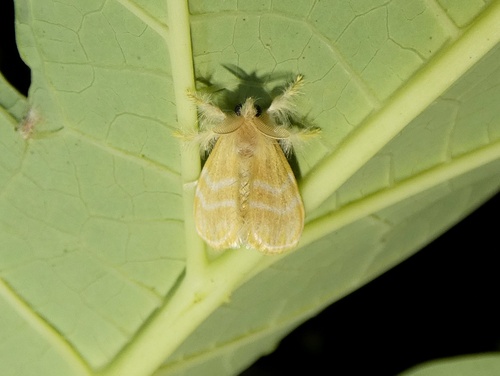
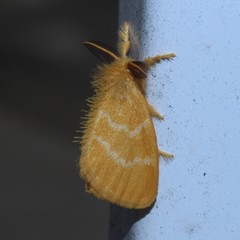
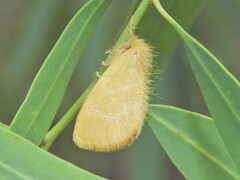
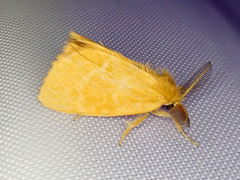
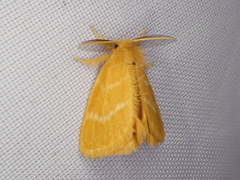
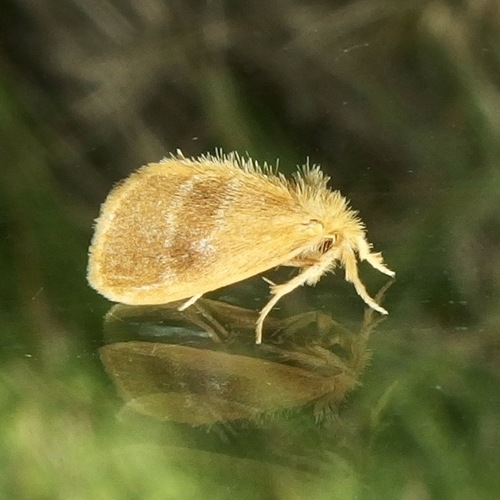
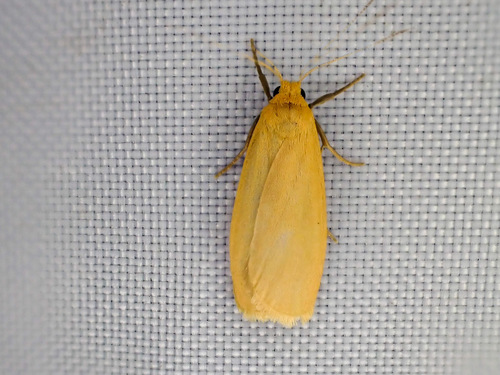
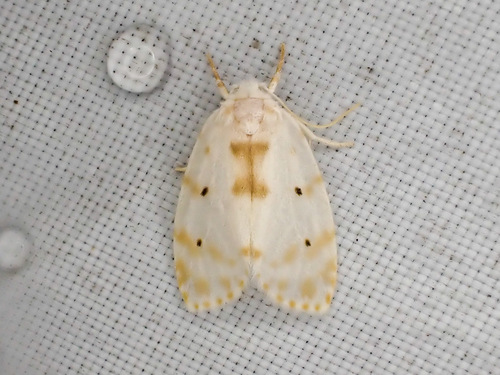
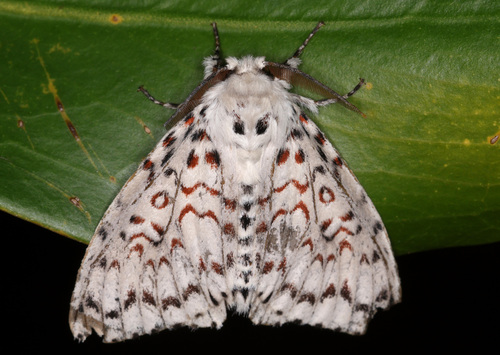
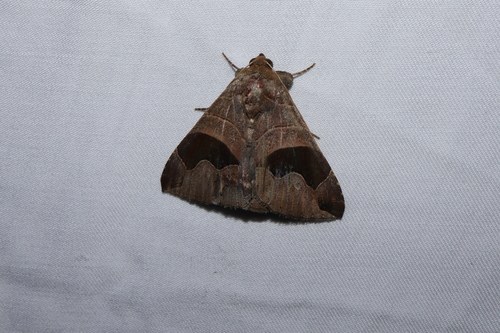
Yellow Tussock

Yellow Tussock

Euproctis lutea

Daily sighting probability ~10% · With luck
at Lamington National Park

In 3 days ~20% in a week ~40%

7 Verified sightings at Lamington National Park From 2019 to 2026
25 In all 2 parks
February Best month
🌙 Nocturnal When it's spotted

About the Yellow Tussock

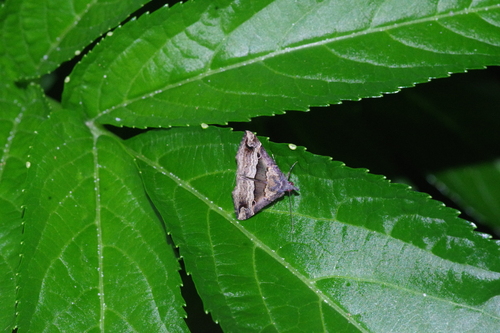
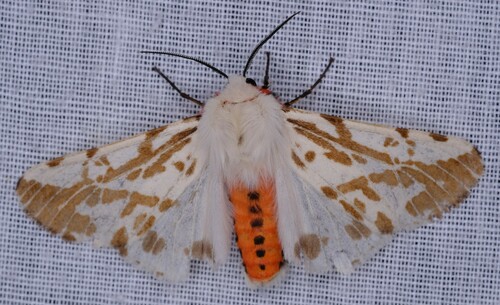
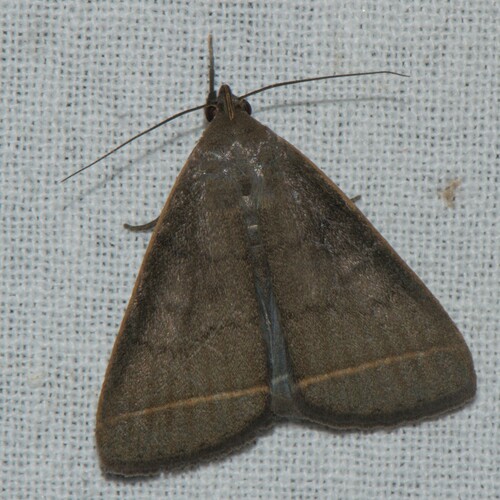
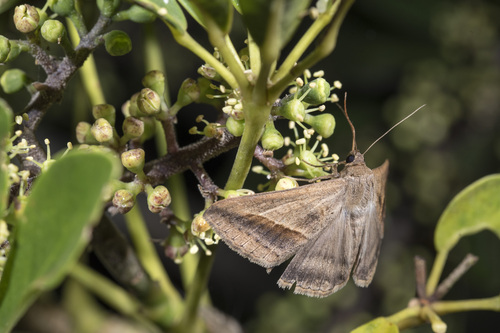
Euproctis lutea, the fresh-water mangrove itchy caterpillar, is a species of moth of the family Erebidae. It is found in northern Australia (the Northern Territory, Queensland and New South Wales) and New Guinea. The wingspan of the adult moth is about 30 mm.

The larvae feed on Lycopersicon esculentum, Begonia species, Myosotis arvensis, Rosa odorata, Barringtonia acutangula and Planchonia careya. Full-grown larvae reach a length of about 15 mm, and their hairs can lead to intense itching after contact with human skin.

The moth was first described in European scientific literature by Johan Christian Fabricius in 1775. Wikipedia →

Global Distribution

Parks Where Found

# Park Country Daily sighting probability
1 Daintree National Park 🇦🇺 Australia
~10%
2 Lamington National Park 🇦🇺 Australia
~10%

Cities Where Found

# City Country Daily sighting probability
1 Brisbane 🇦🇺 Australia
~10%
2 Singapore 🇸🇬 Singapore
<5%

Before you go

What are the chances of seeing a Yellow Tussock in Lamington National Park?

With luck

About 10% of wildlife watchers report a Yellow Tussock sighting in Lamington National Park on a given day, based on 7 verified sightings from GBIF citizen-science data from 2019 to 2026. It is the 263rd most-seen of the 430 insects we can rate there. Over three days the chance rises to about 20%, and over a week to about 40%, if each day is a fresh chance.

When is the best time to see a Yellow Tussock in Lamington National Park?

February and March

In those months about 20% of wildlife watchers report a Yellow Tussock in Lamington National Park on a given day, against under 5% in April to December, the lowest months. Those are among Lamington National Park's wettest months, with about 160 mm of rain a month against 40 mm in August.

What time of day is best to see a Yellow Tussock?

Between 8 and 11 pm

Across all the parks we cover, that three-hour window holds the most Yellow Tussock sightings with a recorded time, and about 7 in 10 of them come between 6 pm and 6 am: it is mostly seen at night.

Is Lamington National Park the best place to see a Yellow Tussock?

Among the best

Of the 2 parks where we can rate Yellow Tussock sightings, Lamington National Park ranks 2nd at about 10%, level with the leaders once rounded. The best odds are in Daintree National Park (Australia, about 10%).

Where does the Yellow Tussock sighting chance come from?

GBIF citizen-science records

It is estimated from how often the Yellow Tussock is recorded against all the insects logged in Lamington National Park (7 verified sightings from 2019 to 2026), calibrated against known sighting rates. Figures are rounded to the nearest 10% because citizen-science data supports honest approximations, not decimals, and months with records from fewer than five people show "—". How it works.

← Back to Lamington National Park