Magnetic Termite

Magnetic Termite

Amitermes meridionalis

Endemic
Daily sighting probability ~40% · Likely
at Litchfield National Park

In 3 days ~80% in a week >90%

38 Verified sightings at Litchfield National Park From 2019 to 2026
38 In 1 park
December Best month
☀️ Diurnal When it's spotted

About the Magnetic Termite

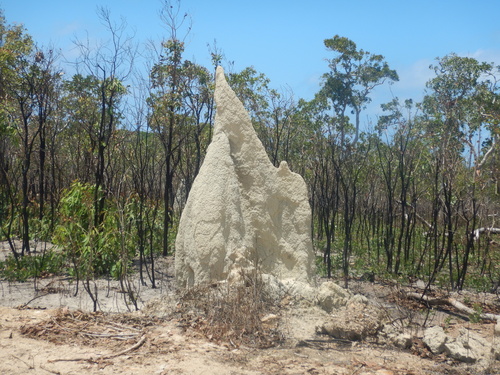
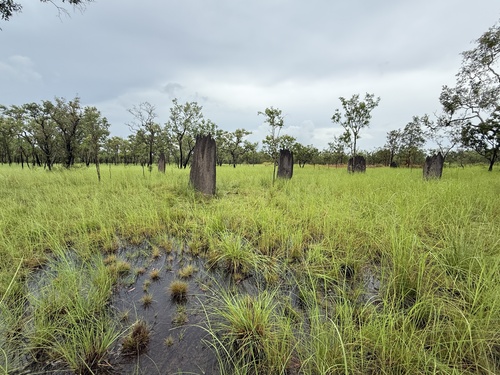
Amitermes meridionalis, commonly known as the magnetic termite or compass termite, is a species of eusocial insect in the family Termitidae. It is endemic to northern Australia and the common names derive from the fact that the wedge-shaped mound is aligned with its main axis running north and south.

A large mound may house up to a million individual termites. Each is the nest of a colony of Amitermes meridionalis and houses the queen, king, reproductives, soldiers and workers. The outer surface of the mound is hard and durable whereas the material separating the chambers and galleries inside is more papery. The soldiers are 4 to 6 mm (0.16 to 0.24 in) long and their curved mandibles bear a single in-turned tooth. Many termites never leave the mound and as a result of this protected environment they have thin cuticles, colourless bodies, little sight and little ability to protect themselves.

Amitermes meridionalis is native to the northern part of Northern Territory of Australia, around Darwin. The slab-like mounds are found in low-lying grassland areas that flood during the rainy season. The mounds are often widely scattered, but may... Wikipedia →
Global Distribution

Parks Where Found

# Park Country Daily sighting probability
1 Litchfield National Park 🇦🇺 Australia
~40%

More parks will be added in future updates.

Before you go

What are the chances of seeing a Magnetic Termite in Litchfield National Park?

Likely

About 40% of wildlife watchers report a Magnetic Termite sighting in Litchfield National Park on a given day, based on 38 verified sightings from GBIF citizen-science data from 2019 to 2026. It is the 4th most-seen of the 43 insects we can rate there. Over three days the chance rises to about 80%, and over a week to over 90%, if each day is a fresh chance.

When is the best time to see a Magnetic Termite in Litchfield National Park?

August and December

In those months about 60% of wildlife watchers report a Magnetic Termite in Litchfield National Park on a given day, against about 10% in November, the lowest month.

What time of day is best to see a Magnetic Termite?

Between 9 am and noon

Across all the parks we cover, that three-hour window holds the most Magnetic Termite sightings with a recorded time, and nearly all of them come between 6 am and 6 pm: it is a daytime animal.

Where else can you see a Magnetic Termite?

Only Litchfield National Park, in our data

Litchfield National Park is the only park on Wallace's Line with enough records to rate Magnetic Termite sightings: about 40% of wildlife watchers there report one on a given day.

Where does the Magnetic Termite sighting chance come from?

GBIF citizen-science records

It is estimated from how often the Magnetic Termite is recorded against all the insects logged in Litchfield National Park (38 verified sightings from 2019 to 2026), calibrated against known sighting rates. Figures are rounded to the nearest 10% because citizen-science data supports honest approximations, not decimals, and months with records from fewer than five people show "—". How it works.

← Back to Litchfield National Park