Litchfield National Park
🇦🇺 Australia
Oceania, Australia 605 spp. recorded
Litchfield National Park is a tropical savanna protected area situated just south of Darwin in Australia's Top End. This landscape features grassy woodlands, sandstone plateaus, and permanent spring-fed waterfalls. Unlike the seasonally dry floodplains found elsewhere in the region, Litchfield is famous for its accessible plunge pools and dense network of walking tracks winding through open eucalypt forests.
-13.167° S 130.780° E
🦜 Nature

246 Species sighted
7,952 Verified sightings From 2019 to 2026
Mar Best month
⭐ Iconic Species
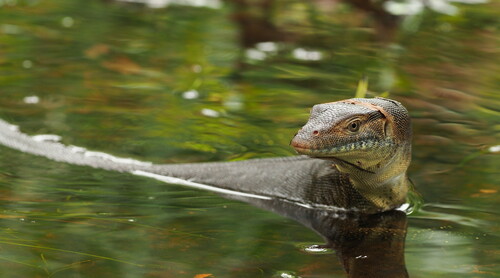


📊 Most Spotted


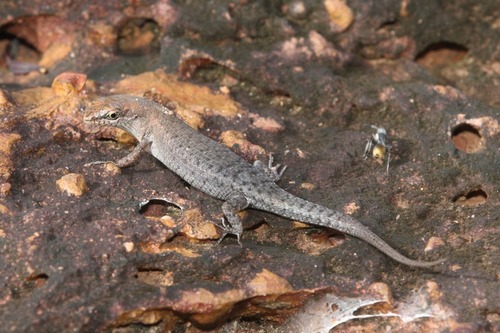

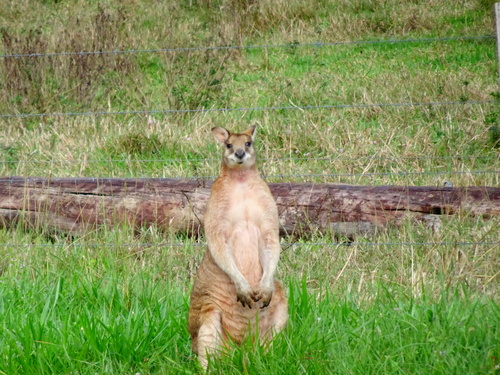

⭐ Iconic Species
📊 Most Spotted


⭐ Iconic Species
📊 Most Spotted
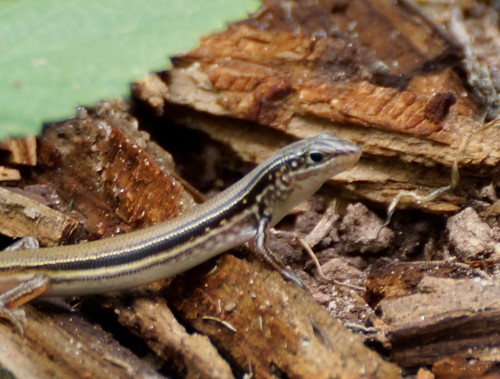


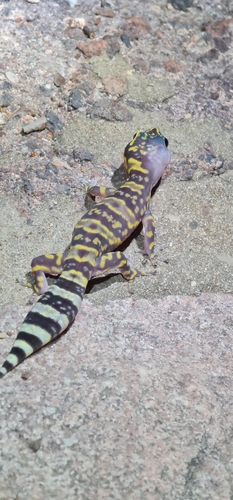

📊 Most Spotted


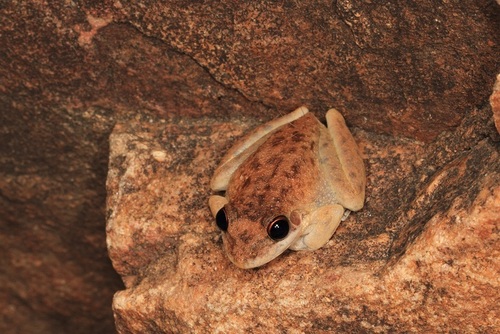


📊 Most Spotted
🌙 Most active after dark
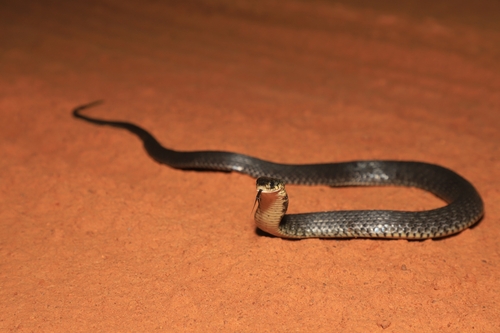

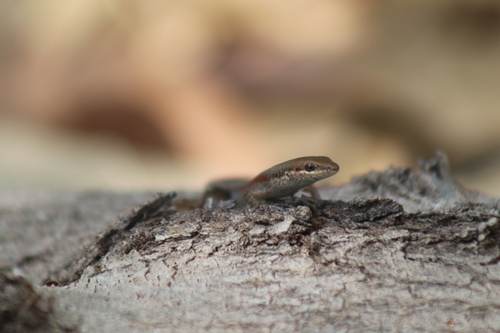

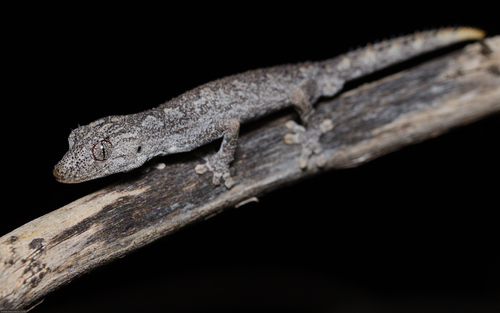

+ 460 more species with insufficient data
Recent sightings in Litchfield National Park
LIVEiNaturalistSighting Calendar
How many species you'd see in a day
30Jan
40Feb
46Mar
40Apr
41May
38Jun
35Jul
39Aug
38Sep
34Oct
31Nov
37Dec
Sighting Zones
Warmer areas are where all species together are recorded most often.
-
Tolmer Falls Lookout
Daily sight. prob.vs avg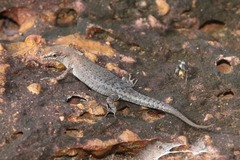 Bauxite Rainbow Skink~90%+40%
 Mertens's Water Monitor~70%-10%
 Copland's Rock Frog~60%+40%
 Rockhole Frog~60%+20%
 Brown Tree Snake~60%+20%
 Common Prickly Gecko~60%+30%
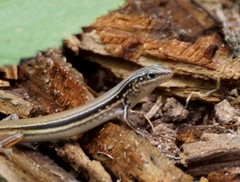 Lowlands Plain-backed Ctenotus~60%+10%
 Lined Firetail Skink~60%+20%
 Torresian Crow~50%-10%
 Burton's Legless Lizard~50%≈
 Watjulum Frog~50%+10%
 Black-headed Python~40%≈
-
Tabletop Swamp
Daily sight. prob.vs avg- Mertens's Water Monitor~80%≈
- Brown Tree Snake~70%+30%
 Rough-scaled Death Adder~70%+30%
- Torresian Crow~60%≈
- Burton's Legless Lizard~60%+10%
- Lowlands Plain-backed Ctenotus~60%+10%
 Olive Python~60%+20%
 Peaceful Dove~50%≈
 Eastern Cane Toad~40%+10%
- Black-headed Python~40%≈
 Gilbert's Dragon~40%≈
 Red-collared Lorikeet~40%-10%
-
Florence Falls
Daily sight. prob.vs avg- Mertens's Water Monitor~90%+10%
 Black Flying-fox~70%+20%
- Gilbert's Dragon~70%+30%
- Lowlands Plain-backed Ctenotus~70%+20%
- Common Prickly Gecko~50%+20%
- Rockhole Frog~50%+10%
- Watjulum Frog~50%+10%
- Bauxite Rainbow Skink~40%≈
- Torresian Crow~40%-20%
 Sulphur-crested Cockatoo~40%-20%
 White-bellied Cuckooshrike~40%-10%
 Australian Rocket Frog~30%+10%
-
Wangi Falls
Daily sight. prob.vs avg- Mertens's Water Monitor>90%+10%
- Black Flying-fox~90%+30%
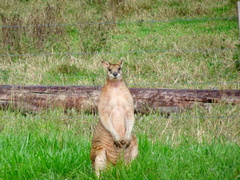 Agile Wallaby~70%+30%
- Sulphur-crested Cockatoo~50%≈
- Torresian Crow~50%-10%
- Lowlands Plain-backed Ctenotus~50%≈
- Eastern Cane Toad~40%+10%
 Varied Triller~40%-10%
 Spangled Drongo~30%-20%
 Whistling Kite~30%-20%
 Great Bowerbird~30%-10%
- Brown Tree Snake~30%-10%
-
Termite Mounds
Daily sight. prob.vs avg- Rough-scaled Death Adder~90%+50%
- Eastern Cane Toad~60%+30%
- Burton's Legless Lizard~60%+20%
- Agile Wallaby~60%+20%
- Brown Tree Snake~40%≈
 Children's Python~40%+10%
- Black-headed Python~40%≈
- Lowlands Plain-backed Ctenotus~40%≈
- Olive Python~40%+10%
- White-bellied Cuckooshrike~40%-10%
- Torresian Crow~30%-30%
- Peaceful Dove~30%-20%
🏕️ Experience
Essentials
Entrance
Paid
Tourism
Low
Typical stay
1
dayTrails
Easy
World Heritage
No
Climate
Temp °C Rain mm
JanFebMarAprMayJunJulAugSepOctNovDec
0.0 Good
Wallace's Line Score
How good is this park for seeing wildlife? 🦜
Biodiversity
GoodHow rich is the wildlife?
3.9
Species by taxon
🦅 Birds 332
🐒 Mammals 81
🦎 Reptiles 162
🐸 Amphibians 30
605 Total Species
828 Global average across 316 parks
25 Threatened 242 Endemic
🔭
Sighting
GoodHow likely to see animals?
3.0
🎯
Top-12 Avg Probability
56% 📊
Coverage (174 species at ≥5% of 605 in the inventory)
29% 🔀
Taxon variety in top 12 (10 bird, 1 reptile, 1 mammal)
39% 🔭
Species per 10 outings (distinct species a visitor would meet over 10 outings — effort held equal across parks)
86 🌟
Iconic-group species (≥15%) (every species from the 19 iconic groups — monkeys, cats, toucans, macaws, sloths, crocodilians… — not just the 4 highlighted above)
15 ⭐
High-prob species (>40%)
22 🏕️
Experience
ExcellentHow easy and pleasant is the visit?
4.4
Climate Pleasant High
Entrance Paid Low
Tourism Medium Medium
Trails Easy High
World Heritage No —
What visitors say
Going against the norm, we had to walk down to this waterfall, not up, and on the way down we could see people getting ready to jump in. - On the way to Florence Falls - And down we go - Our first Pacific Emearald-Dove Finally, we went to Buley Rockholes, this was super fun.
Having seen some crocodiles as we cruised the Kimberley, I guess I was expecting a quiet half-hour pottering up and down the river spotting crocodiles.
We saw some of the invasive cane toads, a kingfisher, and many different types of spiders: a fairly large wolf spider on the forest floor, one that resembled our cross spider hanging down from above, and another large but slender orb-weaver spider.
Overall, it was a great day out, and I’d certainly put Litchfield National Park on a list of ‘must sees’ in Australia’s Top End.
Before you go
What animals can you see in Litchfield National Park?
605 species
Litchfield National Park has 605 recorded vertebrate species. The ones wildlife watchers report most often on a given day are Mertens's Water Monitor (about 80%), Torresian Crow (about 60%), Bar-shouldered Dove (about 60%), Black Flying-fox (about 50%) and Spangled Drongo (about 50%). Among amphibians, the most-seen is Rockhole Frog (about 40%).
When is the best time to visit Litchfield National Park for wildlife?
January, March, May and July–September
In those months the park's 12 most-seen species average about 60% on a given day, against about 50% in February, April, June and October–December.
Can you see a Mertens's Water Monitor in Litchfield National Park?
Yes
About 80% of wildlife watchers report a Mertens's Water Monitor sighting in Litchfield National Park on a given day, based on 159 verified sightings from GBIF citizen-science data from 2019 to 2026. The best time is January, July–August and October–November (about 90%).
Can you see a Great Bowerbird in Litchfield National Park?
Yes
About 40% of wildlife watchers report a Great Bowerbird sighting in Litchfield National Park on a given day, based on 164 verified sightings from GBIF citizen-science data from 2019 to 2026. The best time is August (about 50%).
Can you see a Black Flying-fox in Litchfield National Park?
Yes
About 50% of wildlife watchers report a Black Flying-fox sighting in Litchfield National Park on a given day, based on 60 verified sightings from GBIF citizen-science data from 2019 to 2026. The best time is October (about 80%).
Where in Litchfield National Park is wildlife easiest to see?
Around Tolmer Falls Lookout
The richest sighting zone is around Tolmer Falls Lookout, followed by Tabletop Swamp and Florence Falls, ranked by how many of the park's headline animals visitors can expect to see in each. See the zones on the map.
Is Litchfield National Park good for wildlife watching?
3.3 out of 5
On the Wallace's Line Score, Litchfield National Park rates 3.3/5: 245th of 316 parks worldwide and 23rd in Oceania. 32 of its species are reported by about 40% or more of wildlife watchers on a given day.


